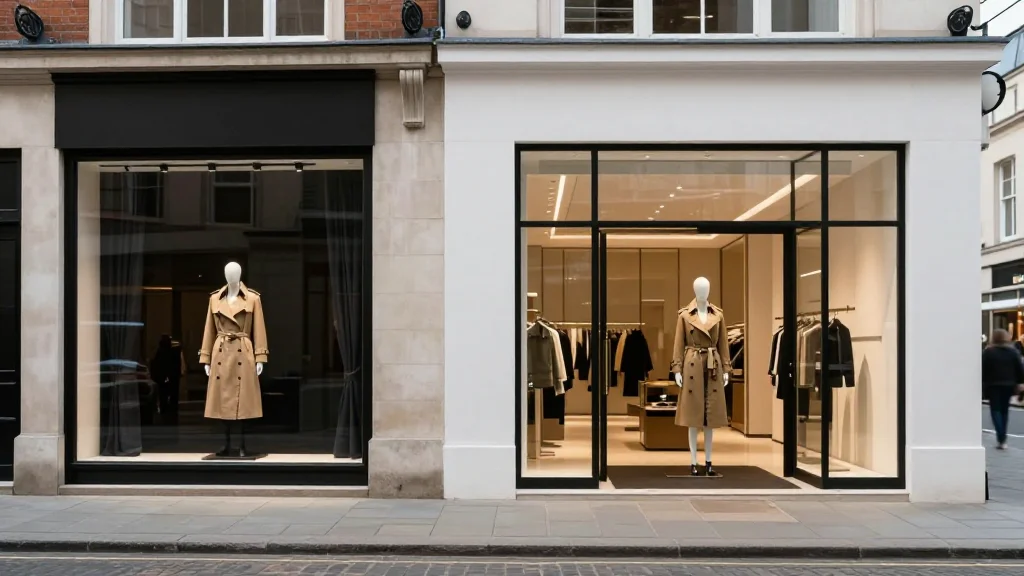
Burberry Closes 21 Stores Globally as Part of Cost‑Cutting Restructuring

Companies Mentioned



Why It Matters
The Burberry store‑closure program illustrates how legacy luxury brands are re‑engineering their revenue engines in response to weaker consumer demand. By shedding underperforming locations and reallocating resources to high‑margin wholesale channels, Burberry aims to protect profit margins while preserving brand cachet. The move also signals to CROs across the sector that operational efficiency—rather than sheer scale—will be the primary lever for revenue resilience in a volatile macro environment. If Burberry’s restructuring delivers the projected $133 million in annual savings and stabilizes comparable sales, it could set a benchmark for other luxury houses grappling with similar cost pressures. Conversely, failure to offset revenue declines may prompt a deeper reassessment of the balance between owned retail and third‑party distribution, reshaping strategic roadmaps for CRO teams worldwide.
Key Takeaways
- •Burberry closed 21 stores and opened nine new locations in FY2026, ending with 410 stores globally.
- •Adjusted operating profit reached £160 million (≈ $213 million) for the year.
- •Cost‑cutting generated £80 million (≈ $107 million) in savings; target is £100 million (≈ $133 million) annualized by FY2027.
- •Revenue fell 2 % YoY, but comparable sales grew 2 % and most regions posted growth.
- •Wholesale partnerships with Saks, Bloomingdale’s, Nordstrom and Galeries Lafayette are now a core growth channel.
Pulse Analysis
Burberry’s decision to prune its store network reflects a broader industry pivot from expansion to optimization. Historically, luxury brands have equated physical presence with prestige, but the current low‑single‑digit growth outlook forces a re‑evaluation of capital allocation. By focusing on high‑performing locations and leveraging wholesale partners, Burberry reduces fixed costs while maintaining brand exposure in premium retail environments. This hybrid model aligns with CRO objectives: maximize revenue per square foot and improve margin contribution without sacrificing brand equity.
The $107 million in immediate savings and the $133 million target illustrate a disciplined, data‑driven approach to cost management. For CROs, the key takeaway is the importance of aligning store performance metrics with broader financial goals. Burberry’s emphasis on productivity and cross‑category merchandising suggests that future revenue growth will hinge on deeper integration of inventory, pricing, and customer experience analytics across both owned and partner channels.
Looking forward, the success of this restructuring will be measured by whether Burberry can sustain comparable‑sales momentum while keeping the store count stable. If the strategy proves effective, it may accelerate a wave of similar initiatives across the luxury sector, prompting CROs to prioritize operational agility, partnership ecosystems, and technology‑enabled merchandising over traditional brick‑and‑mortar expansion.
Burberry Closes 21 Stores Globally as Part of Cost‑Cutting Restructuring
Comments
Want to join the conversation?
Loading comments...