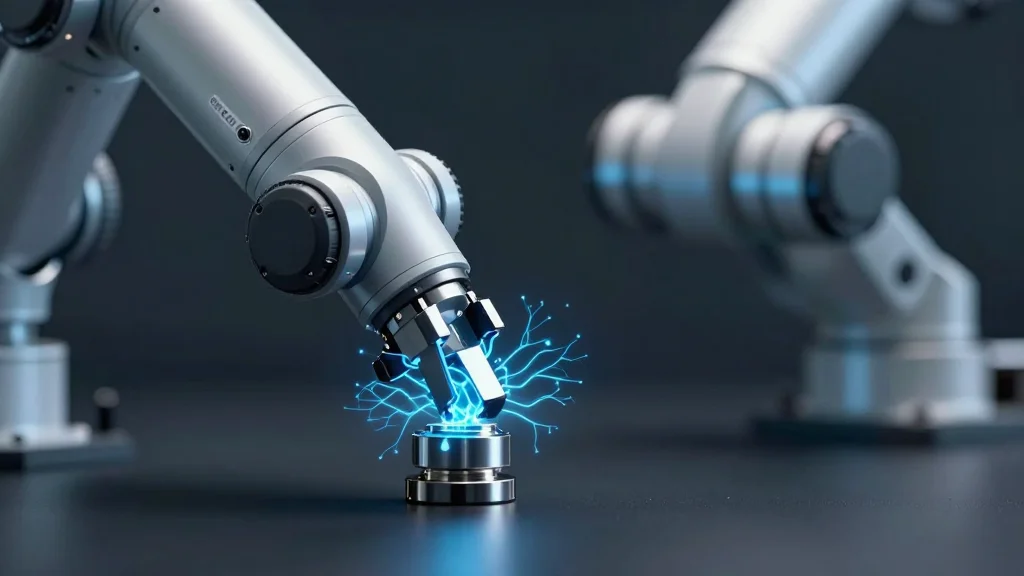
China’s AI‑Driven Manufacturing Push Signals New Era for CRO Scaling

Companies Mentioned
Why It Matters
The Chinese intelligent manufacturing agenda reshapes the competitive landscape for CROs that rely on efficient, high‑throughput processes. By mandating AI integration across supply‑chain and production, the policy creates a de‑facto global standard that could force CROs worldwide to upgrade their own operational tech stacks or risk losing clients who demand the speed and data fidelity that AI‑enhanced factories deliver. Moreover, the initiative signals a broader shift in how emerging economies can dictate technology adoption curves. As China leverages its scale to accelerate AI deployment, CROs that embed these capabilities into their service models will likely enjoy lower per‑trial costs, faster data turnaround, and stronger partnerships with multinational pharma firms seeking to tap into China’s market.
Key Takeaways
- •Chinese Government Work Report 2026 calls for accelerated “AI Plus” rollout in manufacturing.
- •Karcher CFO Rainer Kern calls China a global engine for innovation and manufacturing.
- •EU Chamber survey finds 75% of respondents rate China‑based production as more efficient than elsewhere.
- •AI‑driven supply‑chain scaling offers CROs a template for faster, cost‑effective trial execution.
- •Pilot AI manufacturing projects to launch in early 2027, with potential subsidies for early adopters.
Pulse Analysis
China’s aggressive push for intelligent manufacturing is more than a domestic industrial policy; it is a strategic lever to export its AI standards globally. Historically, large‑scale policy mandates in China have accelerated technology diffusion—think of the 2015 Made in China 2025 plan that reshaped robotics adoption. The current “AI Plus” agenda builds on that legacy, but with a sharper focus on data‑centric, real‑time decision making that aligns closely with the digital transformation needs of CROs.
For CROs, the immediate implication is a race to integrate AI into every operational layer—from sample logistics to trial data analytics. Firms that can partner with Chinese AI vendors or tap into the government‑supported talent pool will likely achieve a competitive edge in speed and cost. Conversely, CROs that remain dependent on legacy systems may find themselves out‑priced as pharma sponsors gravitate toward partners that can promise AI‑enhanced efficiency.
Looking ahead, the policy could catalyze a new wave of cross‑border collaborations. European firms, already expressing confidence in the Chinese market, may form joint ventures with local AI startups, creating hybrid models that blend Western clinical expertise with Chinese manufacturing agility. This hybridization could set a precedent for a globally harmonized, AI‑driven CRO ecosystem, reshaping how clinical trials are designed, executed, and delivered.
China’s AI‑Driven Manufacturing Push Signals New Era for CRO Scaling
Comments
Want to join the conversation?
Loading comments...