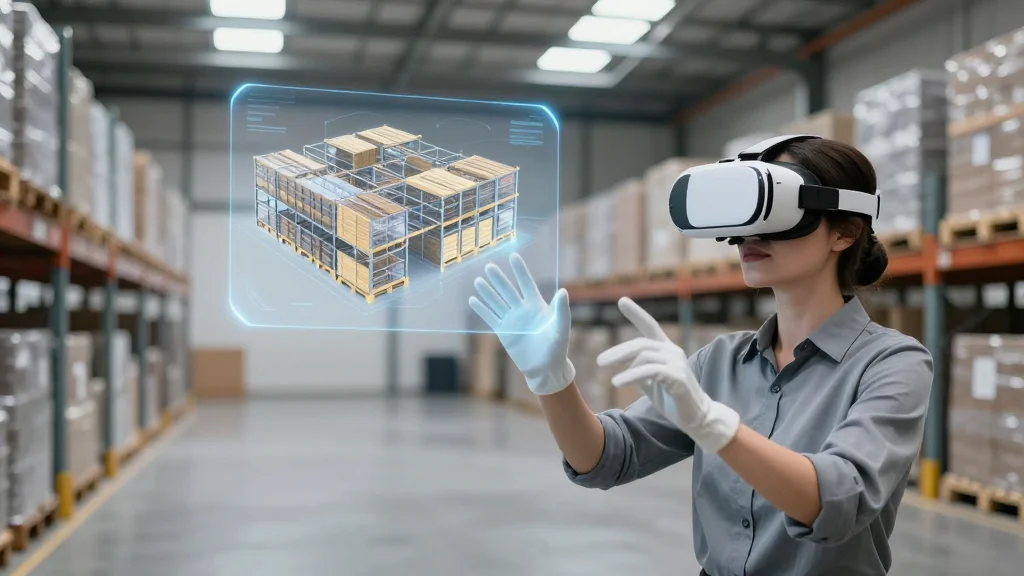
Target Uses 3D Simulation to Build $265M Houston Receive Center, Saving $700K

Companies Mentioned
Why It Matters
The Houston Receive Center illustrates how retailers can harness immersive technologies to shrink the gap between design and execution. By validating facility layouts and sorter configurations in a virtual environment, Target reduced capital outlay and accelerated the path to operational readiness, a competitive advantage in a market where speed to shelf drives sales. If the digital‑first approach proves scalable, other retailers may adopt similar XR workflows, reshaping how distribution centers are planned, built and optimized. The move also signals that supply‑chain innovation is moving beyond software and analytics to include physical‑space engineering, potentially redefining cost structures across the industry.
Key Takeaways
- •Target’s 1.2M‑sq‑ft Houston Receive Center cost $265 million
- •3D simulation saved roughly $700,000 in construction costs
- •Facility serves six regional DCs and one flow center
- •First‑of‑its‑kind sorter uses two independent line sorters, reducing footprint
- •Optimum Retailing CEO Sam Vise cautioned that execution at the shelf remains critical
Pulse Analysis
Target’s decision to embed 3D simulation into the core of its fulfillment hub design reflects a maturation of digital twin technology that has, until now, been confined to automotive and aerospace. In retail, where facility footprints are massive and capital cycles long, the ability to iterate virtually reduces risk and compresses timelines. The $700,000 saving, while modest relative to the $265 million budget, is a proof point that virtual prototyping can uncover efficiencies that traditional engineering overlooks.
Historically, retailers have relied on post‑construction tweaks to address bottlenecks, a costly and disruptive practice. By front‑loading optimization, Target not only cuts construction spend but also positions the hub to hit performance targets from day one—a critical factor as consumer expectations for rapid delivery intensify. The integration of a compact, dual‑line sorter further demonstrates how digital design can influence equipment selection, potentially setting a new standard for space‑efficient automation.
Looking ahead, the real metric will be the center’s impact on on‑shelf availability and last‑mile costs. If the virtual design translates into measurable improvements—higher fill rates, reduced stock‑outs, and lower transportation spend—competitors will likely accelerate their own XR initiatives. Moreover, the success of this project could spur vendors of warehouse management systems and automation hardware to offer tighter integration with 3D modeling platforms, creating an ecosystem where software, hardware, and spatial design converge. For investors and analysts, Target’s move signals a shift toward capital‑light, technology‑driven supply‑chain upgrades that could improve margins and defend market share in an increasingly price‑sensitive retail environment.
Target Uses 3D Simulation to Build $265M Houston Receive Center, Saving $700K
Comments
Want to join the conversation?
Loading comments...