How to Implement Shift-Left Security in Cloud-Native Applications?
Companies Mentioned

Why It Matters
Early‑stage security slashes breach‑related expenses and accelerates delivery, giving cloud‑native firms a decisive competitive edge. It transforms security from a bottleneck into a productivity driver.
Key Takeaways
- •Data breaches average $4.35 million cost, driving need for early security
- •42% of firms see longer remediation times without shift‑left practices
- •Embedding SAST, SCA, and secret scans in CI/CD cuts fix costs
- •Container image scanning before registry push prevents vulnerable releases
- •Shared DevSecOps ownership accelerates feedback and reduces production risk
Pulse Analysis
The rising financial toll of data breaches—now averaging $4.35 million per incident—has forced enterprises to rethink traditional, post‑deployment security models. Cloud‑native architectures, with their microservices, containers, and dynamic infrastructure, expand the attack surface faster than legacy tools can protect. As a result, 42% of organizations report increasing mean‑time‑to‑remediate, underscoring the need for a proactive approach that catches vulnerabilities at the source rather than after they cause damage.
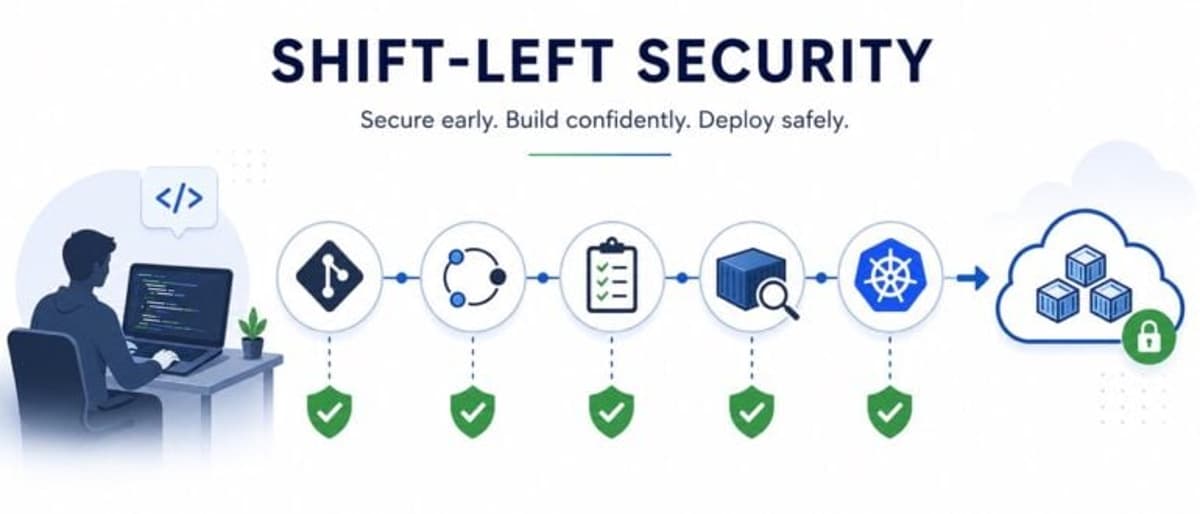
Shift‑left security addresses this gap by weaving security controls directly into the development lifecycle. Developers install IDE plugins such as Snyk or SonarLint to flag insecure code in real time, while automated pipelines run static analysis, software composition analysis, and secret detection on every commit. Container images are scanned with Trivy or Aqua before reaching registries, and IaC templates undergo Checkov or Terrascan checks to eliminate misconfigurations. By automating these steps, teams maintain rapid release cadences without sacrificing safety, and policy gates enforce compliance without manual bottlenecks.
Beyond tooling, the true value of shift‑left lies in cultural transformation. When developers, DevOps engineers, and security specialists share ownership, feedback loops shorten and remediation costs plummet. Companies that adopt this DevSecOps mindset report faster time‑to‑market, reduced incident response spend, and stronger customer trust. In a market where speed and security are both non‑negotiable, embedding security early becomes a sustainable competitive advantage rather than a cost center.
How to Implement Shift-Left Security in Cloud-Native Applications?
Comments
Want to join the conversation?
Loading comments...