One Missed Threat Per Week: What 25M Alerts Reveal About Low-Severity Risk
Companies Mentioned
Why It Matters
Because organizations rely on severity‑based triage, these overlooked alerts expose a systematic blind spot that lets attackers persist undetected, eroding overall security posture.
Key Takeaways
- •Low‑severity alerts generate one missed breach per week on average
- •Over half of endpoint infections were marked “mitigated” by EDR vendors
- •Phishing attacks now exploit trusted platforms like PayPal and OneDrive
- •S3 misconfigurations account for ~70% of cloud control violations
- •AI‑driven SOC triage can investigate 98% of alerts with sub‑minute latency
Pulse Analysis
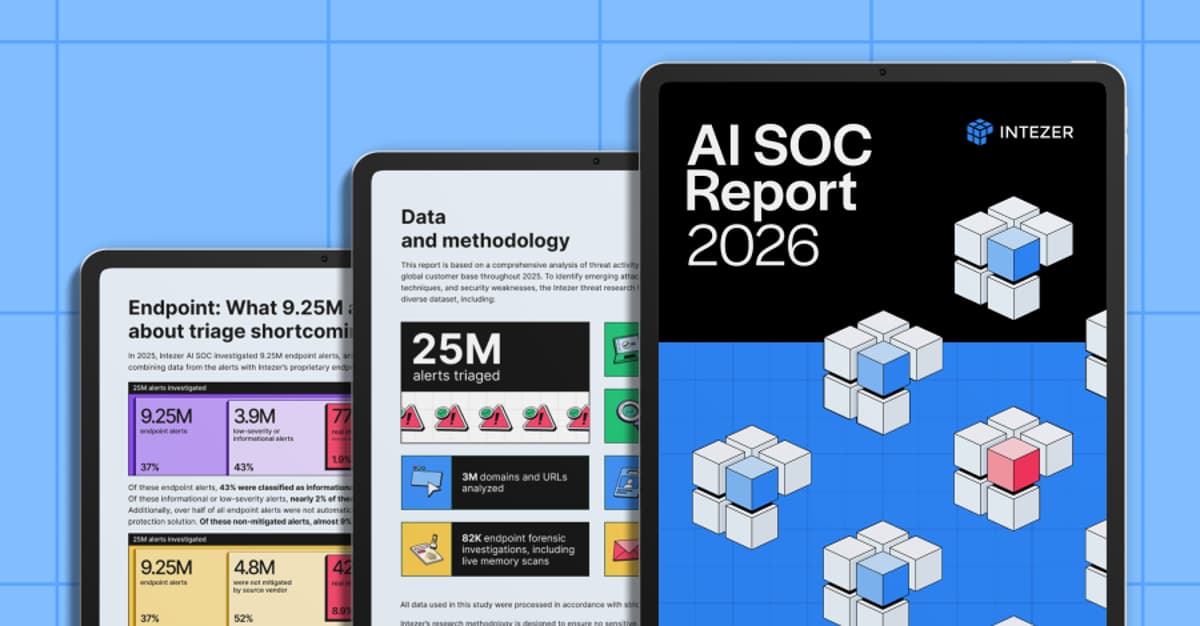
Enterprises today grapple with an avalanche of security telemetry that far outpaces human analysis capacity. The Intezer AI SOC study, which examined 25 million alerts from 10 million endpoints, highlights how severity‑based triage creates a blind spot: roughly one percent of low‑severity or informational alerts turn out to be genuine compromises, translating to about one missed breach per week for a typical organization. This gap is not a statistical anomaly; it is a structural weakness baked into traditional SOC and MDR models that prioritize volume reduction over comprehensive investigation.
The report also uncovers two critical failures in current defenses. First, more than half of the 2,600 endpoint infections identified through live memory forensics had already been labeled “mitigated” by the endpoint detection and response (EDR) platform, meaning that many tools report a clean bill of health while malicious code remains active. Second, phishing attacks have migrated to trusted cloud services—Vercel, CodePen, OneDrive, and even PayPal’s invoicing system—making signature‑based filters ineffective. In the cloud arena, S3 misconfigurations dominate, accounting for roughly 70 % of control violations and often slipping past low‑severity alerts.
Addressing these blind spots requires moving beyond manual triage to AI‑driven, evidence‑first investigation. Intezer’s AI SOC platform demonstrated the ability to process the full alert set with sub‑minute median triage times, escalating less than 2 % of alerts to human analysts while maintaining 98 % verdict accuracy. This approach not only surfaces hidden threats before they mature but also generates continuous feedback that refines detection rules, creating a self‑improving security loop. As organizations adopt such automated, forensic‑grade analysis, the industry can expect a shift from reactive alert suppression to proactive threat eradication.
One Missed Threat Per Week: What 25M Alerts Reveal About Low-Severity Risk
Comments
Want to join the conversation?
Loading comments...