The episode shows how China can wield economic leverage through quiet non‑engagement, forcing small states to weigh symbolic foreign policy against tangible economic risks.
China’s "silent treatment" of Lithuania illustrates a new diplomatic playbook where non‑engagement replaces overt sanctions. By quietly excising Lithuania from customs databases, rerouting freight corridors, and pressuring European supply chains, Beijing applied economic pain without public condemnation. This approach gives China plausible deniability while signaling that breaches of its core interests—such as the One‑China principle—will be met with calibrated, structural pressure rather than headline‑making threats.
For Lithuania, the fallout was immediate and measurable. Rail volumes through the Baltic hub collapsed, depriving the national railway and the port of Klaipėda of hundreds of millions of euros. Export‑oriented firms lost access to Chinese markets, and European manufacturers dropped Lithuanian components to avoid hidden barriers. The EU’s WTO complaint highlighted collective concern, yet the case was withdrawn once limited trade resumed, underscoring the limited leverage smaller states have against a silent, yet powerful, adversary.
Strategically, the episode reflects China’s adoption of "wu wei"—strategic restraint that acts through omission rather than confrontation. By avoiding public escalation, Beijing preserves diplomatic capital while still enforcing red lines. For policymakers in small democracies, the lesson is clear: values‑driven foreign policy must be balanced against the realities of interdependent supply chains and the asymmetric tools larger powers can deploy without fanfare. Understanding this nuanced form of statecraft is essential for navigating future geopolitical friction points.
When Lithuania challenged China over Taiwan, it got silence · not outrage · By Asia Times · Published February 2026
When Lithuania challenged China over Taiwan four years ago, it expected argument or outrage. It got silence. What began as a bold stand for democracy and human rights collided head‑on with China’s unyielding One‑China principle.
In 2021, Lithuania tested one of China’s most sensitive red lines. It allowed Taiwan to open a representative office in Vilnius under the name Taiwan rather than the customary name of Taipei. The decision challenged China’s non‑negotiable “One China Policy.”
Vilnius framed its decision in moral terms: a show of support for democracy and human rights in Taiwan. But it was not prepared for the consequences. China did not respond with threats, sanctions, or denunciations. It responded with silence and quiet “administrative” measures.
Without prior warning, China simply stopped engaging with the Lithuanian government. Beijing ignored requests for dialogue, and its embassy in Vilnius was largely vacated. The message was clear: there was nothing to discuss until Lithuania corrected its mistake.
In subsequent months, China applied quiet pressure on Vilnius through administrative channels. The name Lithuania vanished from Chinese customs systems. Trade between the two countries was largely choked off. Supply chains across Eurasia changed without public explanation, bypassing Lithuania.
By redirecting some of its trade, Lithuania partially recovered from the initial economic shock, but Prime Minister Inga Ruginienė, elected in September last year, recently offered a striking mea culpa. She told the Baltic News Service, “I think Lithuania really jumped in front of a train and lost.”
Lithuania’s challenge to China was fueled by idealism rather than realism. The asymmetry between the two countries could hardly be more pronounced. With a population of 3 million, Lithuania is one of the smallest countries in the world. China has over 50 cities with populations of more than 3 million.
The initial economic impact of China’s silent administrative measures was severe, affecting broad sectors of the Lithuanian economy.
Impact of China’s “administrative” measures on Lithuania during the first two years
(Table showing impact categories, descriptions, and estimated scale/evidence of Lithuania’s economic fallout from China’s non‑engagement, customs restrictions, supply‑chain ejection, logistics decimation, business failures, and operational paralysis.)
In subsequent months, China signaled to European companies that goods containing Lithuanian components could face obstacles in the Chinese market. Major European manufacturers quietly dropped Lithuanian suppliers. For Lithuania, an export‑oriented economy embedded in EU value chains, this amounted to systemic exclusion.
China’s response extended into infrastructure. Lithuania had positioned itself as a modest but strategically useful node in Eurasian rail networks linking China to Europe. After the diplomatic rupture, freight routes were quietly rerouted through neighboring countries.
Rail volumes through Lithuania fell sharply, depriving the national railway system and the port of Klaipėda of hundreds of millions of euros in revenue.
In January 2022, the EU launched a formal WTO dispute‑settlement case, accusing China of discriminatory and coercive measures against Lithuanian goods and EU products containing Lithuanian components.
The WTO case signaled European solidarity, and some trade flows gradually resumed. This allowed the EU to withdraw the case in late 2025. But China didn’t acknowledge wrongdoing and continued its broader strategy of diplomatic silence.
Lithuania is not the first country to experience China’s silent treatment. After the 2010 Nobel Peace Prize was awarded to dissident Liu Xiaobo in Norway, China froze high‑level contact with Oslo for six years. Norway’s trade access narrowed and dialogue ceased; normalization only followed after Norway issued a carefully worded statement acknowledging China’s “core interests.”
Australia faced years of diplomatic non‑engagement and informal trade restrictions after calling for an inquiry into Covid‑19’s origins. The dispute ended not through policy reversal but through a change in tone after Prime Minister Anthony Albanese took office in 2022. Albanese softened rhetoric, emphasized stabilization, and China responded incrementally: working‑level contacts resumed first, then trade restrictions were quietly lifted, and only later did high‑level meetings and symbolic visits follow. This sequencing mattered. In China’s “cold‑handling” diplomacy, dialogue itself is the reward, not the starting point.
China no longer needs to threaten or publicly punish states to enforce red lines. Control over networks, customs systems, supply chains, logistics routes, visa regimes and regulatory access enables quiet, persistent pressure with plausible deniability.
The diplomacy of silence is neither emotional nor improvised. It is a disciplined, calculated form of statecraft particularly suited to a multipolar environment. Influence is exercised through strategic absence, restraint and calibrated non‑engagement rather than through overt action or declaratory confrontation.
Conceptually, this approach aligns with the ancient Chinese notion of wu wei, often mistranslated as “non‑action,” but more accurately understood as highly informed restraint—acting through alignment, timing, and structural positioning instead of direct force.
Wu wei vs. Idealism
(Table comparing dimensions of Wu Wei (Strategic Restraint and Alignment) with Idealism (Normative Assertion & Values).)
In strategic terms, wu wei offers clear advantages in an interdependent world: overt confrontation invites escalation, coalition‑building and reputational costs, whereas calibrated non‑engagement allows pressure to accumulate quietly, minimizes blowback and preserves space for eventual normalization on the stronger actor’s terms.
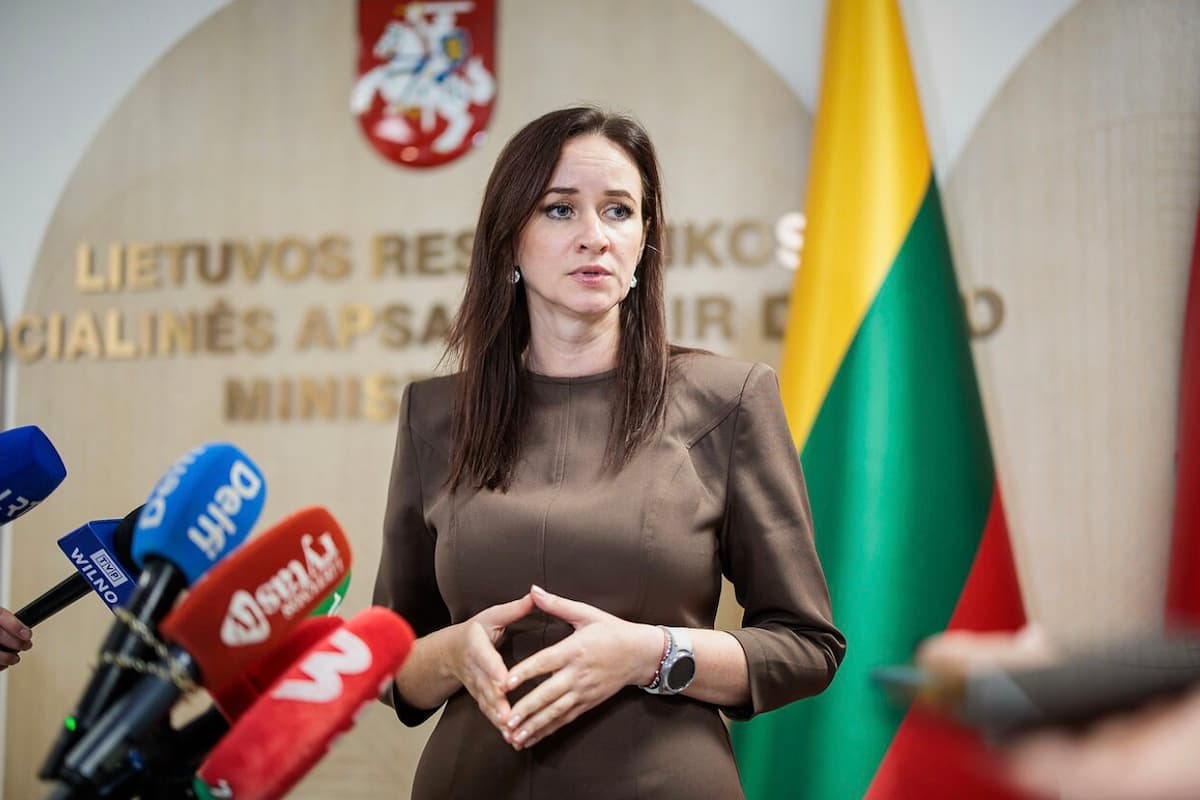
Ruginienė’s admission that Lithuania had made a costly mistake in confronting China prompted a muted response at home.
The Lithuanian media largely treated it as a pragmatic acknowledgment of realities that had long been evident but seldom stated openly. Coverage moved away from moral defiance and toward a sober assessment of economic damage, supply‑chain disruption, and diplomatic isolation.
While some commentators criticized the blunt phrasing, most interpreted it as a signal that the new government was prepared to reassess policy on strategic grounds.
Public reaction was divided but restrained. A core, strongly Atlanticist constituency continued to defend the Taiwan decision on moral grounds and viewed the statement as unnecessary. A broader segment of society appeared fatigued rather than angry.
Business owners and workers affected by lost markets increasingly accepted that the costs of the confrontation had been underestimated. Polling and commentary suggested not a rejection of democratic values, but a declining appetite for symbolic foreign policy when it carries significant economic and material costs.
Lithuania’s experience shows China can project power through strategic withdrawal of engagement. Small states may act on values, but when they collide with what China considers its domestic affairs and core interests, the outcome is shaped by leverage, not the nobility of intent.
Comments
Want to join the conversation?
Loading comments...