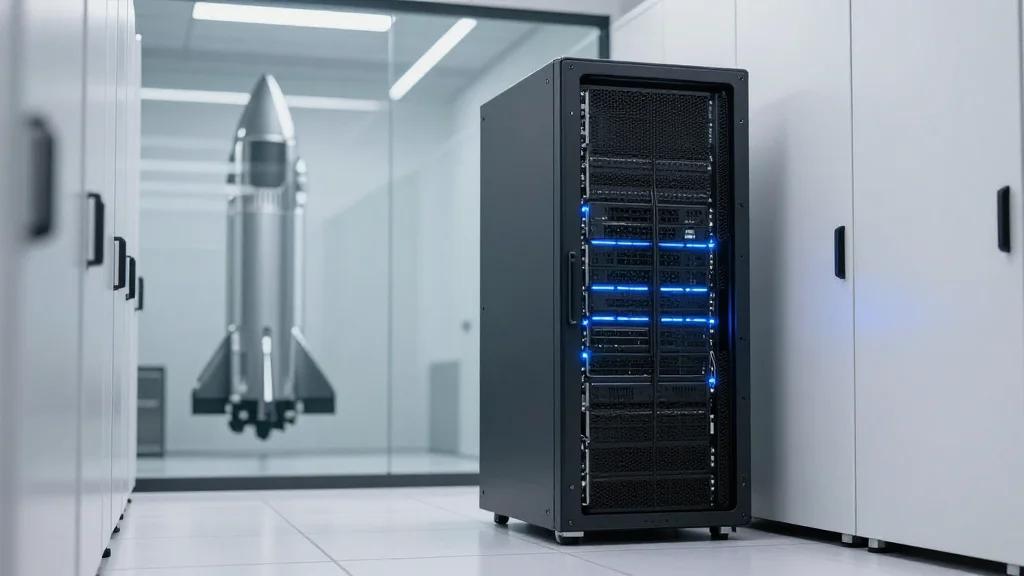
Anthropic Taps SpaceX's Colossus 1 Supercomputer to Boost Claude Capacity


Why It Matters
The Anthropic‑SpaceX partnership directly addresses a pain point for developers: limited AI prompt capacity that forces teams to fragment workloads or sacrifice model depth. By unlocking higher token‑per‑minute rates and removing peak‑hour throttles, the deal enables more ambitious AI‑driven automation in CI/CD pipelines, from code synthesis to automated testing. This shift could accelerate the adoption of AI‑first DevOps practices across enterprises that have been hesitant due to cost and latency concerns. Beyond the immediate technical benefits, the agreement illustrates a broader strategic move by AI startups to diversify compute sources. As cloud providers lock in multi‑year, multi‑billion‑dollar contracts, companies like Anthropic are hedging against supply constraints and price volatility by tapping specialized supercomputers. This multi‑vendor approach may reshape the economics of AI model training and inference, prompting DevOps teams to rethink infrastructure budgeting and vendor lock‑in strategies.
Key Takeaways
- •Anthropic gains access to SpaceX’s Colossus 1, featuring over 220,000 NVIDIA GPUs and 300 MW of compute.
- •Claude Code rate limits for Pro, Max, Team and Enterprise plans are doubled; peak‑hour throttles removed.
- •Tier 1 API token limits jump from 30,000 to 500,000 inputs per minute and 8,000 to 80,000 outputs per minute.
- •The deal follows Anthropic’s recent compute agreements with Amazon ($25 B), Google/Broadcom, and Microsoft/NVIDIA ($30 B).
- •Higher limits aim to eliminate user complaints about rapid quota exhaustion and enable richer AI‑driven DevOps workflows.
Pulse Analysis
Anthropic’s rapid expansion of compute capacity reflects a maturing market where generative AI is becoming a core component of software delivery. The move to secure SpaceX’s Colossus 1 is less about raw horsepower than about strategic flexibility. By spreading workloads across Amazon, Google, Microsoft, and now SpaceX, Anthropic can negotiate better pricing tiers, avoid single‑vendor outages, and tailor hardware to specific model families—an advantage that traditional cloud‑only players lack.
For DevOps teams, the practical upshot is a reduction in the operational friction that has hampered AI adoption. Previously, engineers had to design prompts that fit within tight token budgets, often breaking complex tasks into multiple calls and adding orchestration overhead. The new limits effectively remove that ceiling, allowing end‑to‑end pipelines that feed entire codebases or design specifications into Claude in a single request. This could accelerate the shift from AI‑assisted code suggestions to fully autonomous code generation and testing, reshaping the skill set required of DevOps engineers.
However, the proliferation of compute contracts also raises questions about sustainability and cost control. While Anthropic’s multi‑vendor strategy mitigates risk, it also introduces complexity in monitoring spend across disparate billing systems. Companies that integrate Claude at scale will need robust cost‑allocation tools and governance frameworks to prevent runaway AI‑driven compute bills. Moreover, as more AI firms tap niche supercomputers like SpaceX’s, the market may see a new class of compute providers that compete directly with the big three clouds, potentially driving down prices but also fragmenting the ecosystem. The next few quarters will reveal whether Anthropic’s compute diversification translates into measurable productivity gains for developers and a competitive edge in the crowded generative‑AI space.
Anthropic taps SpaceX's Colossus 1 supercomputer to boost Claude capacity
Comments
Want to join the conversation?
Loading comments...