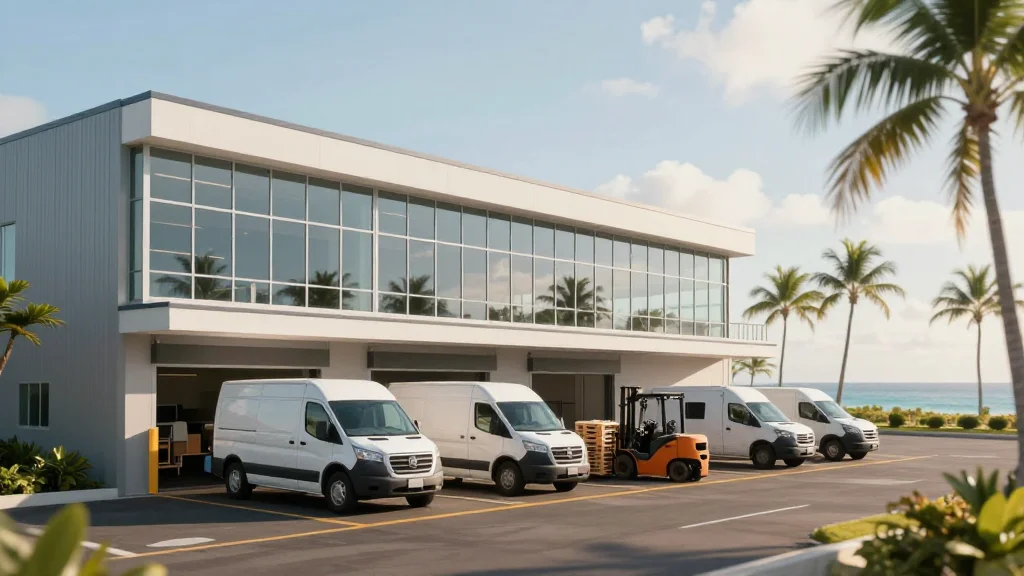
Amazon Proposes $600 M, 2.8‑Million‑Sq‑Ft Fulfillment Hub in Kapolei, Hawaii

Companies Mentioned
Why It Matters
Amazon’s Kapolei proposal illustrates how the world’s largest e‑commerce player is extending its ultra‑fast delivery promise to remote markets, potentially reshaping retail dynamics in Hawaii. By localizing inventory, Amazon can cut shipping times and costs, raising the bar for competitors and forcing a reevaluation of supply‑chain strategies across the Pacific. At the same time, the project spotlights the tension between economic development and community preservation, as small‑business owners fear being eclipsed by a corporate behemoth. The outcome will signal how aggressively Amazon will pursue similar mega‑facilities in other underserved regions. If approved, the hub could accelerate the adoption of two‑day delivery as a baseline expectation in Hawaii, prompting retailers to invest in their own fulfillment infrastructure or partner with third‑party logistics providers. Conversely, strong local resistance could embolden municipalities to impose stricter zoning or community‑impact requirements on future e‑commerce expansions, influencing the regulatory environment for large‑scale warehousing nationwide.
Key Takeaways
- •Amazon seeks $600 million approval for a 2.8 M‑sq‑ft, five‑story fulfillment center in Kapolei.
- •Project Savoy would employ 1,562 workers, feature 47 loading docks and 895 employee parking spaces.
- •The proposal requires a height‑limit amendment from 60 ft to 99 ft, prompting a neighborhood board review.
- •Board member Kioni Dudley opposes the project, citing threats to small businesses and potential homelessness.
- •If built, the hub would make Amazon the largest warehouse operator in Hawaii, enhancing two‑day delivery capability.
Pulse Analysis
Amazon’s move into Kapolei is more than a real‑estate transaction; it’s a strategic push to cement its logistics dominance in a market where geographic isolation has traditionally inflated delivery times and costs. By investing $600 million to bring inventory closer to consumers, Amazon is effectively internalizing a portion of the last‑mile network that many third‑party carriers currently service. This mirrors the company’s broader ‘hub‑and‑spoke’ model seen in mainland U.S. markets, where mega‑fulfillment centers feed smaller satellite sites to meet ever‑shortening delivery windows.
Historically, Hawaii’s e‑commerce landscape has been fragmented, with retailers relying on inter‑island freight and limited air cargo capacity. Amazon’s existing Air hub and the Kalihi Kai center already reduced some friction, but Project Savoy promises to eliminate the need for cross‑island transshipment for a large swath of everyday goods. Competitors will need to decide whether to double‑down on niche product offerings, partner with local couriers, or launch their own mega‑warehouses—a costly gamble given the high land and construction expenses in the islands.
The community backlash underscores a growing awareness of the social costs of hyper‑scale logistics. While the promise of faster, cheaper shipping is attractive, the potential displacement of small retailers could erode local economies and cultural fabric. Municipalities may soon be forced to balance economic incentives with protective zoning, perhaps instituting impact fees or requiring community benefit agreements. The Kapolei decision will therefore serve as a bellwether for how U.S. cities negotiate the trade‑offs between attracting global e‑commerce giants and preserving local business ecosystems.
Amazon proposes $600 M, 2.8‑Million‑Sq‑Ft fulfillment hub in Kapolei, Hawaii
Comments
Want to join the conversation?
Loading comments...