Would You Let Robots Spend Your Money? Google Is Betting on It
Why It Matters
The Universal Cart could reshape e‑commerce by centralizing purchase decisions within Google’s ecosystem, forcing retailers to compete for AI visibility and altering traditional checkout dynamics. Success hinges on consumer trust in AI agents handling money, a hurdle that will define the next wave of digital commerce.
Key Takeaways
- •Universal Cart aggregates items across retailers in real time
- •AI agent can auto‑purchase based on price limits and preferences
- •Google takes no commission, positioning itself as a matchmaker
- •UCP standard backed by Walmart, Shopify, Target, Amazon, Meta
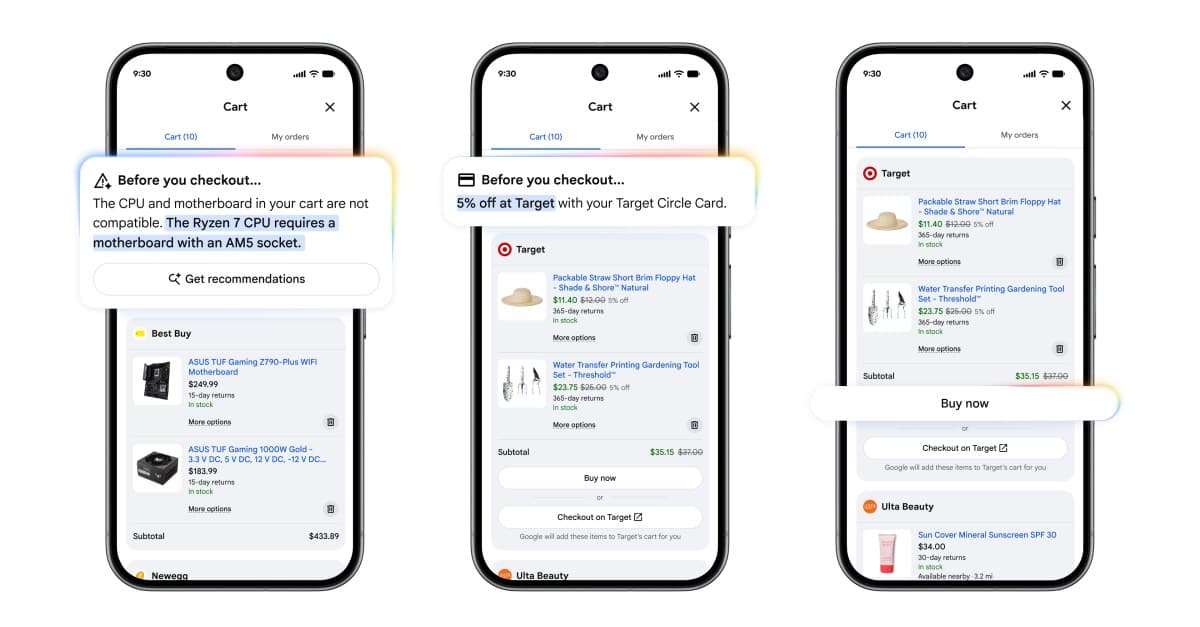
- •Price‑drop alerts and incompatibility warnings aim to boost shopper confidence
Pulse Analysis
Google’s Universal Cart marks a decisive push to embed AI directly into the shopping journey, moving beyond search snippets to a full‑fledged purchase conduit. By leveraging Gemini’s conversational capabilities, the cart can pull products from disparate sites, monitor price fluctuations, and even flag technical mismatches—features that mimic a human personal shopper. This integration is reinforced by the Universal Commerce Protocol, an open‑source framework co‑created with industry heavyweights like Walmart and Shopify, which standardizes data exchange from product discovery to post‑purchase support. The protocol’s adoption by competitors such as Amazon and Meta signals a broader industry shift toward AI‑mediated commerce, where the platform that best orchestrates the end‑to‑end experience could capture a disproportionate share of consumer spend.
For retailers, the Universal Cart presents both an opportunity and a dilemma. On one hand, participation grants access to Google’s massive user base and the sophisticated recommendation engine that can drive incremental sales. On the other, it raises concerns about losing direct traffic to brand sites, echoing the “Doordash problem” where platforms become the primary sales channel. Google’s decision to forgo transaction fees and act merely as a matchmaker attempts to allay these fears, but the long‑term revenue model—likely centered on advertising and data insights—remains opaque. Brands will need to optimize their product feeds and AI‑friendly content to stay visible in Gemini’s results, a new frontier for SEO and digital marketing teams.
Consumer adoption will ultimately hinge on trust in autonomous purchasing. While the cart can enforce budget caps and highlight savings, shoppers must relinquish control over payment authorization and post‑purchase dispute resolution. Google’s Agent Payments Protocol provides a digital audit trail, yet real‑world scenarios—such as tax and shipping variations—could erode confidence. If Google can demonstrate reliable, transparent transactions, the Universal Cart could accelerate the migration of everyday buying from fragmented web experiences to a single, AI‑curated hub, reshaping the economics of e‑commerce for the next decade.
Would you let robots spend your money? Google is betting on it
Comments
Want to join the conversation?
Loading comments...