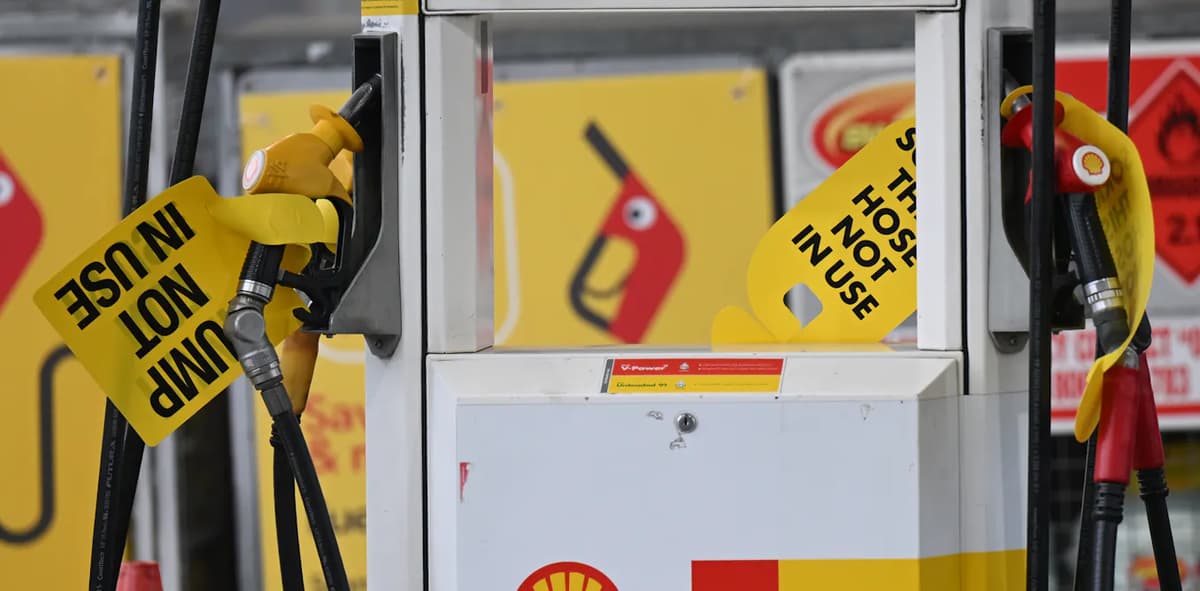
A New Ad Campaign Is Pushing Australians to Use Less Petrol. Has This Happened Before?
Why It Matters
The campaign signals that Australia is preparing for possible fuel shortages, which could trigger rationing and disrupt transport, logistics, and broader economic activity if global oil supplies tighten further.
Key Takeaways
- •Campaign urges drivers to cut fuel use, offering efficiency tips
- •National Fuel Security Plan includes rationing as final step
- •Australia previously rationed petrol in WWII and 1979 oil crisis
- •Asian nations have introduced odd‑even rules and work‑from‑home mandates
- •Government can invoke Liquid Fuel Emergency Act to control supplies
Pulse Analysis
Australia’s new "every little bit helps" advertising push reflects growing anxiety over fuel security as the Middle East conflict threatens the Strait of Hormuz, a chokepoint for roughly 84% of crude headed to Asia. With more than a quarter of the nation’s refined imports arriving via Singapore, Prime Minister Albanese’s recent negotiations have bought a temporary buffer, but the National Fuel Security Plan’s four‑stage framework keeps rationing on the table. By encouraging smoother driving, lighter loads and reduced car use, the government hopes to shave demand before resorting to stricter controls.
Historically, Australia has not shied away from direct fuel management. During World War II, the Menzies government introduced voluntary cuts before imposing ration coupons that limited civilian petrol purchases, a measure that lingered post‑war due to dollar shortages. A similar approach resurfaced after the 1979 oil price spike, when an odd‑even licence plate scheme curbed consumption. Today, the Liquid Fuel Emergency Act gives ministers authority to direct refineries, importers and distributors, and to impose retail or bulk rationing if critical infrastructure is jeopardised.
Across the region, governments are already acting. Myanmar’s odd‑even rule, Thailand’s remote‑work encouragement, Vietnam’s car‑pool incentives, and Indonesia’s capped daily purchases illustrate a coordinated push to blunt demand spikes. For Australian businesses, especially logistics firms and mining operators, these trends underscore the need for contingency planning, fuel‑efficiency investments and diversified energy sourcing. While a ceasefire offers a short reprieve, the campaign serves as a pre‑emptive signal that fuel scarcity could soon become a tangible operational risk.
A new ad campaign is pushing Australians to use less petrol. Has this happened before?
Comments
Want to join the conversation?
Loading comments...