Energy News and Headlines
  • All Technology
  • AI
  • Autonomy
  • B2B Growth
  • Big Data
  • BioTech
  • ClimateTech
  • Consumer Tech
  • Crypto
  • Cybersecurity
  • DevOps
  • Digital Marketing
  • Ecommerce
  • EdTech
  • Enterprise
  • FinTech
  • GovTech
  • Hardware
  • HealthTech
  • HRTech
  • LegalTech
  • Nanotech
  • PropTech
  • Quantum
  • Robotics
  • SaaS
  • SpaceTech
AllNewsDealsSocialBlogsVideosPodcastsDigests

Energy Pulse

EMAIL DIGESTS

Daily

Every morning

Weekly

Sunday recap

NewsDealsSocialBlogsVideosPodcasts
EnergyNewsAustralia: Victoria Government Accelerates 700MW of Battery Storage via Development Facilitation Program
Australia: Victoria Government Accelerates 700MW of Battery Storage via Development Facilitation Program
Energy

Australia: Victoria Government Accelerates 700MW of Battery Storage via Development Facilitation Program

•February 10, 2026
0
Energy Storage News
Energy Storage News•Feb 10, 2026

Why It Matters

The accelerated approvals boost Victoria’s renewable capacity, delivering cheaper, more reliable power and significant job growth. The initiative also shows how policy‑driven fast‑tracking can attract billions in clean‑energy investment.

Key Takeaways

  • •700 MW battery capacity approved in Victoria.
  • •Projects create ~250 construction jobs total.
  • •DFP cuts approval time, unlocking AU$9 bn investment.
  • •Storage will support NEM grid stability during peaks.
  • •Victoria retains lowest wholesale electricity prices in Australia.

Pulse Analysis

Battery storage is becoming a cornerstone of Australia’s transition to a low‑carbon grid, and Victoria is positioning itself at the forefront. By linking the new 300 MW Heywood and 400 MW Glenrowan systems to the National Electricity Market, the state adds over 2.7 GWh of dispatchable capacity that can absorb excess renewable generation and release it during peak demand. This not only smooths intermittency but also reduces reliance on fossil‑fuel peaker plants, helping to keep wholesale electricity prices among the lowest in the country.

The Development Facilitation Program (DFP) is the policy engine behind this rapid rollout. Since its expansion to include renewable projects, the DFP has streamlined permitting, cutting approval timelines that once delayed up to 20 % of proposals by two years. The resulting AU$9 billion investment across 25 projects illustrates how regulatory certainty can mobilise private capital at scale. In addition to the direct construction workforce—estimated at 250 jobs—the projects generate long‑term operational roles and ancillary services that support grid reliability.

Looking ahead, Victoria’s fast‑track model offers a template for other jurisdictions seeking to accelerate clean‑energy deployment. The combined storage capacity will enhance grid resilience, enable higher penetration of wind and solar, and provide a foundation for emerging technologies such as vehicle‑to‑grid and demand‑response platforms. As the state continues to attract large‑scale renewable projects, its approach could shape national policy, reinforcing Australia’s broader ambition to meet its 2030 emissions targets while delivering affordable power to consumers.

Australia: Victoria government accelerates 700MW of battery storage via Development Facilitation Program

By George Heynes · February 10 2026

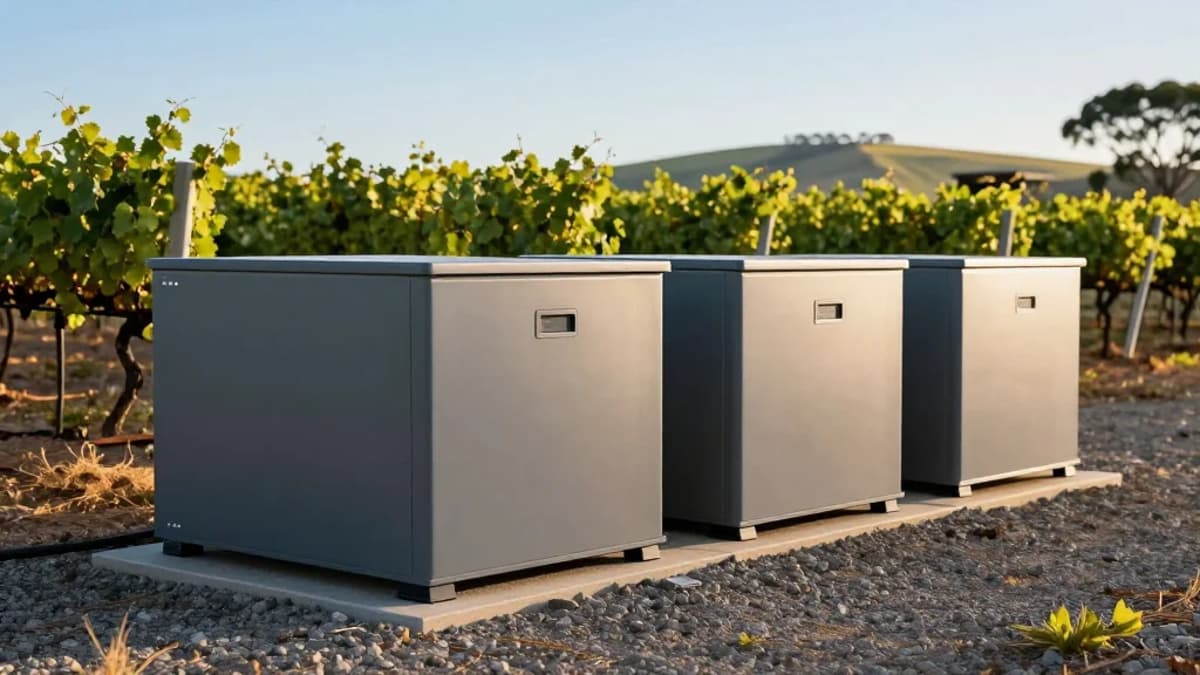
Akaysha Energy’s 1,600 MWh BESS in Glenrowan was one of the two projects fast‑tracked via the Development Facilitation Program. (Image: Akaysha Energy)

The Victoria government in Australia has approved two large‑scale battery energy storage system (BESS) projects totalling 700 MW through its Development Facilitation Program (DFP).

  • Atmos Renewables received approval for a 300 MW/1,140 MWh battery storage system in Heywood, strategically positioned near AusNet’s Heywood Terminal Station. The project will create up to 150 construction jobs and provide ongoing operational roles once commissioned.

  • Akaysha Energy secured approval for a 400 MW/1,600 MWh battery storage system in Glenrowan, which will connect to AusNet’s Glenrowan Terminal Station. The Akaysha project, developed in collaboration with BZ Renewables, is expected to generate approximately 100 construction jobs and will provide grid‑stability services by storing energy from nearby electricity generation projects and the grid and discharging it during times of peak demand.

Both projects underwent consultation processes with local communities, councils, the Country Fire Authority, AusNet, and the Department of Energy, Environment and Climate Action. In addition, both projects will be connected to the National Electricity Market (NEM), which spans Australia’s eastern and southern states and territories.

The approvals represent the latest developments under Victoria’s DFP initiative, which was expanded to include renewable energy projects less than two years ago. Prior to its inclusion, projects had to pass through the Victorian Civil and Administrative Tribunal, which delayed around 20 % of them by about two years.

Since the program’s expansion to cover renewable‑energy development, the Victoria government has unlocked more than AU $9 billion (US $6.38 billion) in investment across 25 projects. Over the past few months, the government has selected several BESS sites for inclusion in the scheme. For instance, last year Energy‑Storage.news reported that developer ACEnergy saw its 350 MW/770 MWh Little River BESS included within the scheme. Prior to this, Elgin Energy’s 500 MWh Barwon Solar Farm, a solar‑plus‑storage site, had been selected for the initiative. The project is also located in Victoria’s Little River region.

“The Development Facilitation Program is all about making good decisions, faster,” said Victoria’s minister for planning Sonya Kilkenny.

“This fast‑tracked pathway has unlocked more than AU $9 billion worth of investment into renewable energy projects, helping provide cheaper and cleaner energy to hundreds of thousands of Victorian households.”

Minister for Energy and Resources Lily D’Ambrosio emphasized the broader energy‑system benefits:

“More renewable energy projects mean more reliable and cheaper power for families, more jobs for Victorians and a cleaner energy system for the future.”

Victoria’s record investments in renewable energy have enabled the state to maintain the lowest wholesale power prices in Australia, the state government claims.

Read Original Article
0

Comments

Want to join the conversation?

Loading comments...