Battery-Electric Vehicles on The Rise: VW Reaches Milestone of Five Million Electric Drivetrains
Companies Mentioned
Why It Matters
The achievement signals VW’s leadership in e‑mobility, accelerating the shift away from internal‑combustion engines and reshaping supplier dynamics across the automotive sector.
Key Takeaways
- •VW produced five million BEV drivetrains globally.
- •42% German BEV market share in 2025.
- •APP550 unit reaches one million, 20% efficiency boost.
- •In‑house pulse inverter cuts costs, boosts supplier independence.
- •Production spread across Győr, Kassel, Tianjin, Zuffenhausen.
Pulse Analysis
Germany’s automotive landscape is undergoing a rapid transformation, with fully electric registrations now accounting for one in five new vehicles in 2025. Volkswagen’s five‑million‑drivetrain milestone not only reflects the scale of this transition but also underscores the group’s strategic positioning as the market’s clear leader. By leveraging a tightly integrated global network, VW can synchronize development, production, and logistics, ensuring rapid rollout of new technologies while maintaining high quality across its brands.
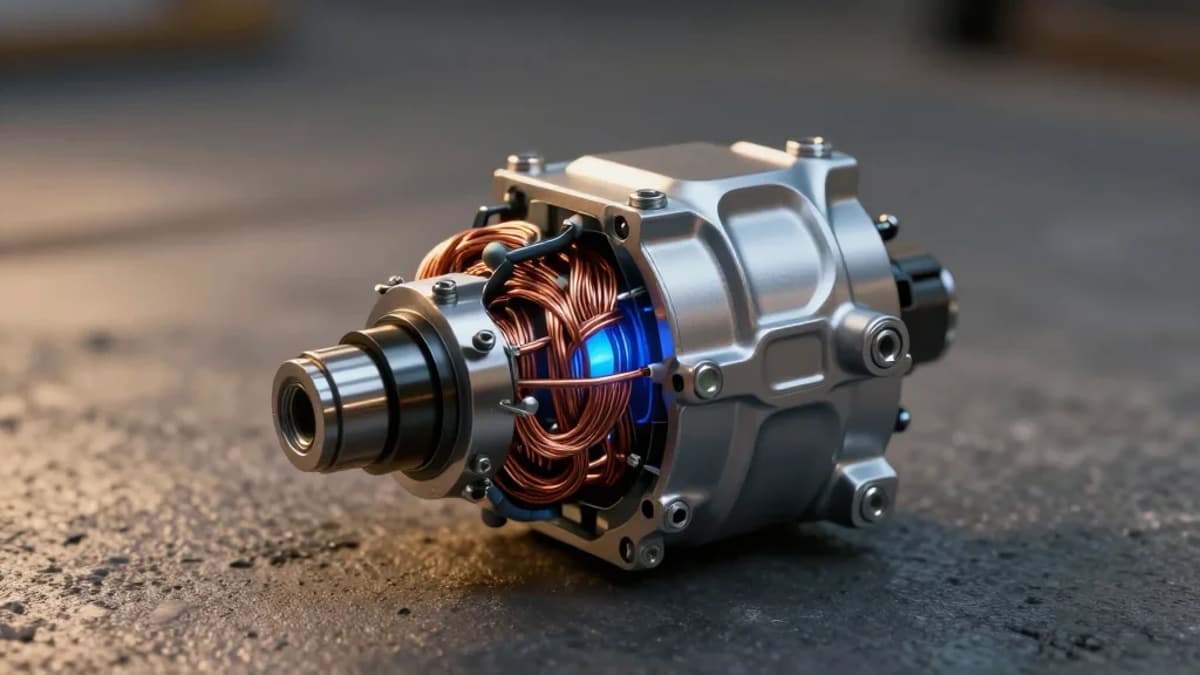
At the heart of VW’s technical edge is the APP550 drive unit, now in its millionth iteration. The module boosts efficiency by roughly 20 percent and delivers up to 240 kW and 560 Nm, thanks to a compact design that retains the dimensions of its predecessor. Its advanced water‑oil cooling eliminates the need for an extra pump, simplifying thermal management and reducing weight. These performance gains translate into longer range and lower operating costs for models such as the ID. family, Škoda Enyaq and CUPRA Tavascan, reinforcing VW’s appeal in the volume EV segment.
Beyond hardware, Volkswagen’s development of an in‑house pulse inverter marks a decisive step toward supply‑chain independence. By producing this critical power‑electronics component internally, the group shortens development cycles, cuts component costs, and mitigates exposure to external semiconductor shortages. Coupled with silicon‑carbide technology in the APP290 motor, the move positions VW to offer more efficient, lower‑cost electric cars while safeguarding strategic control. As competitors scramble to secure similar capabilities, VW’s integrated approach is likely to shape industry standards and accelerate the broader adoption of electric mobility.
Battery-electric Vehicles on The Rise: VW Reaches Milestone of Five Million Electric Drivetrains


Comments
Want to join the conversation?
Loading comments...