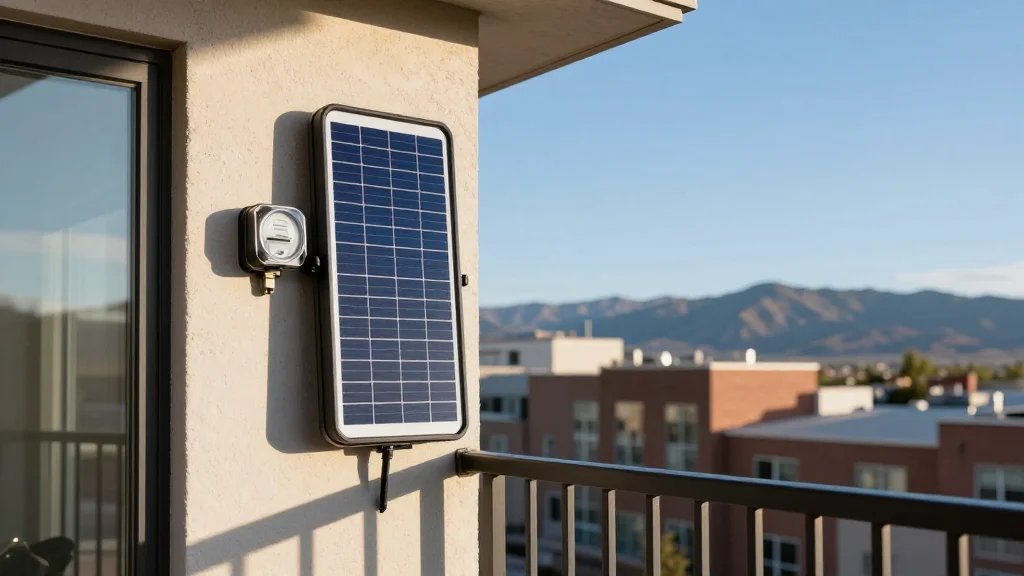
Colorado House Passes Legislation to Legalize Plug-In Solar for Renters
Why It Matters
By removing legal and technical barriers, the bill expands clean‑energy access to renters, potentially reducing utility costs for low‑income families and accelerating Colorado’s decarbonization goals.
Key Takeaways
- •Colorado House approves plug‑in solar for renters
- •Devices classified as personal property, bypassing HOA bans
- •UL 3700 safety standard required for grid compatibility
- •Meter collars enable plug‑and‑play without panel upgrades
- •Law could lower utility bills for low‑income renters
Pulse Analysis
Plug‑in solar represents a shift from permanent rooftop installations to portable, plug‑and‑play arrays that connect directly to a standard outlet. HB26‑1007 creates a clear regulatory pathway by defining these systems as personal property and imposing the UL 3700 safety standard, a requirement already familiar to European markets where millions of households have adopted similar technology. This approach not only mitigates concerns about grid stability and islanding but also aligns Colorado with emerging global trends toward modular, distributed energy resources.
For renters and multifamily occupants, the bill tackles two longstanding obstacles: ownership rights and installation costs. By allowing meter collars—devices that sit between the utility meter and the socket—to provide instant interconnection, the legislation eliminates the need for expensive electrical panel upgrades and professional labor, which traditionally account for a large share of solar’s soft costs. Coupled with the Clean Energy for All Families Act, which earmarks $100 million for low‑income solar and weatherization, the policy package aims to reduce the energy burden on households spending over 10% of income on utilities.
Colorado’s move positions the state as a leader in the U.S. plug‑in solar market, potentially spurring manufacturer investment and creating new revenue streams for utilities through net‑metering arrangements. As adoption scales, grid operators will need to integrate these distributed resources while maintaining reliability, prompting further innovation in smart‑grid technologies. If the Senate passes the bill, Colorado could see a rapid expansion of residential clean‑energy generation, setting a template for other states seeking cost‑effective pathways to meet renewable targets.
Colorado House passes legislation to legalize plug-in solar for renters
Comments
Want to join the conversation?
Loading comments...