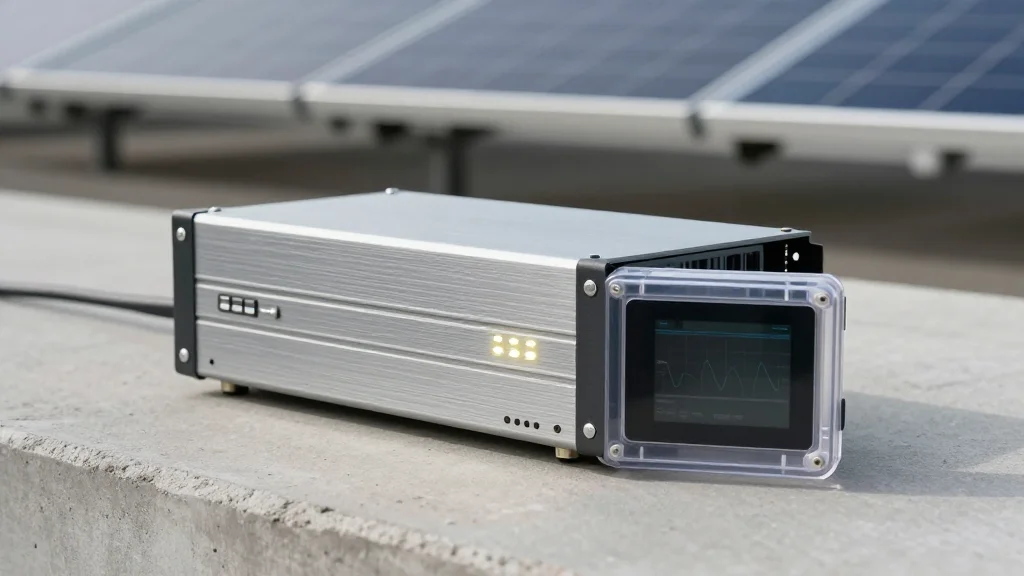
Inverter-Based Resource Performance History Leads to US Regulatory Change
Why It Matters
The standards aim to prevent large‑scale generation losses that can destabilize grid frequency, safeguarding reliability as renewable penetration grows. Non‑compliance could trigger regulatory penalties and heightened outage risk for asset owners.
Key Takeaways
- •NERC introduced PRC-028, 029, 030 standards for IBRs.
- •Ride‑through performance failures caused 2,555 MW loss in 2022.
- •Compliance deadlines: Oct 1 2026 (BES) and Jan 1 2027 (non‑BES).
- •Mandatory high‑resolution data recording and UTC synchronization required.
- •IBRs must meet IEEE‑2800 voltage/frequency ride‑through curves.
Pulse Analysis
The rapid integration of inverter‑based resources—solar, wind and storage—has reshaped the North American bulk power system, but it also exposed gaps in how these assets respond to grid disturbances. The 2022 Odessa incident, where a routine fault triggered a 2,555 MW loss, highlighted the vulnerability of IBRs lacking robust ride‑through capabilities. As utilities lean more heavily on renewables to meet decarbonization goals, regulators are compelled to ensure that these resources can stay online when the grid experiences voltage dips or frequency swings.
NERC’s three new standards address the shortcomings revealed by recent events. PRC-028-1 requires granular fault and disturbance recordings with sub‑millisecond UTC alignment, giving operators the data needed to diagnose and model IBR behavior accurately. PRC-029-1 tightens performance expectations by adopting IEEE‑2800 curves, demanding that inverters sustain operation through defined voltage and frequency excursions, including rapid phase‑angle jumps and a 5 Hz/second rate of change. PRC-030-1 completes the framework by obligating facilities to identify significant output deviations, conduct root‑cause analyses, and implement corrective action plans. Together, these rules create a comprehensive compliance pathway that balances data transparency with operational resilience.
For owners and operators, the standards translate into concrete investment and engineering priorities. High‑resolution data loggers, synchronized timing systems, and updated inverter control logic must be deployed before the October 1 2026 deadline for bulk‑power system assets, with a later January 1 2027 deadline for smaller facilities. Failure to meet these requirements could result in fines, forced deratings, or increased insurance costs. More importantly, adhering to the new criteria positions IBR portfolios to contribute reliably to grid stability, supporting the broader transition to a low‑carbon electricity mix while protecting revenue streams.
Inverter-based resource performance history leads to US regulatory change
Comments
Want to join the conversation?
Loading comments...