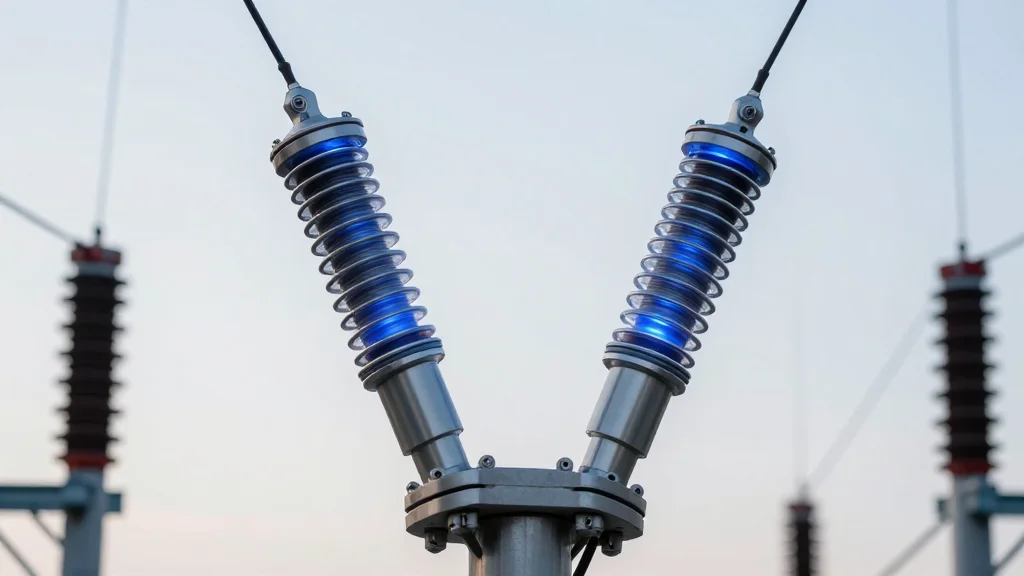
New ‘Universal Shock Absorber’ Is Stabilizing Force for Tomorrow’s Grid
Why It Matters
By providing dynamic damping without new hardware, the UD‑STATCOM reduces upgrade costs and mitigates outage risk, accelerating renewable integration and enhancing utility reliability.
Key Takeaways
- •UD‑STATCOM adds damping without increasing hardware ratings
- •Simulation shows rapid oscillation suppression for 200 MW wind farm
- •Technology returns absorbed energy to grid at fundamental frequency
- •Enables cheaper, scalable grid upgrades versus full infrastructure replacement
Pulse Analysis
Grid operators face mounting stability challenges as solar and wind installations inject variable power into aging transmission networks. Traditional approaches rely on extensive hardware upgrades or manual tuning, which are costly and often lag behind the speed of renewable deployment. A software‑driven damping solution that can react in real time to frequency deviations offers a strategic advantage, especially as grid operators worldwide grapple with tighter reliability standards and climate‑driven policy mandates.
The Universal Damping STATCOM (UD‑STATCOM) builds on the proven STATCOM platform by adding a control layer that detects non‑fundamental frequency oscillations and injects a counter‑acting current. Unlike a simple shunt resistor, the absorbed energy is not wasted; it is fed back into the system at the 50 Hz or 60 Hz base frequency, preserving overall efficiency. Ramboll’s electromagnetic‑transient simulations demonstrated that the device could both pre‑emptively stabilize a 200‑MW wind farm and react within half a second after a disturbance, highlighting its potential to safeguard long, series‑compensated transmission corridors.
From a market perspective, the UD‑STATCOM could reshape investment priorities. Utilities can achieve the reliability gains of a major infrastructure overhaul through a modest software retrofit, freeing capital for other modernization projects such as energy‑storage integration or digital grid management. OEMs that adopt the technology early may capture a competitive edge in regions with aggressive renewable targets, while investors see a lower‑risk pathway to scaling grid resilience solutions. As regulatory bodies emphasize grid stability metrics, the UD‑STATCOM positions itself as a cost‑effective, future‑proof tool for the evolving power landscape.
New ‘Universal Shock Absorber’ Is Stabilizing Force for Tomorrow’s Grid
Comments
Want to join the conversation?
Loading comments...