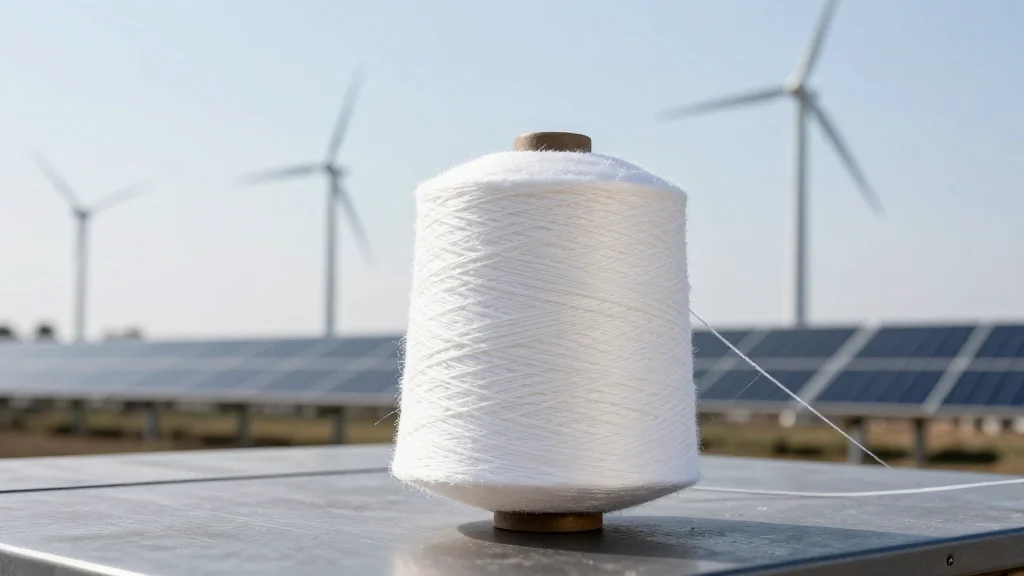
Renewable Power Curbs Hit Gujarat’s Textile Spinning Mills
Why It Matters
Higher energy costs squeeze margins of mills that account for roughly a quarter of India’s yarn output, potentially slowing growth and deterring future renewable projects in a key manufacturing hub.
Key Takeaways
- •Gujarat curtails 50‑70% renewable output during peak hours.
- •Mills switch to pricier grid power, raising operational costs.
- •Solar generation cost $0.022‑$0.032 per unit versus grid $0.065‑$0.097.
- •Spinning sector supplies ~25% of India's yarn, concentrated in three cities.
- •Curtailments threaten renewable investments despite state’s 64% clean‑energy mix.
Pulse Analysis
The state of Gujarat has positioned itself as India’s renewable‑energy powerhouse, with clean sources supplying roughly 64% of its electricity and contributing more than a quarter of the nation’s wind capacity. Yet, over the last 20 months grid operators have imposed curtailments that shave 50‑70% off wind, solar and hybrid output during peak demand windows. For the region’s dense cluster of textile spinning mills—over 100 facilities in Surat, Ahmedabad and Rajkot—this translates into an abrupt loss of low‑cost power and a sudden reliance on conventional grid electricity.
The cost differential is stark. While commercial grid rates hover between $0.065 and $0.097 per kilowatt‑hour, solar generation in Gujarat can be produced at an effective $0.022‑$0.032 per unit over its lifespan, offering potential savings of 70‑80% on energy bills. When mills are forced to switch to the pricier grid, operating margins shrink, eroding the sector’s contribution of nearly 25% to India’s yarn production. Investors watching the Spinners’ Association of Gujarat’s warnings may reassess the risk profile of new renewable projects in the state.
Policy makers now face a dilemma: maintain grid stability or honor the renewable‑investment pipeline that underpins Gujarat’s clean‑energy credentials. Options such as dynamic pricing, enhanced storage, or demand‑response mechanisms could alleviate curtailments without compromising supply security. For the textile industry, preserving access to affordable solar and wind power is essential to stay competitive in global markets where energy intensity drives cost structures. A clear regulatory framework that aligns grid management with renewable expansion will be critical to sustain both manufacturing growth and India’s broader climate ambitions.
Renewable Power Curbs Hit Gujarat’s Textile Spinning Mills
Comments
Want to join the conversation?
Loading comments...