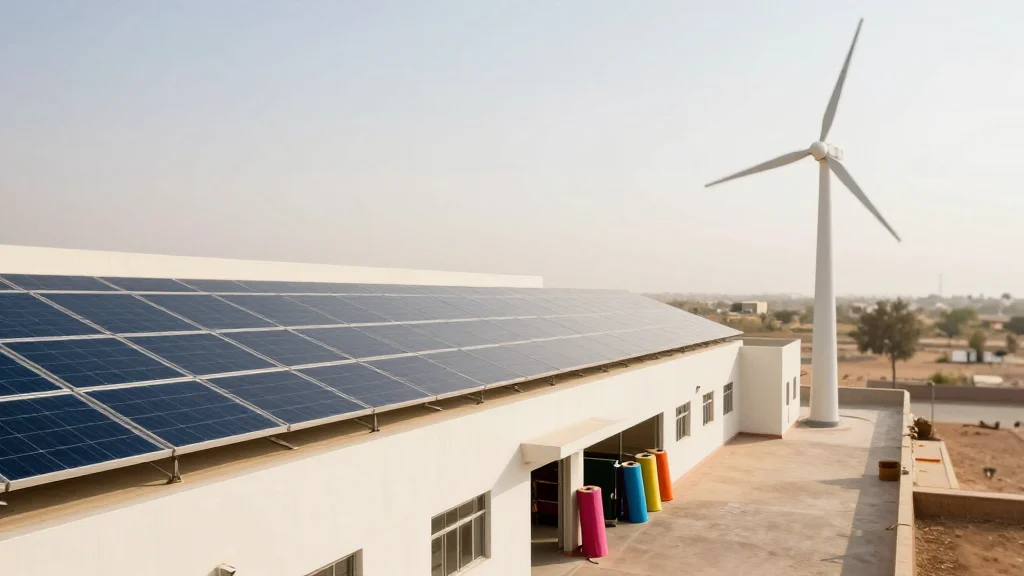
Sangam India Secures Hybrid Renewable Energy Supply for Rajasthan Manufacturing Units
Why It Matters
By securing on‑site renewable generation, Sangam can reduce its power bill, which accounts for up to 20% of production costs, and advance its ESG commitments, setting a benchmark for Indian textile firms.
Key Takeaways
- •30 MWp solar and 20 MW wind capacity installed.
- •2 MWh battery storage enables round‑the‑clock renewable supply.
- •Intra‑state captive model gives Sangam energy cost control.
- •Textile sector energy costs represent up to 20% of production.
- •Partnership signals broader shift to renewables in Indian manufacturing.
Pulse Analysis
India’s renewable push is gaining momentum in the industrial arena, and the CleanMax‑Sangam partnership exemplifies the shift toward hybrid power solutions. Combining 30 MWp of solar with 20 MW of wind and a 2 MWh battery storage system, the project delivers reliable, round‑the‑clock electricity without relying on the grid’s volatility. Hybrid configurations are attractive because they balance solar’s daytime output with wind’s evening generation, while storage smooths intermittency. For manufacturers, this translates into predictable energy supply, lower carbon intensity, and alignment with national clean‑energy targets.
The textile sector is notoriously energy‑intensive, with power expenses often consuming 15‑20% of total production costs. By adopting a group captive model, Sangam India gains direct control over procurement, sidestepping volatile wholesale tariffs and reducing operational risk. The on‑site renewable mix also supports the company’s ESG roadmap, offering measurable reductions in Scope 2 emissions that resonate with global buyers demanding sustainable sourcing. Moreover, the battery system provides backup during peak demand, ensuring uninterrupted loom operation and protecting product quality.
Beyond Sangam, the deal signals a broader transformation across Indian manufacturing. As utilities grapple with capacity constraints, more firms are likely to emulate the captive renewable model to secure affordable power and meet tightening carbon regulations. Policy incentives, such as accelerated depreciation for solar assets and subsidies for battery storage, further sweeten the economics. Analysts expect that hybrid projects of this scale could become the norm, driving a cascade of investments that reshape the country’s industrial energy landscape and bolster its competitiveness in global markets.
Sangam India Secures Hybrid Renewable Energy Supply for Rajasthan Manufacturing Units
Comments
Want to join the conversation?
Loading comments...