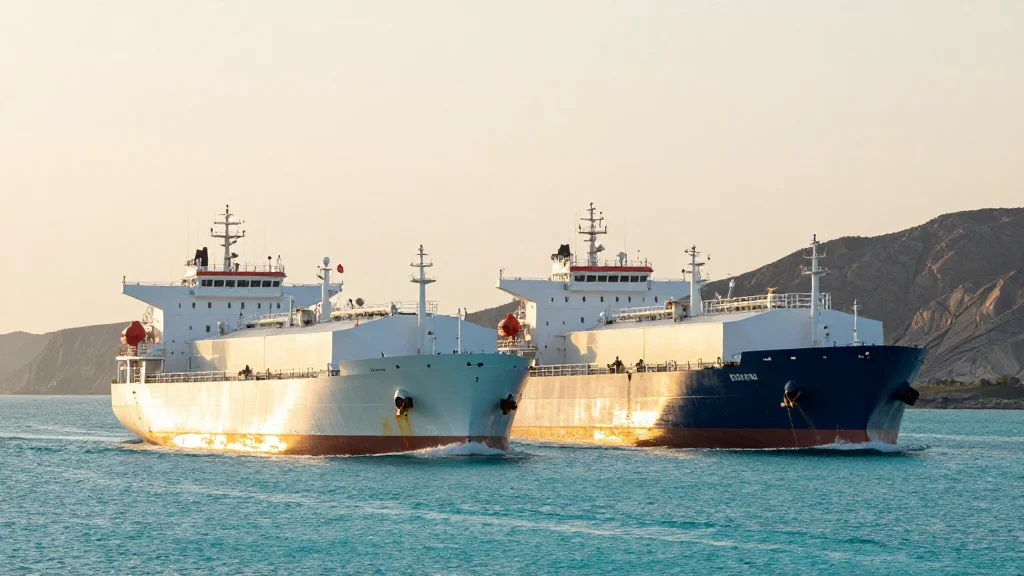
Tankers with Qatar LNG Attempt to Exit the Strait of Hormuz
Why It Matters
Re‑opening the strait would restore a critical chokepoint for LNG flows, easing price pressure and signaling a shift in regional risk calculations. It also offers Qatar a lifeline to maintain market share amid plant outages.
Key Takeaways
- •Two Qatar LNG tankers headed toward Strait of Hormuz.
- •First loaded LNG transit since Feb. 28 strikes.
- •Closure cut roughly 20% of global LNG supply.
- •Ras Laffan plant offline for over a month.
- •Over 48 empty Qatari tankers remain idling worldwide.
Pulse Analysis
The Strait of Hormuz, a narrow conduit linking the Persian Gulf to the open ocean, suddenly became a geopolitical flashpoint after U.S. and Israeli forces struck Iranian targets in February. That action effectively sealed the passage, cutting off roughly 20% of the world’s liquefied natural gas supply—a volume normally sourced from Qatar, the United Arab Emirates and other Gulf exporters. The blockage sent ripples through spot markets, pushing LNG prices to multi‑year highs and prompting import‑dependent nations to reassess their energy security strategies.
For Qatar, the strait’s closure coincided with a severe blow to its flagship Ras Laffan facility, which has been offline for more than a month due to Iranian missile attacks. While the plant undergoes repairs, dozens of tankers loaded with LNG sit idle in the Gulf, awaiting clearance. The recent maneuver by Al Daayen and Rasheeda, signaling a possible exit toward China, could unlock a backlog of cargoes, allowing Qatar to sustain its roughly one‑fifth share of global LNG exports. Even a single successful transit would demonstrate that Iran is willing to grant limited passage, offering a modest but valuable relief to a market strained by both supply shortages and geopolitical risk.
Looking ahead, the strait’s status will shape the broader LNG landscape for months to come. Analysts expect that any sustained reopening will temper price spikes and encourage re‑balancing of contracts, while continued closure could accelerate the shift toward alternative supply routes, such as the Cape of Good Hope or increased reliance on floating storage and regasification units. Stakeholders—from shipowners to energy traders—are closely watching diplomatic overtures, as a negotiated corridor could become a cornerstone of post‑conflict energy stability in the region.
Tankers with Qatar LNG attempt to exit the Strait of Hormuz
Comments
Want to join the conversation?
Loading comments...