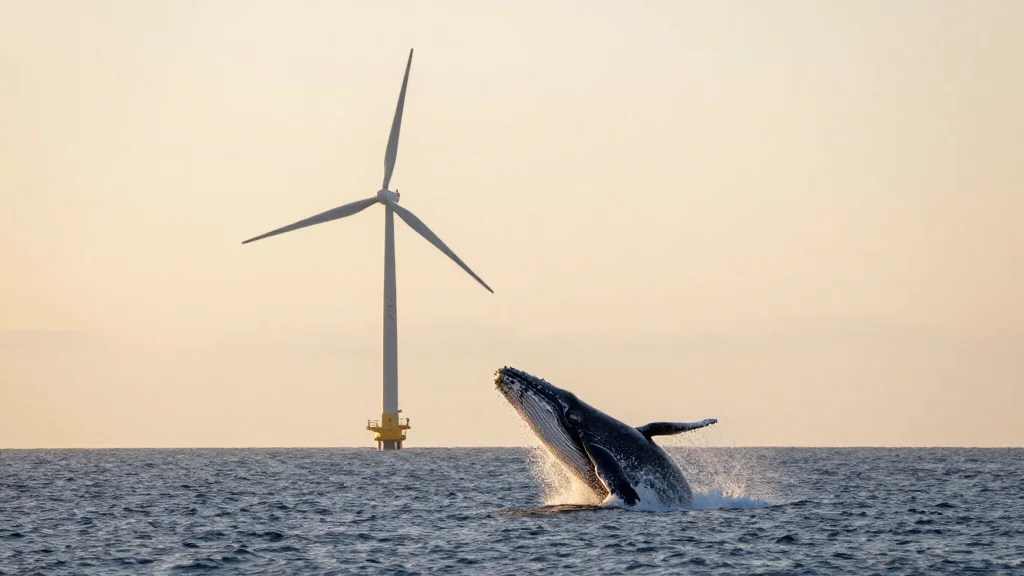
Trump’s Offshore Wind Opposition Was Never Really About the Whales
Why It Matters
By shielding Gulf drilling from stricter ESA requirements, the decision accelerates fossil‑fuel production while sidelining real threats to cetaceans, shaping U.S. energy policy and offshore wind prospects.
Key Takeaways
- •Trump admin used whale rhetoric against offshore wind
- •God Squad exempted Gulf oil drilling from ESA protections
- •Decision driven by national security, not marine conservation
- •Offshore wind still faces political opposition despite low impact
- •Existing safety rules remain for Gulf drilling operations
Pulse Analysis
The controversy over offshore wind in the United States often masks deeper political calculations. While environmental groups highlight the negligible impact of wind turbines on whales, the Trump administration has weaponized marine‑mammal concerns to stall a nascent clean‑energy sector. This strategy taps into a broader narrative that frames renewable projects as threats to iconic wildlife, even as scientific studies show that turbine noise and collision risks are minimal compared with the chronic stress caused by oil spills and vessel traffic.
In March, the Interior Department’s so‑called God Squad—comprising secretaries of Defense, Agriculture, EPA, NOAA, and others—unanimously voted to lift Endangered Species Act protections for oil and gas operations in the Gulf of Mexico. The committee justified the move as a "national security imperative," arguing that uninterrupted fossil‑fuel output buffers the U.S. economy from geopolitical shocks, such as the recent disruptions in the Strait of Hormuz. While the exemption does not erase existing safety standards enforced by the Bureau of Ocean Energy Management and the Bureau of Safety and Environmental Enforcement, it removes the requirement for new ESA‑driven mitigation measures that could have slowed drilling projects.
The decision reverberates beyond the Gulf, signaling to investors and developers that the federal government prioritizes energy security over marine conservation. For offshore wind, the episode reinforces political headwinds that could delay permitting and increase costs, even as the sector promises lower emissions and job growth. Environmental advocates argue that real threats to whales—gear entanglement, ship strikes, and climate‑driven habitat loss—remain unaddressed, highlighting a policy gap where wildlife rhetoric is decoupled from substantive protection. As the U.S. seeks to balance energy independence with climate goals, the gulf‑region ruling illustrates the complex trade‑offs shaping the nation’s energy future.
Trump’s offshore wind opposition was never really about the whales
Comments
Want to join the conversation?
Loading comments...