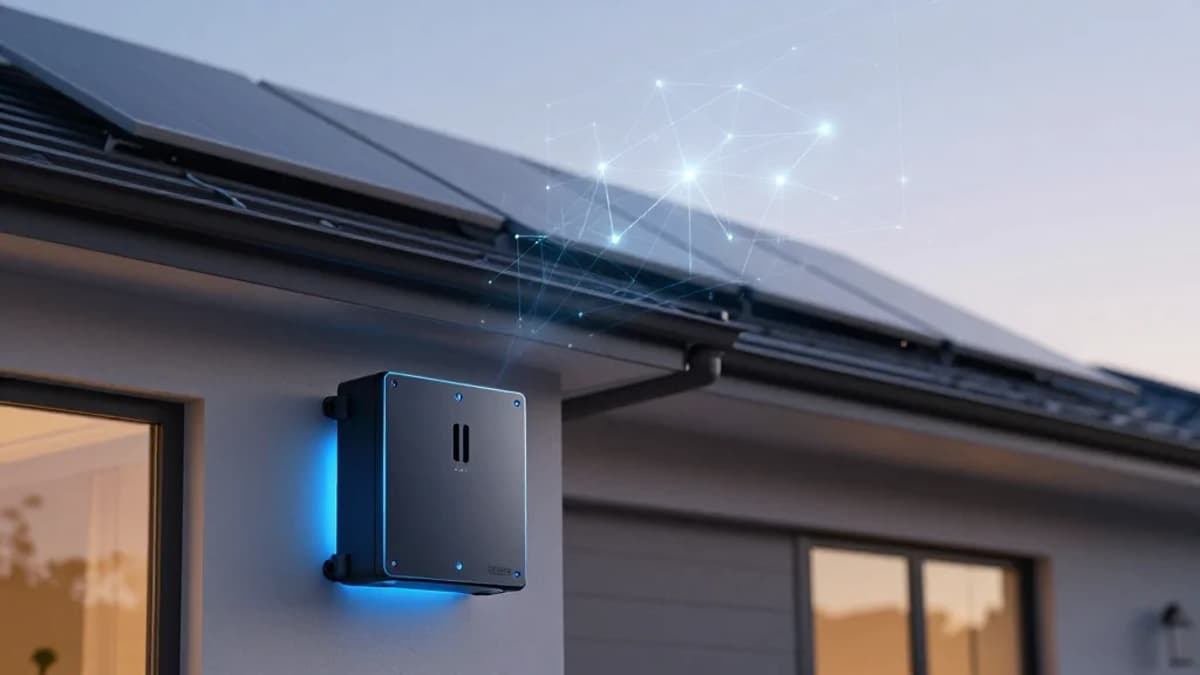
US Energy Storage Startup Moves In On The Residential Market With Another $232 Million
Companies Mentioned

Why It Matters
The infusion accelerates deployment of intelligent home batteries, intensifying competition for Tesla and reshaping revenue models for grid‑services and residential solar integration.
Key Takeaways
- •$232M raised in Series C and D rounds
- •AI-driven storage claims $464 average savings per home
- •Sunrun joins investors, linking to Gridshare platform
- •650 MW managed across thousands of residential units
- •Lunar aims to outpace Tesla Powerwall in US market
Pulse Analysis
The residential energy‑storage market is entering a new phase as homeowners demand not just backup power but active grid participation. AI‑driven platforms can analyze consumption down to the minute, optimizing solar self‑consumption and feeding excess energy into virtual power plants (VPPs). This technology promises lower electricity bills, enhanced resilience, and a more decentralized grid, making it attractive to utilities and solar installers alike. As solar adoption climbs and electricity rates rise, intelligent storage solutions are becoming a cornerstone of the modern energy ecosystem.
Lunar Energy’s latest $232 million raise underscores investor confidence in this emerging model. The round, split between a $130 million Series C led by Activate Capital and an oversubscribed $102 million Series D led by B Capital and Prelude Ventures, also attracted strategic players such as Sunrun, DCVC and Itochu. Sunrun’s involvement ties directly to Lunar’s Gridshare platform, which aggregates thousands of home batteries into coordinated VPPs across markets like New England, Hawaii and Puerto Rico. The funding will accelerate hardware scaling, software refinement, and market rollout, positioning Lunar to capture a larger share of the projected multi‑gigawatt residential storage market.
The capital infusion intensifies the rivalry with Tesla’s Powerwall, which has long dominated U.S. home battery sales. Lunar’s claim of $464 average annual savings per household, combined with a DC architecture and plug‑and‑play installation, offers a compelling alternative for Sunrun’s residential customers. If Lunar can sustain rapid deployment and demonstrate measurable bill reductions, it could shift installer preferences and erode Tesla’s market share. The broader implication is a more competitive landscape that drives innovation, lowers costs, and accelerates the transition to a resilient, decentralized energy grid.
US Energy Storage Startup Moves In On The Residential Market With Another $232 Million


Comments
Want to join the conversation?
Loading comments...