Gaming News and Headlines
  • All Technology
  • AI
  • Autonomy
  • B2B Growth
  • Big Data
  • BioTech
  • ClimateTech
  • Consumer Tech
  • Crypto
  • Cybersecurity
  • DevOps
  • Digital Marketing
  • Ecommerce
  • EdTech
  • Enterprise
  • FinTech
  • GovTech
  • Hardware
  • HealthTech
  • HRTech
  • LegalTech
  • Nanotech
  • PropTech
  • Quantum
  • Robotics
  • SaaS
  • SpaceTech
AllNewsDealsSocialBlogsVideosPodcastsDigests

Gaming Pulse

EMAIL DIGESTS

Daily

Every morning

Weekly

Sunday recap

NewsDealsSocialBlogsVideosPodcasts
GamingNewsIt's "Hard to Push Innovation" In Racing Games Compared to Other Genres, Reckons Star Wars: Galactic Racer Creative Director
It's "Hard to Push Innovation" In Racing Games Compared to Other Genres, Reckons Star Wars: Galactic Racer Creative Director
Gaming

It's "Hard to Push Innovation" In Racing Games Compared to Other Genres, Reckons Star Wars: Galactic Racer Creative Director

•February 16, 2026
0
Rock Paper Shotgun
Rock Paper Shotgun•Feb 16, 2026

Why It Matters

Understanding the innovation constraints in racing games helps studios balance fresh mechanics with player expectations, influencing future development strategies across the genre.

Key Takeaways

  • •Racing games face low cognitive load, limiting innovation.
  • •Galactic Racer uses traditional tracks for replayability and narrative.
  • •Open-world racers prioritize freedom over deep tactical depth.
  • •Industry dominated by franchises; indie titles drive fresh ideas.
  • •Boost mechanics inspired by Motorstorm's temperature system.

Pulse Analysis

The racing genre’s unique design constraints make groundbreaking changes difficult. Unlike shooters or open‑world adventures, racers demand constant, split‑second decision‑making, which limits the cognitive bandwidth available for complex new systems. Crimmins notes that this narrow focus forces developers to perfect moment‑to‑moment gameplay rather than experiment with macro‑level innovations, a reality reflected in the modest boost mechanics of Star Wars: Galactic Racer that echo Motorstorm's temperature‑sensitive system.

Choosing a conventional track layout for Galactic Racer serves multiple strategic goals. Traditional circuits enhance replayability, encouraging players to master each lap and fostering a competitive league narrative that aligns with Star Wars storytelling. This approach contrasts with open‑world racers like Forza Horizon, which prioritize expansive environments and player freedom but often dilute the intense, tactical racing experience. By anchoring the game in a structured league, Fuse can weave character arcs and rivalries into the fast‑paced action, delivering both nostalgia and a fresh narrative layer.

The broader market underscores the tension between innovation and commercial safety. Major franchises such as Horizon, Need for Speed, and GTA Online dominate the high‑budget space, leaving little incentive for risky experimentation. Meanwhile, indie developers continue to push boundaries, offering niche experiences that challenge genre conventions. As studios recognize the limits of traditional racing mechanics, hybrid models that blend tight track racing with selective open‑world elements may emerge, potentially revitalizing the genre while preserving its core adrenaline‑driven appeal.

It's "hard to push innovation" in racing games compared to other genres, reckons Star Wars: Galactic Racer creative director

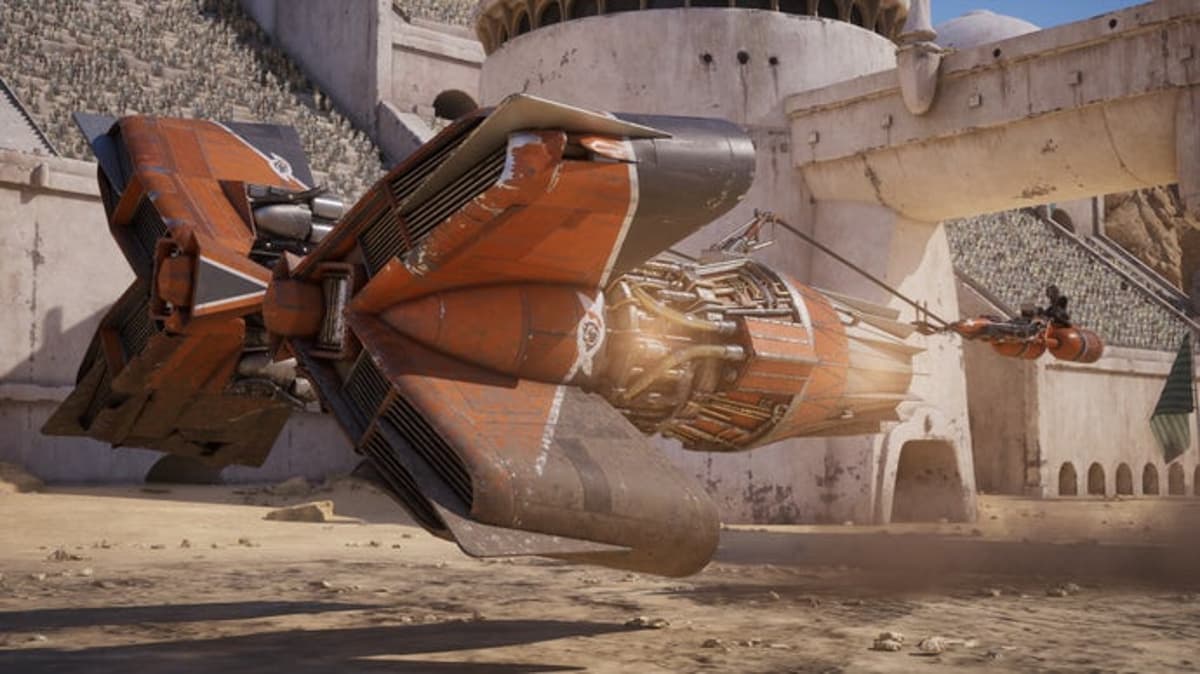
Star Wars: Galactic Racer, Fuse Games' take on off‑road speeder rushes in a galaxy far, far away, sounds more and more up my alley every time I hear about it. That’s no different in a freshly published interview with Fuse founder Matt Webster and creative director Kieran Crimmins, which sees the pair chat about boost mechanics that sound a lot like the environmental temperature‑sensitive system from PS3 racer Motorstorm: Pacific Rift.

The pair also made some interesting points when asked why they went for a more traditional track racer rather than an open‑world one with this game, and whether the latter has reached a point where it’s a bit of a stale concept.

Speaking to IGN, Fuse creative director Kieran Crimmins argued that ascribing any nostalgic push‑back towards more traditional track/level‑based racers players might feel can’t just be chalked up to open‑world racers being fairly common nowadays.

“I don’t think it’s as simple as that overall,” the developer said. “I think there’s great fun, innovation and things to do in both of those spaces… it is weird, I can’t remember who wrote it but there was an article about ‘why aren’t racing games like shooters, why is the innovation different?’ I think it’s because racers, you just need more stuff to do in the race second‑to‑second. We talked about the tactical layer of Galactic Racer’s ramjet system and how that works with the boost, but I think that goes across the board with the whole genre.

“It used to be a very, very innovative genre, but it’s hard to push innovation in a space where your cognitive load is fairly small because you’re in a kind of dynamic system of where you’re moving around. Getting that right is a lot harder than other games. I just like to see really, really great experiences that really tighten focus.”

Crimmins went on to outline that in Galactic Racer’s case, the studio opted for a more traditional racer because they wanted “replayability” and the evolution that comes from running a track until you totally nail it to be a key factor. The pair also emphasized that the approach is a more natural one when setting up the game’s Galactic League as a sporting league with its own characters and contenders, allowing them to also tell a Star Wars story through the racing action. Open‑world racers, meanwhile, Crimmins argued, shine in offering a sprawling “kind of ‘play with the toys’ experience”. Player freedom is the draw, often with a character‑less player facsimile behind the wheel, as you get in the likes of Forza Horizon or Burnout Paradise.

The developer’s comments about the need to nail the moment‑to‑moment intangibles make it tougher for racing games to focus on innovating in the macro. You could argue that current arcade behemoth flagbearer Horizon is set to innovate a bit in its imminent next installment, Horizon 6, via the addition of more spaces in which players can customise and build. However, that’s more along the lines of pulling base and track‑building mechanics across from other games than it is trying something truly new.

The other side of the coin, though, is that innovation always risks disrupting the established beloved elements of a genre or series—it’s not a racing game, but Civilization 7 comes to mind. Those are, of course, risks studios need to be comfortable taking in order to avoid every new game just being iterative, but the current state of the industry in terms of job security and the relentless pursuit of bigger profits is likely pushing things in the opposite direction. That’s possibly even more true in a genre like the arcade racer, which has well‑established expectations and is dominated at the top end these days by massive juggernauts like Horizon and even GTA Online, with long‑time frontrunners like Need for Speed, Burnout and Midnight Club having been put out to pasture or paused.

Thankfully, there are still plenty of indie racers both pushing the envelope and delivering nostalgia hits that folks can’t get elsewhere. I certainly have to agree with Crimmins on at least one point, though— all of the games I’d count among the best racers have their second‑to‑second action nailed.

Read Original Article
0

Comments

Want to join the conversation?

Loading comments...