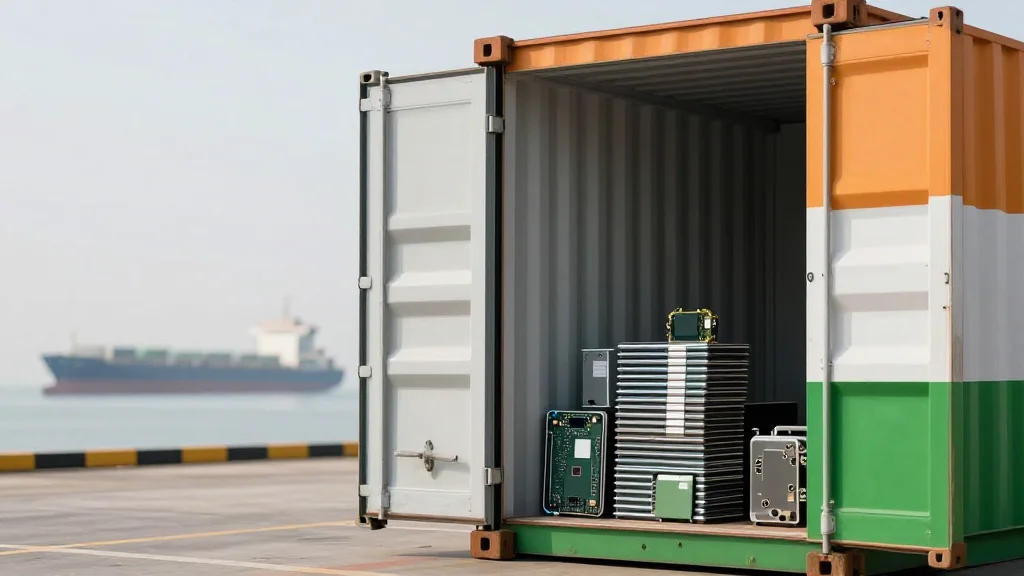
India's Apple Component Exports to China Surge to Record $2.5 Billion Under ECMS Scheme
Why It Matters
The reverse trade flow signals India’s emerging role as a component supplier to China, reshaping global electronics supply chains and boosting domestic value addition. It validates the ECMS policy and could accelerate India’s ambition to capture a larger share of worldwide mobile‑phone production.
Key Takeaways
- •Apple component exports to China hit $2.5B in FY26
- •ECMS scheme drives reverse trade flow from India to China
- •Foxconn, Tata Electronics, Pegatron among top Apple component exporters
- •India's electronics exports to China forecast $3.5B FY26
- •PLI 2.0 under discussion to extend manufacturing incentives
Pulse Analysis
India’s electronics landscape has been transformed by Apple’s strategic relocation of iPhone assembly to the subcontinent. The original Production‑Linked Incentive (PLI) scheme, launched in 2022, spurred $70 billion of iPhone output, of which $51 billion left the country. Building on that foundation, the Electronics Component Manufacturing Scheme (ECMS) has now enabled Indian vendors to ship $2.5 billion of components to China in FY 26, reversing the traditional flow of parts from China to India. This rapid scaling reflects a maturing domestic ecosystem capable of meeting the exacting quality standards of a global brand.
The surge in component exports carries profound supply‑chain implications. By supplying printed circuit board assemblies, housings, flex PCBs and even button mechanisms to Chinese manufacturers, Indian firms are positioning themselves as indispensable partners in the world’s largest electronics market. Companies such as Foxconn, Tata Electronics, Pegatron, Motherson and Salcomp are gaining experience that can be leveraged across other high‑tech sectors, reducing India’s reliance on imported parts and enhancing its trade balance. Moreover, the reverse flow challenges China’s historic dominance as the sole source of components for Indian assemblers, potentially softening geopolitical risks tied to single‑source dependencies.
Looking ahead, policymakers are eyeing a PLI 2.0 to extend incentives beyond smartphones into broader consumer electronics and automotive applications. If successful, India could capture 30‑35 % of global mobile‑phone production, as projected by industry analysts, and become a key node in the electronics supply chain. The combination of ECMS‑driven component exports and a refreshed incentive framework could push total India‑to‑China electronics trade beyond $18 billion this fiscal year, cementing the subcontinent’s status as a manufacturing powerhouse. Stakeholders should monitor how these policies translate into sustained export growth and deeper integration with Chinese OEMs.
India's Apple component exports to China surge to record $2.5 billion under ECMS scheme
Comments
Want to join the conversation?
Loading comments...