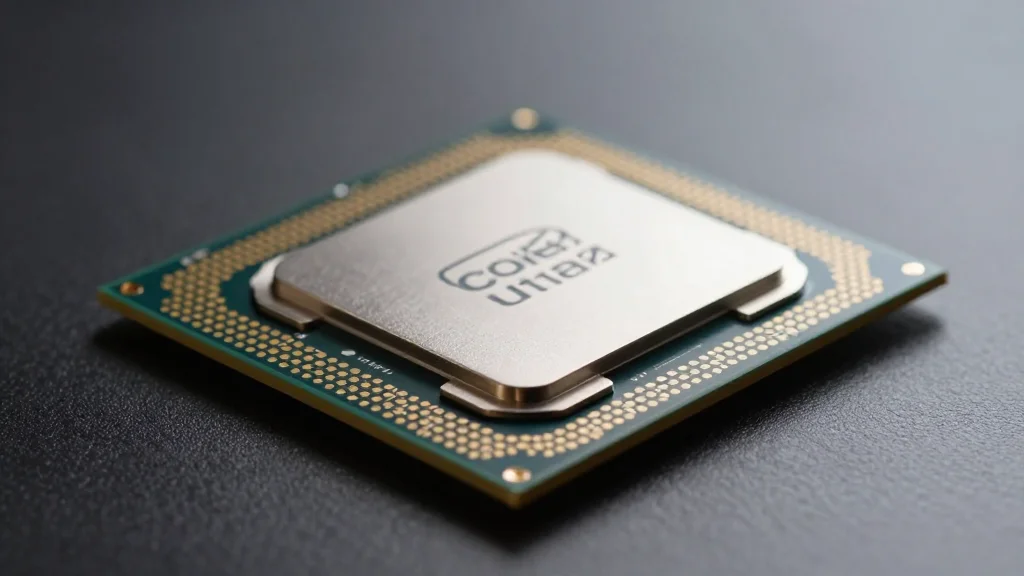
Intel Nova Lake S Leak Points to 52-Core Desktop CPUs
Why It Matters
The 52‑core desktop CPU pushes the performance ceiling for content creation, AI workloads, and high‑parallelism tasks, challenging AMD’s high‑core offerings and reshaping the desktop market. Forward socket compatibility could lower upgrade costs and extend the lifespan of motherboards, a strategic shift for Intel’s platform strategy.
Key Takeaways
- •Up to 52 cores on a single desktop die
- •DDR5‑8000 support targets bandwidth‑hungry workloads
- •144 MB–288 MB bLLC adds L4‑class cache
- •LGA 1954 socket may stay compatible across generations
- •Xe3 iGPU offers modest graphics for display and compute
Pulse Analysis
Intel’s Nova Lake S represents a bold escalation in desktop silicon, taking the hybrid core design that debuted with Alder Lake and expanding it to a 52‑core flagship. By pairing 16 performance cores with 32 efficiency cores and a modest set of low‑power cores, Intel aims to dominate workloads that thrive on massive parallelism, such as 3D rendering, video encoding, and emerging AI inference tasks. The move also positions the company directly against AMD’s Threadripper and Ryzen 9 series, which have long been the go‑to for creators seeking high core counts.
Memory bandwidth is a critical bottleneck as core counts rise, and Nova Lake S’s DDR5‑8000 support addresses that head‑on. Coupled with a new big last‑level cache (bLLC) ranging from 144 MB on single‑die parts to 288 MB on dual‑die configurations, Intel introduces an L4‑class cache layer that rivals AMD’s 3D V‑Cache. This large shared cache reduces latency and improves data locality, translating to tangible gains in latency‑sensitive applications and AI workloads that repeatedly access the same data sets. The architecture’s emphasis on cache and bandwidth signals a shift from pure core scaling to holistic system performance.
Beyond raw specs, Intel hints at forward socket compatibility with the LGA 1954 socket, a departure from its historical pattern of frequent socket changes. If realized, this could extend motherboard lifecycles, lower total cost of ownership, and simplify upgrades for power users. The platform’s 150 W TDP for top SKUs, alongside a modest Xe3 integrated graphics solution, suggests a balanced approach that prioritizes compute over gaming graphics. Together, these elements position Nova Lake S as a versatile, future‑proof desktop offering that could reshape purchasing decisions for professionals and enthusiasts alike.
Intel Nova Lake S Leak Points to 52-Core Desktop CPUs
Comments
Want to join the conversation?
Loading comments...