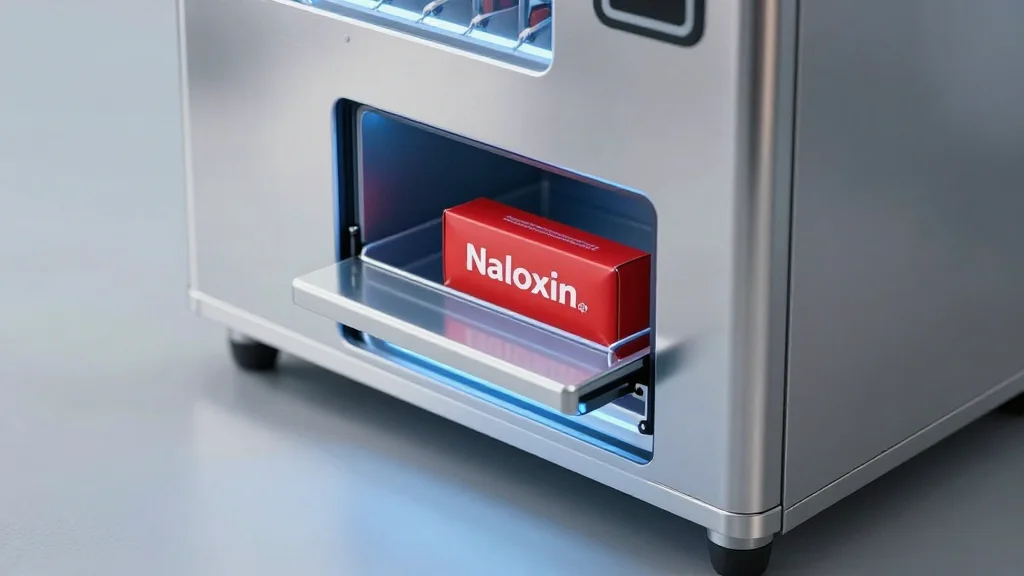
Free Narcan Vending Machines Launch in Mich. County to Address Overdose Rates
Why It Matters
By placing lifesaving naloxone directly in the community, Muskegon County can lower fatal overdoses and accelerate connections to treatment, addressing a critical public‑health emergency.
Key Takeaways
- •Five Narcan vending machines installed at Trinity Health and public health sites.
- •Muskegon County overdose death rate 29.3 per 100k, above state average.
- •Free kits aim to cut barriers and lower stigma around opioid use.
- •Early data credits Narcan availability for recent decline in overdose deaths.
- •Machines dispense unlimited boxes, encouraging community sharing and rapid response.
Pulse Analysis
The United States continues to grapple with an opioid crisis that claims over 50,000 lives annually, and Michigan is no exception. In 2024 the state’s overdose death rate stood at 19.1 per 100,000, yet Muskegon County’s rate surged to 29.3, driven by a spike in fentanyl‑contaminated substances. Traditional response models—relying on emergency services and prescription distribution—have struggled to reach at‑risk individuals quickly enough. By introducing free, publicly accessible naloxone vending machines, the county is adopting a harm‑reduction strategy that aligns with evidence‑based public‑health practices, aiming to close the time gap between overdose onset and treatment.
The vending machines, resembling newspaper boxes, are strategically placed at five Trinity Health sites and the Muskegon County Department of Public Health. Funded by the county and maintained by each location, they allow anyone to retrieve as many Narcan kits as needed, encouraging peer‑to‑peer distribution. This model tackles two persistent barriers: cost and stigma. When community members can obtain naloxone without a prescription or fee, they are more likely to keep doses on hand for friends or family, fostering a culture of shared responsibility. Moreover, the visible presence of the machines normalizes overdose preparedness, prompting conversations about addiction, mental health, and pathways to recovery.
Early indicators suggest the initiative is already making an impact. County officials attribute a recent dip in overdose fatalities to the expanded Narcan access, and the approach has drawn interest from neighboring jurisdictions. If the trend continues, Muskegon’s model could serve as a blueprint for other high‑risk counties seeking scalable, low‑cost interventions. Future steps may include integrating fentanyl testing strips, expanding educational outreach, and leveraging data analytics to fine‑tune placement. Ultimately, the vending machines represent a pragmatic, community‑driven effort to save lives while laying groundwork for broader addiction‑treatment engagement.
Free Narcan vending machines launch in Mich. county to address overdose rates
Comments
Want to join the conversation?
Loading comments...