AI Darwinism Can Unleash New Potential of Energy Workforce – Enlit Magazine
•February 19, 2026
0
Why It Matters
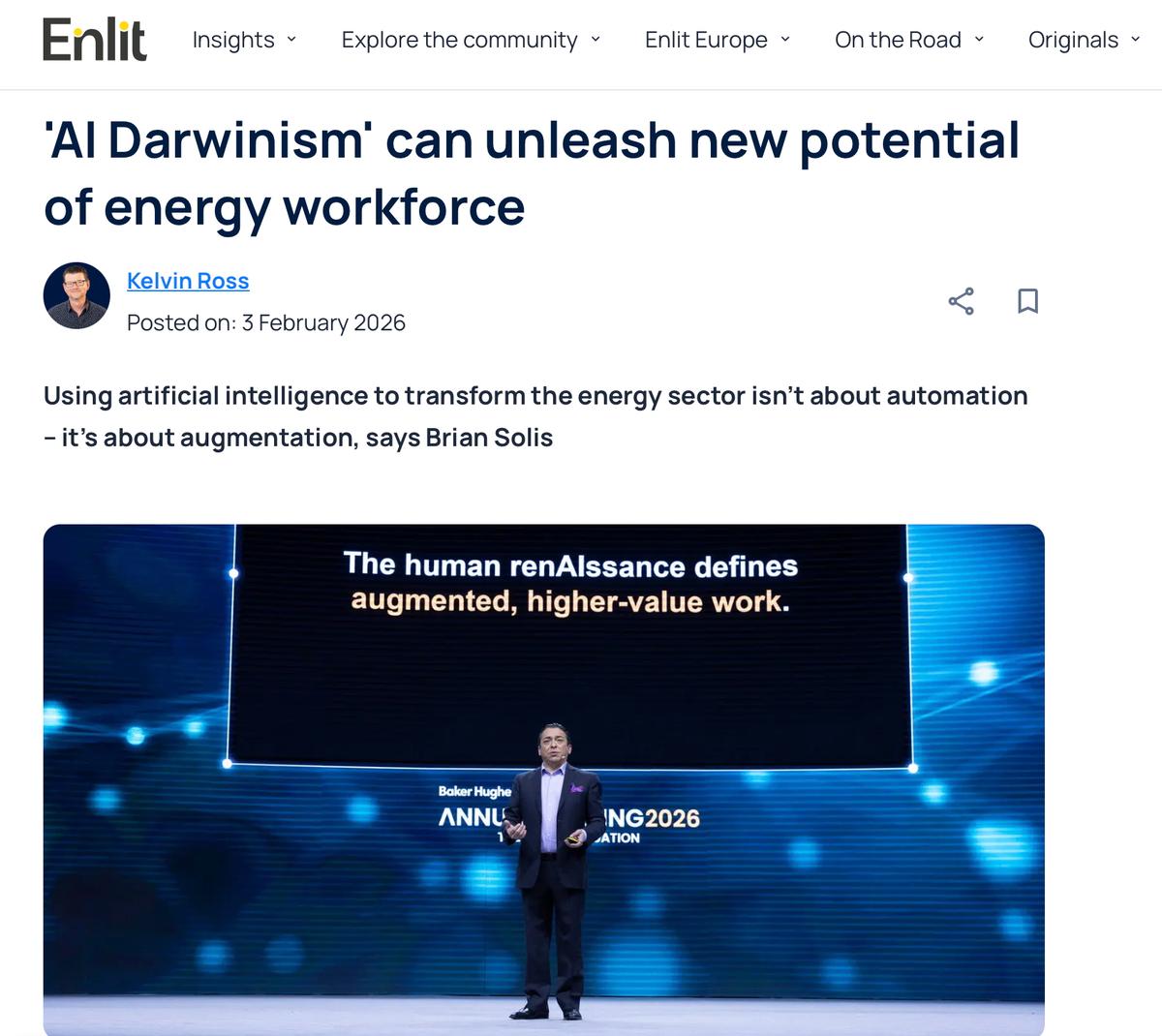
Companies that embed AI as an augmentative force will gain operational efficiency and competitive advantage, reshaping the energy sector’s talent landscape.
Key Takeaways
- •AI should augment, not replace, energy workers
- •Leadership must define AI vision beyond automation
- •AI Darwinism rewards firms blending human and AI
- •Lagging firms risk losing operational resilience
- •ServiceNow promotes AI‑driven workforce transformation
Pulse Analysis
The energy industry stands at a crossroads where traditional digitization has plateaued, and the next wave of value hinges on artificial intelligence that enhances human capability. Unlike past automation efforts that merely replicated existing processes, AI augmentation empowers workers to tackle complex, data‑intensive problems in real time. This shift mirrors the broader "intelligent industry" narrative, where AI serves as a strategic partner, unlocking new operational models and revenue streams that were previously unattainable.
For executives, the challenge is not acquiring AI tools but cultivating an organizational mindset that integrates AI into core decision‑making. AI literacy must evolve into AI vision—an articulated roadmap that aligns technology with business outcomes. Leaders who champion collaborative human‑AI workflows can drive higher asset reliability, predictive maintenance, and demand forecasting accuracy. Moreover, reskilling initiatives that focus on data interpretation, model oversight, and ethical AI use become critical to sustain a competitive edge and mitigate the risk of talent obsolescence.
Looking ahead, firms that embrace "AI Darwinism" will likely dominate the energy landscape by achieving superior operational efficiency and resilience. Investment in scalable AI platforms, coupled with robust governance structures, will enable rapid experimentation and deployment across generation, transmission, and distribution assets. As regulatory pressures intensify and renewable integration accelerates, the ability to adapt through AI‑augmented workforces will differentiate market leaders from laggards, making the current leadership moment a decisive factor in the sector’s future trajectory.
AI Darwinism can unleash new potential of energy workforce – Enlit Magazine
0
Comments
Want to join the conversation?
Loading comments...