
BACCM Framework
Corporate transformation projects often fail because leaders view strategy, execution and stakeholder impact as separate silos. The Business Analysis Core Concept Model (BACCM) offers a six‑part systemic framework—Change, Need, Solution, Stakeholder, Value, Context—to align every initiative with core business value. By treating these elements as a tightly coupled system, executives can diagnose misalignments early and steer projects toward measurable outcomes. The model complements Agile, PMI and Lean Six Sigma, providing a governance layer that ties strategic intent to operational results.

Important Pivot to Innovate
The article urges organizations to execute a "Hard Pivot"—a deep, non‑linear transformation from traditional linear management to collaborative, adaptive innovation. It outlines three interlocking pivots: Architectural (building an integrated, agent‑ready fabric and separating reasoning engines from knowledge graphs), Operational (moving...

Essay: Are We Researching the Market or Just Confirming Our Assumptions?
The essay argues that “evidence‑based” strategy is often reduced to data collection rather than genuine insight. It highlights how organizations rely heavily on secondary research and AI‑generated dashboards, yet miss critical operational realities that only primary research can reveal. Confirmation...

Great Consultants Can Overcome Stakeholder Resistance And Still Deliver Incredible Results
Rich Millington’s latest newsletter spotlights the three forms of stakeholder resistance—passive, active and covert—and offers concrete scripts to address each. He promotes a free 60‑minute webinar on May 15 that walks solo consultants through five dreaded conversations, then launches a five‑week...

Why Most App Modernization Efforts Fail, and How a Capabilities-Driven Strategy Can Stop the Billion-Dollar Bleed
Application modernization spending is projected to climb from $22.7 bn in 2025 to $51.5 bn by 2031, yet 79% of initiatives fail. The article attributes failures to technology‑first mindsets, oversized scopes, siloed execution, and lack of business‑value focus. It proposes a capabilities‑driven...
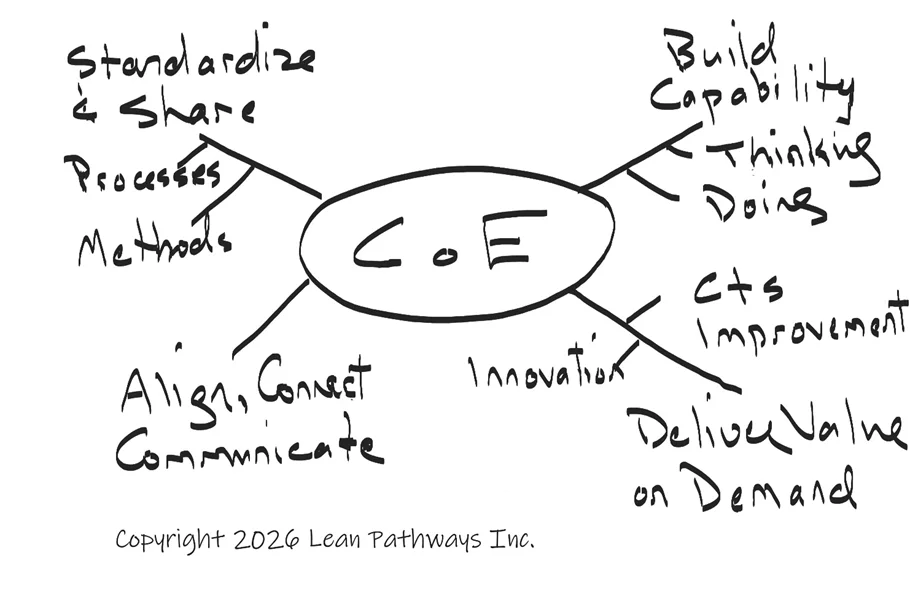
Levelling Up the Centre of Excellence
The article argues that Centres of Excellence remain vital but must evolve into ambidextrous units that balance Lean/OpEx core protection with digital growth initiatives. It outlines five foundational pillars—standardizing processes, building capability, leading alignment, on‑demand support, and driving innovation. The...

EY Brazil Acquires MB Agro to Strengthen Agribusiness Consulting and Market Intelligence Capabilities
EY Brazil has agreed to acquire MB Agro, a leading agribusiness consulting boutique with decades‑long expertise in economic scenario analysis and market intelligence. The deal brings MB Agro’s full team, client portfolio, and subscription‑based intelligence products into EY’s Agribusiness Center...

Are You Worth It?
Alan Weiss urges consultants to stop assuming in‑person work is default. He argues that remote engagements can meet client needs just as well, if not better, when the focus is on outcomes rather than physical presence. By redefining worth as...

Accenture Appoints Sripad Patil As Managing Director To Strengthen Enterprise Transformation Leadership
Accenture announced the appointment of Sripad Patil as Managing Director to bolster its enterprise transformation leadership. Patil arrives with a track record of steering complex technology programs at Ascendion, Mphasis, Coforge and Mercer. In his new role he will oversee...

BoD's Strategic Oversight for Intelligent Organization
The article argues that modern boards must evolve from traditional risk‑mitigation bodies to digital‑fit overseers of AI‑enabled enterprises. Board directors need to view AI as an enterprise‑wide operating system, enforce interoperability standards, and embed autonomous governance with real‑time audit trails....

Gemba Walks: Why Leaders Must Go and How to Do It Right
The article explains that a Gemba walk—visiting the place where value is created—is a leadership practice aimed at observing processes, uncovering hidden problems, and engaging front‑line staff. It stresses that walks must be conducted with humility, open‑ended questioning, and a...

Belief Vs. Compliance: Why Lean Still Struggles to Take Root
Lean initiatives often stall not because employees resist change, but because firms rely on compliance rather than belief. Don Ephlin’s insight—that behavior shifts only when people truly believe—remains a litmus test for sustainable transformation. Organizations that embed trust, transparent problem‑solving, and...
9 “Whys” Every Consulting Leader Should Master
The article urges consulting leaders to adopt a childlike curiosity by mastering a set of strategic "Why" questions during discovery. It outlines eight core "Whys"—from "Why now?" to "Why not?"—that help uncover urgency, justify investment, clarify fit, and surface risks....

The Suite Vs. Breed Debate Has Taken A New Twist. Here’s What Replaced It.
The long‑standing "suite vs. best‑of‑breed" debate in enterprise software is being eclipsed by composable architecture, a strategy that stitches together modular, API‑first services instead of relying on monolithic suites. Vendors such as Ardoq promote visual catalogs that map dependencies, making...

The Most Expensive Person on Your Unit Is the One You Just Eliminated
Hospitals are replacing dedicated charge nurses with "working" charge nurses to trim the roughly $110,000 annual salary per unit, presenting a tidy line‑item saving to finance teams. The move, however, triggers higher turnover, longer lengths of stay, more readmissions, lower...