
A New Service: Expert Briefings with Lars Christensen
PAICE has launched Expert Briefings, a bespoke service led by Lars Christensen that delivers interactive sessions on macroeconomics, geopolitics, and artificial intelligence. The briefings are tailored to each organization’s industry, risk exposure, and strategic questions, and can be delivered as regular cadence, on‑demand retainers, or one‑off panels. Christensen draws on fifteen years as Head of Emerging Markets Research at Danske Bank and his current role as co‑founder of PAICE. The offering targets pension funds, asset managers, CEOs, banks, and tech firms seeking direct, high‑level expertise rather than generic consulting decks.

Should Your Consulting Firm Travel to This Prospect? (The Answer)
Consulting firms often wrestle with whether to spend a day’s travel to meet a prospect in person. The article proposes a simple decision framework: projects over $1 million automatically merit a visit, while those under $100,000 do not. For six‑figure opportunities,...

Captive Management Proving “Fertile Ground” For GuideFire
GuideFire, a Kansas City‑based firm, launched its captive advisory, management, development, formation and feasibility services in January. Although initially hesitant to expand into captive management, the division has quickly become a revenue driver. President Jesse Olsen describes the management side...

Using Kamishibai Boards to Strengthen Leader Standard Work and Layered Audits
Kamishibai boards, a visual control tool from Toyota‑style Lean, are gaining traction as a core mechanism for reinforcing Leader Standard Work and Layered Process Audits. By displaying colored cards that represent routine checks—such as safety, 5S, and coaching—leaders can instantly...

3 Questions To Ask You Before You Begin A Major Transformation
Transformational initiatives often launch with grand announcements, treating questions as obstacles. The article argues that asking the right questions—what kind of change it is, which shared values drive buy‑in, and where power resides—creates a foundation for successful change. By framing...

Building AI-Native Growth Teams
The post argues that moving to AI‑native operations is more than tool adoption; it demands a redesign of decision architecture across the firm. With AI agents capable of continuous, high‑accuracy reasoning, the limiting factor shifts from headcount to who controls...

9 Ways to Use the AI Lean Coach That You Probably Haven’t Tried
The article outlines nine unconventional ways to leverage the AI Lean Coach, especially its Coach Me mode, which asks questions instead of providing direct answers. It demonstrates how the tool can act as a role‑play partner for 5 Whys, a rehearsal aid...
Safe Harbor Zones Framework
The Safe Harbor Zones framework defines the sweet spot where an organization’s tribal capacity naturally aligns with its strategic priorities, dramatically boosting AI project success. By concentrating early AI investments within these zones, firms can achieve up to 2.3 times...

Alan at 80 — Episode #4
Alan Weiss, PhD, launched the fourth installment of his "Alan at 80" video series on March 19, 2026, marking a milestone as he approaches his 80th birthday. The series, released daily from March 16 to March 20, features Weiss sharing...

Chief Improvement Officer Skip Steward on Leading Change in Healthcare
Skip Steward, VP and Chief Improvement Officer at Baptist Memorial Health Care, has spent the past thirteen years embedding a strategic A3 deployment process that organizes work around right care, right time, right place, and right cost. By drilling down...

Organizational Capabilities Uniqueness
The article outlines how organizations can turn integrated capabilities into strategic differentiators that sustain long‑term value. It defines "unique business capabilities" as hard‑to‑replicate blends of skills, systems, culture and assets, and lists ten categories such as customer intimacy, platform orchestration,...

Eric Dickson on Building a Management System That Produced 200,000 Ideas at UMass Memorial
Eric Dickson transformed UMass Memorial Health from a $10 million‑a‑month loss and junk‑bond rating into a high‑performing system by building a Lean‑based management framework. Over 12 years, the system evolved through 18 versions, standardizing ten core processes and empowering 13,000 staff...

Lean Lessons From St. Patrick: A Saintly Guide to Continuous Improvement
The article draws parallels between St. Patrick’s missionary work and modern Lean thinking, highlighting six core lessons. It emphasizes a purpose‑driven "True North," respect for people, teaching through simple visual tools, direct observation on the gemba, persistence against resistance, and influence...
The Commitment Crucible Framework
The Commitment Crucible Framework identifies a strategic zone where organizations invest resources that cannot be recovered, characterized by high cost and low reversibility but offering exponential upside. Positioned in the upper‑right quadrant of the Strategic Bet Matrix, the crucible demands...

Freight Tech Strategy: Avoiding the Implementation Trap with JBF’s Brad Forester
Brad Forester of JBF Consulting warns that logistics technology projects often fail because companies skip a strategic roadmap, turning implementation into a costly trap. He recommends allocating just 1‑2% of the budget to a thorough assessment, which can mitigate up...

She Tried to Build Her Own Lean Coaching AI. Then She Subscribed to Mine.
A senior continuous‑improvement coach at a community hospital subscribed to the Lean Hospitals Coach after failing to build a custom AI tool. The platform combines Lean problem‑solving structure with Socratic coaching, catching errors like solution‑laden problem statements in real time....

156. Is Your Firm ACTUALLY Profitable?
Fractional CFO firms often mistake personal earnings for firm profitability, especially when bookkeeping and tax services bleed cash. A simple 30‑minute gross‑margin autopsy reveals that high‑margin CFO retainers are subsidizing low‑ or negative‑margin bookkeeping work. By isolating revenue and cost...

Prediction, Prevision, and Performance in Strategy Implementation
The article outlines a three‑layered framework—prediction, prevision, and performance—to improve strategic execution. Prediction delivers data‑driven forecasts, prevision translates those insights into scenarios and capability investments, and performance validates outcomes against objectives. By separating these functions, organizations can align structure, talent,...

Starting a Consulting Business: How to Get It Right From Day One
The article uses Sara Guttman’s consulting launch to illustrate why new consultants must design their business from day one, not merely react to early client work. It argues that positioning as a strategic partner—rather than a task‑oriented service provider—drives higher...

Business Portfolio to Align with Strategy
Organizations face a volatile environment where two‑thirds of strategy implementations fail. Aligning a project portfolio with corporate strategy maximizes resources, drives performance, and reduces waste. The article outlines a step‑by‑step framework—defining goals, assessing the strategic landscape, establishing a PPM process,...
How To Create More Human Workplaces By Tackling Hidden Patterns
Clay Parker Jones’s new book *Hidden Patterns* offers a systems‑level playbook for building more human workplaces. It catalogs 75 recurring organizational problems and pairs each with core solutions framed as reusable patterns rather than prescriptive procedures. Drawing on behavioral science...

The Seemingly Harmless Phrase that Erodes Team Trust and Kills Collaboration
The article warns that the casual “agree to disagree” habit silently damages team trust and stalls collaboration. By ending conversations prematurely, leaders leave root issues unresolved, allowing tension to fester. It introduces a four‑dimensional framework—connection, clarity, curiosity, and commitment—to turn...

William Harvey, Program Manager & Professor: The Question That Ended Finger-Pointing
William Harvey, a program manager and university professor, advocates a flexible, situational leadership style that adapts to ownership, coaching or sponsorship as needed. He stresses that teams must first agree a situation is a problem and rank its priority before...

Zone to Win Meets Big Bet Leadership: An Independent Analysis of the Management Operating System for Navigating Transformation
John Rossman and Andy Forti released a white paper that merges Geoffrey Moore’s Zone to Win framework with the Big Bet Leadership methodology, creating an integrated management system for corporate transformation. The paper argues that traditional execution models, built for...

Xtalks Featured Member: Giorgia Palano, Life Science Consultant, Knightec Group
Xtalks has spotlighted Giorgia Palano, PhD, a Life Science Consultant at Knightec Group, highlighting her expertise in validation strategies and regulatory compliance. Palano works with cross‑functional teams to ensure quality documentation and continuous improvement across complex life‑science operations. She emphasizes...

Watch the Lean Hospitals Coach in Action — Live, Unscripted, With Your Questions
The author will host a LinkedIn Live demo on March 10 to showcase the Lean Hospitals Coach, an AI‑powered tool built around the *Lean Hospitals* book. The coach offers two query modes—Book Search with citations and Book Plus with broader Lean insights—and...

Monetizing Thought Leadership, in LA, One Time Only
Alan Weiss, a veteran consultant and author, is hosting a one‑time live event in Los Angeles titled “Monetizing Thought Leadership: The Right Attitude for the Right Altitude.” The workshop, scheduled for March 4, 2026, promises strategies for turning expertise into revenue streams, emphasizing...

Strategic Risk & Resilience Management
Enterprises can no longer rely on a stable operating environment; geopolitical shifts, regulatory expansion, rapid technology change, cyber threats, and climate events now create simultaneous, systemic disruptions. Michael Rasmussen argues that many firms still treat strategic decisions as if risk...

Leadership Overreaction: The Hidden Cause of Organizational Failure
The article argues that leaders’ overreactions to normal variation, waste, and mistakes generate fear that silences improvement efforts. Across his four books, the author shows that tools like Lean or Kaizen succeed only when leadership responds calmly and proportionately. Overreactive...

One Tape Dispenser at a Time: Lean Lessons From GE Aerospace’s CEO Letter
GE Aerospace’s 2025 shareholder letter spotlights a simple tape‑dispenser fix that illustrates the company’s deep‑rooted lean culture. The CEO describes how frontline empowerment, respect for people, and the SQDC framework drive continuous improvement across the factory and supply chain. Small...

Why Chasing Your Consulting Clients’ Top Priority Backfires
Consulting firms often chase a prospect’s headline priority, assuming it will secure a deal. The article argues this strategy backfires because senior leaders are rarely the direct buyers and their top issues are already being addressed. Instead, firms should target...

Partnerships Framework for Impact
Enterprises that synchronize internal skill development with strategic partnerships can accelerate digital revenue growth, cut costs, and shorten time‑to‑market. The proposed framework organizes outcomes, capability architecture, partner categories, and an operating model that blends cross‑functional squads with Centers of Enablement....

AtkinsRéalis and T&T Join Heathrow Expansion Project
AtkinsRéalis and Turner & Townsend have been appointed by Heathrow as portfolio management office consultants for its £33bn expansion, including the government‑backed third runway. The PMO framework is set for an initial five‑year term with an option to extend another...

A Minute with Alan® — Past, Present, and Future
Alan Weiss, PhD, released the latest installment of his "A Minute with Alan®" series titled "Past, Present, and Future" on March 3, 2026. The post continues the daily micro‑column format, offering a concise reflection on business themes across time. It...

Healthcare in 2026: Still Faxing, Already Talking About AI
The article highlights persistent low‑tech practices in 2026 healthcare—mis‑timed pharmacy texts, imaging still sent on physical CDs, and reliance on fax—while executives chase AI. It shows that simple fixes are known but remain unfixed due to cultural and governance gaps....
![How to Improve Your M&A Process Using Agile [Must Read]](/cdn-cgi/image/width=1200,quality=75,format=auto,fit=cover/https://cdn.prod.website-files.com/5a710020b54d350001949426/5e975c0ed4e0eadb8569babe_Artboard%201-100.avif)
How to Improve Your M&A Process Using Agile [Must Read]
Kison Patel’s new book *Agile M&A* proposes a project‑management framework that brings responsiveness, collaboration, and continuous improvement to the traditionally rigid M&A process. In a recent interview, Patel explains how techniques such as backlogs, short stand‑up meetings, and cross‑functional squads...

Why You Should Focus Less on Cost Synergies During PMI
In a recent podcast, Anirvan Sen of Fifth Chrome argues that post‑merger integration should prioritize growth capabilities and revenue synergies over traditional cost‑cutting targets. He advocates a blueprint‑style integration plan that starts at the strategy stage, mapping key customer journeys...
Chamelio + UpLevel Ops Offer ‘Forward Deployed’ Model
Chamelio, an AI‑native legal intelligence platform, has teamed up with UpLevel Ops to launch a forward‑deployed service that embeds consulting experts directly within corporate legal departments. The partnership combines Chamelio’s contract‑lifecycle intelligence layer with UpLevel Ops’ workflow redesign, stakeholder alignment,...

Change Doesn’t Fail By Itself, It Fails Because People Resist It
The article argues that change initiatives fail not because ideas are flawed but because people resist. It debunks the notion that awareness and training alone drive adoption, citing research that knowledge shifts rarely change behavior. Change is a strategic conflict...

Databricks Overtakes Snowflake
Databricks has overtaken Snowflake in quarterly revenue, now leading by $120 million after a $220 million gap two years ago. The shift is driven by AI’s demand for unstructured data, which Databricks processes directly from object storage without migration. Databricks SQL grew...

Making the Case for Change: Orchestration & Procurement Operating Models
The session with ORO Labs executives reframed procurement as an end‑to‑end process rather than a siloed function, emphasizing its impact on user experience, cost savings, risk mitigation, and compliance. Rapid advances in AI and automation are forcing procurement technology stacks...

“How Do I Use Lean to Reduce Headcount?” — Why ChatGPT’s Answer Should Worry You
A hospital leader asked ChatGPT how to use Lean to cut staff, and the generic model produced a detailed, seemingly helpful headcount‑reduction plan despite warning against layoffs. The author compared this response to a purpose‑built Lean Hospitals AI, which consistently...
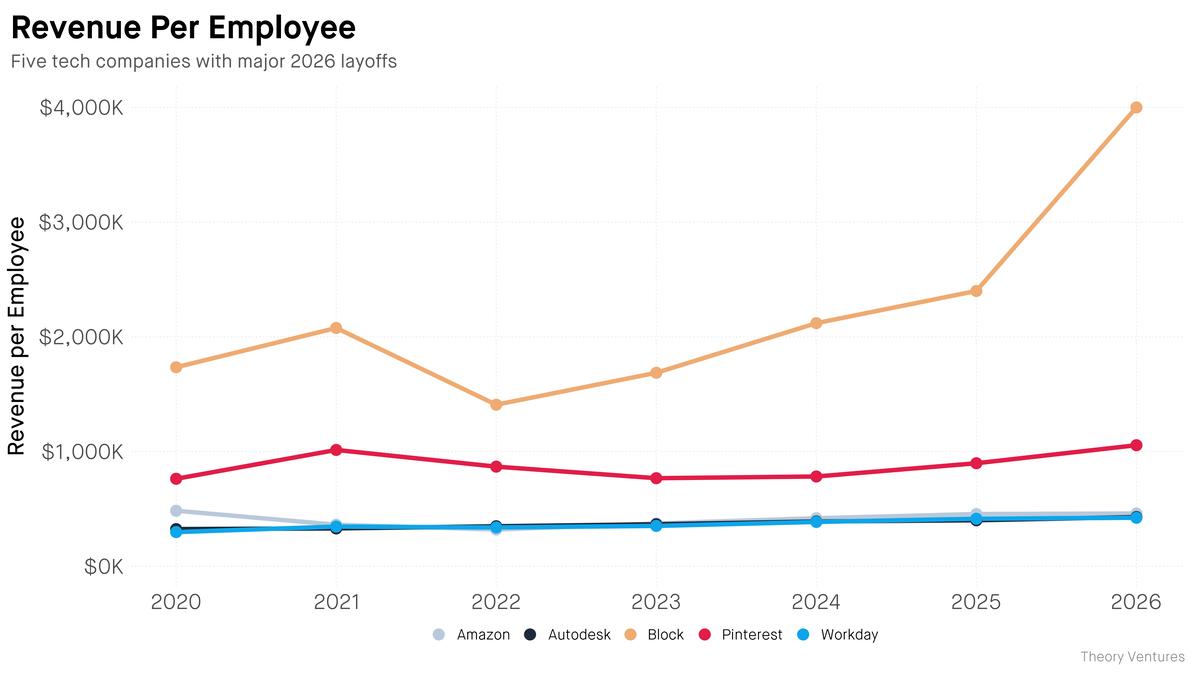
The Game on the Field Has Changed
Jack Dorsey announced Block will slash its workforce from 10,000 to 6,000, sending the stock up 24% and signaling a broader efficiency push. Tech layoffs in February total 23,000 and, if the trend continues, could annualize to 153,000 by year‑end,...

Fujio Cho on Standardized Work: The Foundation for Improvement, Not Control
Fujio Cho emphasized that standardized work is a learning tool, not a control mechanism. He argued that a shared, current‑best‑practice baseline makes problems visible and enables continuous improvement. When leaders treat standards as compliance checks, employees hide issues; instead, leaders...

Missed Deadlines? 5 Leadership Moves to Restore Credibility
The article presents five leadership moves to stop missed deadlines and rebuild team credibility. It urges leaders to diagnose the real causes of delays, turn simple agreement into firm commitment, and protect focus from constant interruptions. It also stresses surfacing...

Rewiring Leadership for the New Age
In the digital era, leadership is moving from command‑and‑control to orchestrating a trustworthy ecosystem of people, machines, and processes. The article outlines an "agentic" model that distributes decision rights, adopts policy‑first delegation, and embeds transparency and ethical guardrails. Structural changes...
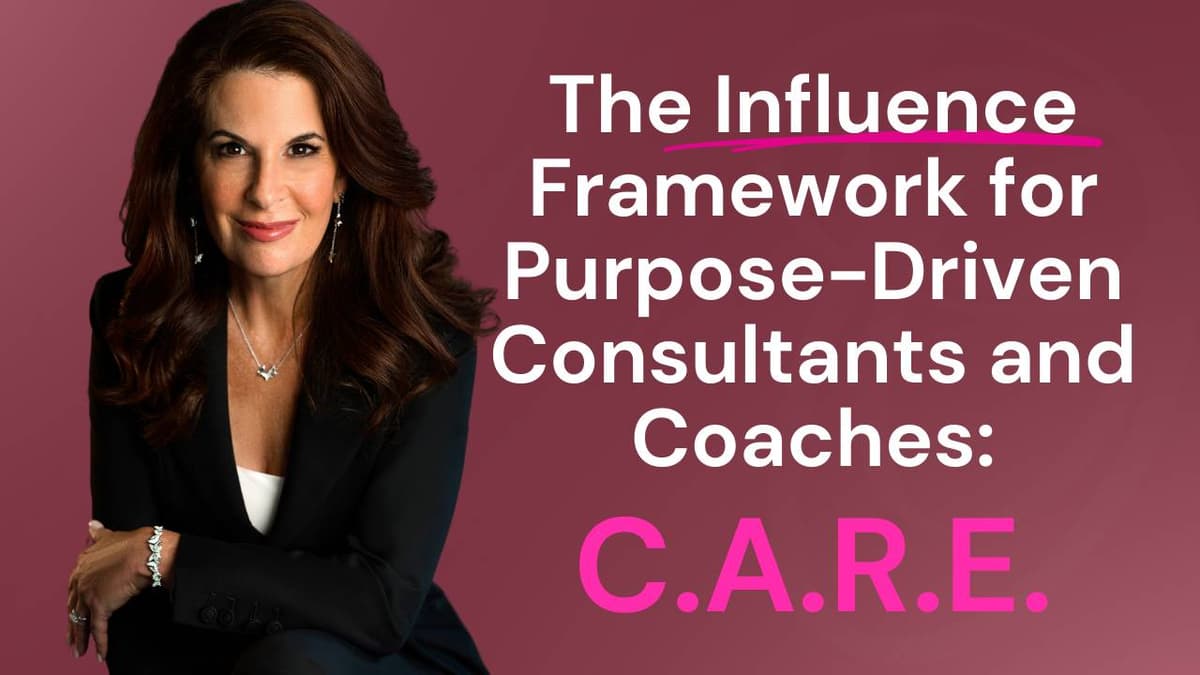
The Influence Framework for Purpose-Driven Consultants: C.A.R.E.
Betsy Jordyn introduces the C.A.R.E. framework—Connect, Ask, Reframe, Encourage—as an ethical, partnership‑based approach for consultants and coaches to influence clients without positional authority. The model emphasizes deep human connection, strategic questioning, reframing client concerns into clear themes, and supportive encouragement...

Rethinking ERP Transformation: A Governance Centric Framework for Sustainable Value Realization
Enterprise Resource Planning (ERP) projects continue to suffer cost overruns and muted business value, not because of technology limits but due to weak governance structures. Rajesh Arangamany proposes a five‑layer, governance‑centric framework that aligns strategic objectives, capability models, architectural accountability,...

Lean Roundup #201 – February 2026
The February 2026 Lean Roundup aggregates ten fresh blog posts that explore how Lean thinking is evolving across leadership, strategy, and technology. Highlights include "good trouble" as a catalyst for cultural change, the discipline of Leader Standard Work, and the...
Synpulse Strengthens Global Leadership in Commercial Insurance & Reinsurance with New Promotions
Synpulse announced the promotion of Marcel Loetscher to Senior Partner and Joel Smith to Partner within its Commercial Insurance, Reinsurance, ILS and Delegated Authority (CRID) practice. Loetscher, a 16‑year veteran who founded the New York office, will now head the...