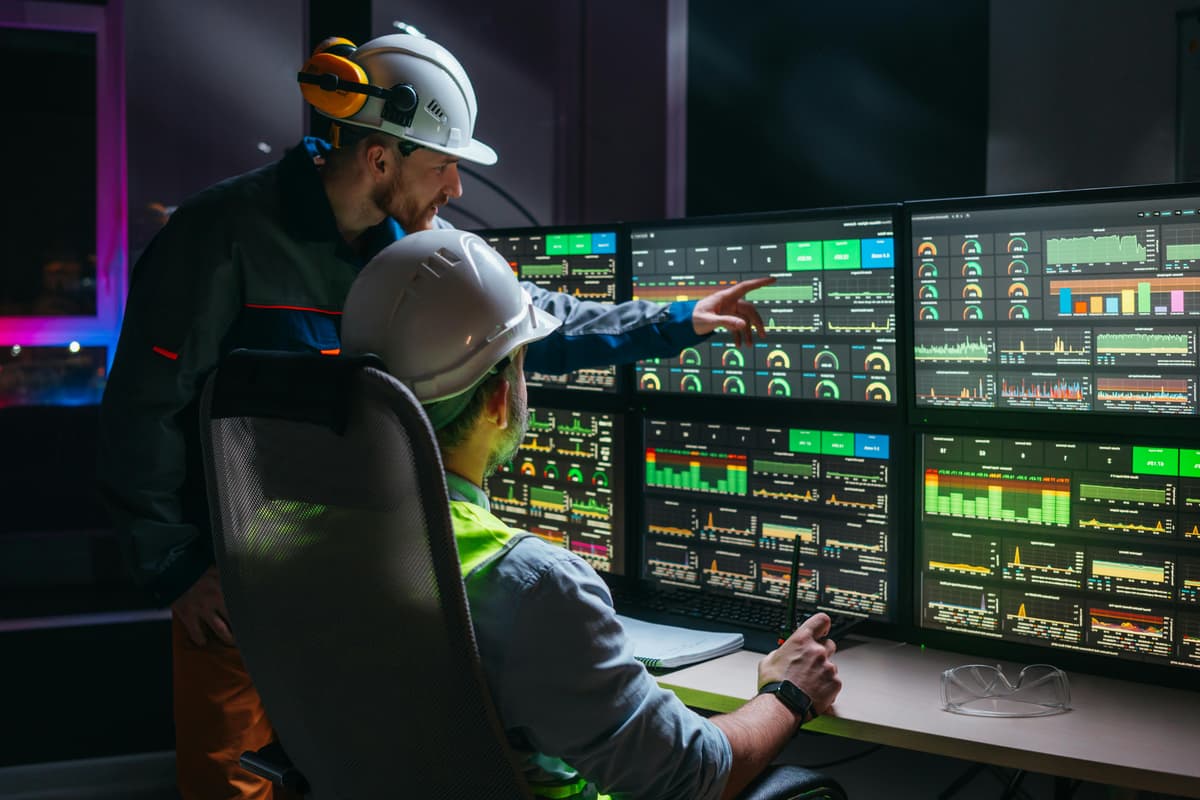
Human-Machine Interfaces Redefine SCADA and Cloud Integration
Why It Matters
By merging HMI and SCADA functions on open, cloud‑ready platforms, manufacturers gain faster ROI, lower integration costs, and greater agility in a rapidly digitizing industrial landscape.
Key Takeaways
- •Open protocols like OPC, MQTT simplify integration
- •Edge-capable HMIs now handle data logging and cloud sync
- •Expandable hardware platforms future‑proof industrial interfaces
- •Converging HMI/SCADA blurs traditional system boundaries
- •Security considerations essential with increased connectivity
Pulse Analysis
The transformation of human‑machine interfaces mirrors the broader shift toward open, network‑centric automation. Early HMIs were locked to proprietary hardware and offered only static, real‑time displays. Today, Ethernet/IP, Modbus/TCP, and EtherCAT provide a common language that lets HMIs speak directly to PLCs, sensors, and enterprise IT systems. By leveraging OPC UA and MQTT, engineers can stitch together legacy equipment with modern cloud services without costly custom gateways, accelerating deployment timelines and reducing total cost of ownership.
Beyond connectivity, the rise of edge‑capable HMIs redefines the functional boundary between operator consoles and supervisory control. Modern panels now embed local storage, perform data aggregation, and execute lightweight analytics before forwarding curated information to SCADA or cloud platforms. This edge processing reduces latency, eases bandwidth constraints, and enables real‑time decision making at the source. At the same time, the convergence of HMI and SCADA functions simplifies architecture, but it also introduces new security vectors that must be addressed through hardened firmware, network segmentation, and continuous monitoring.
Looking ahead, designers must prioritize scalability and security from the outset. Selecting modular hardware that supports additional Ethernet cards, protocol stacks, and secure VPN tunnels ensures the interface can adapt to emerging standards and expanding data‑driven initiatives. As more manufacturers adopt predictive maintenance and AI‑powered analytics, the ability of HMIs to act as reliable data conduits to the cloud will become a competitive differentiator. Investing in open‑standard, edge‑enabled HMI solutions positions industrial firms to capitalize on digital transformation while safeguarding operational resilience.
Human-machine interfaces redefine SCADA and cloud integration


Comments
Want to join the conversation?
Loading comments...