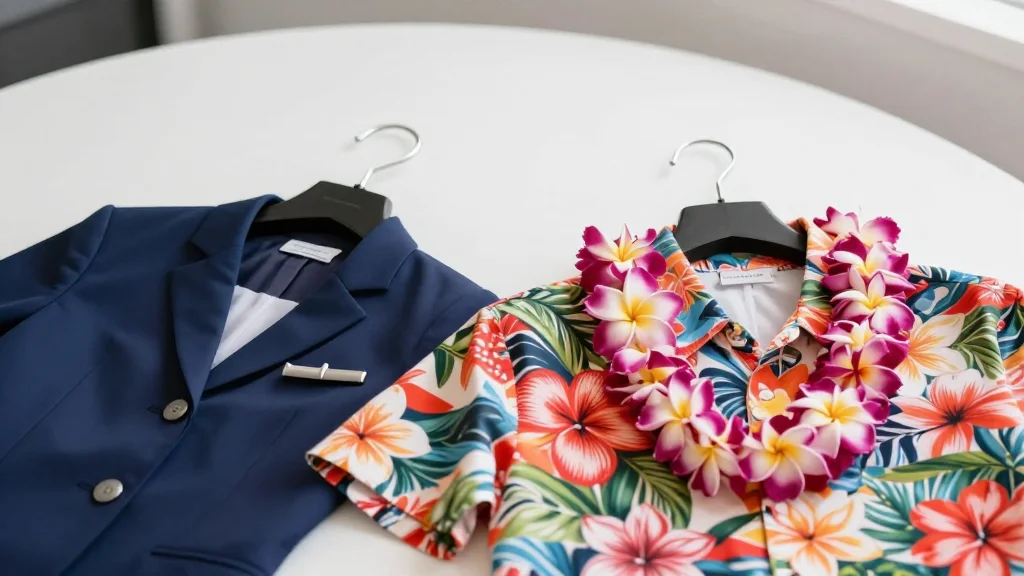
Alaska Air’s Dual‑Brand Merge Sparks Uniform Pushback Among Hawaiian Flight Attendants

Companies Mentioned

Alaska Air Group Inc.
Boeing
BA
Why It Matters
The uniform dispute underscores a broader challenge in modern marketing: how to merge legacy brand equity with new corporate structures without alienating core audiences. Hawaiian Airlines’ cultural symbols—flowers, leis, the Pualani logo—are integral to its identity and have been leveraged for decades in its marketing narrative. Stripping those symbols on high‑visibility international flights risks weakening the emotional connection that drives repeat business and premium pricing. Beyond the airline industry, the case offers a cautionary tale for any company pursuing a dual‑brand strategy. Maintaining separate brand voices requires more than separate logos; it demands consistent employee experience, clear internal communication, and policies that respect the cultural DNA of each brand. Failure to align these elements can spill over into public perception, eroding trust and diminishing the very differentiation the strategy seeks to protect.
Key Takeaways
- •Alaska Air’s $1.9 bn acquisition of Hawaiian Holdings triggers new uniform rules for ~250 Seattle‑based attendants
- •Eric Edge, VP of brand and marketing, calls the dual‑brand approach "unprecedented" in U.S. aviation
- •Alisa Onishi cites 96 years of Hawaiian brand heritage tied to the Pualani logo
- •Uniform change applies to Alaska‑branded long‑haul flights on Boeing 787 Dreamliners
- •Company cites brand integrity; unions and staff voice pushback over cultural symbols
Pulse Analysis
Alaska Air’s attempt to run two distinct brands under one corporate roof is a high‑stakes branding experiment that could reshape airline marketing playbooks. Historically, airline mergers have leaned toward brand consolidation—think United‑Continental or American‑US Airways—to achieve cost synergies and simplify customer perception. By contrast, Alaska’s decision to preserve Hawaiian’s cultural cachet while expanding Alaska’s global footprint reflects a belief that brand differentiation can be a competitive moat, especially in a market where loyalty is increasingly tied to experiential cues.
The uniform controversy reveals the friction point where brand theory meets employee reality. Marketing teams can craft compelling narratives, but frontline staff embody those stories daily. When a visual cue like a flower in the hair—an emblem of Hawaiian hospitality—is removed, the brand promise becomes abstract. This disconnect can manifest in lower employee morale, higher turnover, and ultimately a diluted passenger experience. The airline’s interim blended uniform may mitigate the visual inconsistency, but it also risks creating a hybrid identity that satisfies neither purist Hawaiian fans nor Alaska’s sleek, modern image.
If Alaska successfully navigates this tension, it could demonstrate a scalable model for preserving niche brand equity post‑acquisition—a valuable lesson for sectors beyond aviation, from consumer goods to tech. However, the stakes are high: missteps could erode Hawaiian’s loyal customer base, reduce ancillary revenue tied to brand‑specific merchandise, and invite criticism from cultural advocates. The next few months will test whether clear communication and respect for cultural symbols can bridge the gap between corporate strategy and employee identity, setting a benchmark for future dual‑brand integrations.
Alaska Air’s Dual‑Brand Merge Sparks Uniform Pushback Among Hawaiian Flight Attendants
Comments
Want to join the conversation?
Loading comments...