Marketing Pulse Daily Digest

MARKETING PULSE

Friday, April 17, 2026

Market Intelligence for Marketing Professionals


🎯 Today's Marketing Pulse
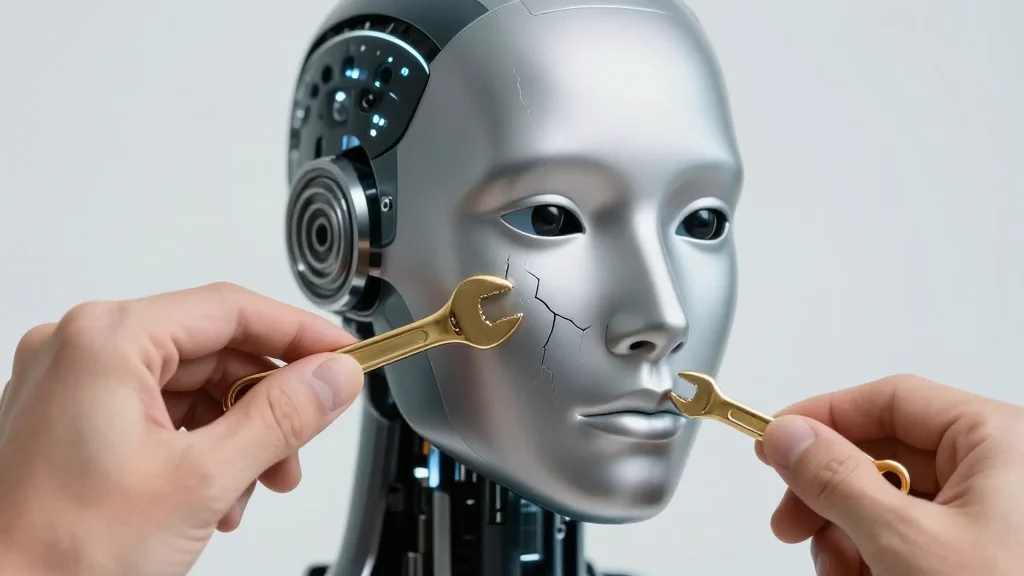
Brands Test ChatGPT Ads Amid High Costs and Limited Measurement

OpenAI introduced a paid advertising channel inside ChatGPT two months ago, prompting early‑stage campaigns from brands. Advertisers report high CPMs and six‑figure minimum spends, but measurement is limited to impressions with no clear performance benchmarks, leading to mixed sentiment.

🚀 Top Marketing Headlines

PUMA India turns RCB jersey into everyday fandom with #RCBEverywhere

PUMA India Turns RCB Jersey Into Everyday Fandom with #RCBEverywhere

PUMA India has launched #RCBEverywhere, a fan-led campaign encouraging supporters to take the RCB jersey beyond matchdays and into everyday life. Featuring Virat Kohli, Rajat Patidar, and Krunal Pandya, the campaign builds on how fans already wear the jersey across real-world moments. The campaign opens with a digital film where players urge fans to make the jersey a part of daily routines, positioning it as a symbol of identity beyond the stadium. Adding a cultural layer, the campaign also brings in the viral Kumbh Mela fan, whose appearance in an RCB jersey became a widely shared moment, grounding the idea in real fan behaviour. View this post on Instagram Speaking in the reel, RCB star batter Virat Kohli says , _“Guys, you’ve really made this a thing. And we love it. So, this season, don’t leave this jersey behind.”_ *Skipper Rajat Patidar adds* , _“Take it everywhere. We’re not joking. Everywhere.”_ *All-rounder Spinner Krunal Pandya further explains* , _“Your office. Your vacation. Your brother’s wedding. Your next job interview.”_ Shreya Sachdev, head of marketing, PUMA India said , _“The PUMA x RCB partnership has always been about putting the fan at the centre of the experience. Be it our fan on a billboard activation last year, or the #RCBEverywhere movement this year, we have consistently looked to bring fans closer to the game. For a fan, the jersey is more than a garment. It is a symbol of emotion, shared pride and belonging through sport. This year’s authentic jersey has already set new benchmarks, with sales surging 300% over last year and it ranking as PUMA’s top-selling apparel globally within the first week of its launch. With #RCBEverywhere, we want to celebrate how fans make this jersey their own, wherever they go.”_ #RCBEverywhere builds on PUMA India’s long-standing fan-first approach. From putting fans shoulder-to-shoulder with players through the tech-led ‘Fan on a Billboard’ experience last season to large-scale participation-led activations to create Guiness World Record, the focus has remained on deepening fan engagement. The #RCBEverywhere campaign will continue to roll out across digital platforms, additional fan participation initiatives and Instagram-worthy on-ground activations in the coming weeks. Keeping up with this momentum, PUMA India is also scaling its recently launched RCB Instagram Broadcast channel - giving fans inner circle access to behind-the-scenes campaign shoots, styling sessions, candid locker-room moments, interactive polls, along with early access to merchandise and special content drops. With this, PUMA reinforces is at the forefront of sport and culture, creating deeper, more direct connections between athletes and fans. At the centre of this push is RCB’s growing cultural and commercial strength. With a brand value of USD 269 million, the highest in the league and among the most valuable franchises globally, and over 22 million followers on Instagram, leading 16.2 per cent share of engagement in 2025, the team continues to set the pace for fan-led conversations.

afaqs! (India)

What Dove, Netflix, and Nike Didn’t Do on Reddit Is Why They’re Winning

What Dove, Netflix, and Nike Didn’t Do on Reddit Is Why They’re Winning

Reddit's global head of insights Rob Gage dishes on how brands are hacking the platform at Social Media Week.

Adweek (People Moves)

Coachella 2026 wasn’t just a music festival; it was a brand universe

Coachella 2026 Wasn’t Just a Music Festival; It Was a Brand Universe

Coachella has always been more than a music festival. But in 2026, it felt less like a concert and more like a fully immersive brand universe, one where the music, almost ironically, wasn’t always the main event. Held annually in California’s Colorado Desert, Coachella has grown from a niche music gathering into a global cultural moment. Its scale today owes as much to social media as it does to its lineup. Before Instagram and TikTok, the festival was big. Now, it’s unavoidable. And this year, brands didn’t just show up; they built worlds. Rhode (stylised as 'Rode' in some chatter), a beauty brand founded by Hailey Bieber, created an entire 'Rhode world', complete with claw machines, games, and touch-up stations, turning beauty into an interactive playground.  View this post on Instagram The timing was no accident. Hailey Bieber (model-entrepreneur and wife of Justin Bieber) synced the drop of a Justin Bieber collaboration with his Coachella headline set, blurring the line between product launch and pop culture moment. View this post on Instagram Kendall Jenner’s (American model and entrepreneur) 818 Tequila set up the '818 Outpost', a hybrid influencer hotspot-meets-hospitality zone.  View this post on Instagram In a crossover that screamed Coachella-core, the brand collaborated with Rhode to serve coffee spiked with tequila shooters alongside lip treatments, because why pick between skincare and spirits? Neutrogena, meanwhile, played a smarter, more functional game.  View this post on Instagram With temperatures soaring in the desert, it installed over eight SPF stations across the venue, turning sunscreen into a necessity rather than a plug. It’s the kind of “utility marketing” that doesn’t ask for attention; it earns it. Magnum leant into indulgence, building luxe dessert lounges that doubled up as content backdrops and was also among the pioneer brands that brought Indian influencers to the festival as part of its creator-led experience strategy. View this post on Instagram While Barbie went full fantasy, rolling out a “You Can Be Anything” world with charm bars and portrait studios. View this post on Instagram And then there was Red Bull, which scaled things, literally. Its three-storey 'Red Bull Mirage', a 20,000 sq ft structure near the Quasar stage, functioned as a festival within the festival.  View this post on Instagram From mist-cooled viewing decks to its cult $6 slushies, it was less an activation and more a landmark. Google Gemini is among the brand partners offering interactive AI-led experiences at the festival. As part of its on-ground activations, it has set up four AI photobooths across the venue that use Gemini models and Nano Banana technology to digitally remix attendees’ images in real time. Visitors can experiment with different visual styles and print their edited photos on the spot. View this post on Instagram Gap Hoodie House: As the official apparel partner, Gap debuted an immersive hub where attendees can purchase and personalise exclusive heavyweight hoodies with custom patches and daily charm drops. View this post on Instagram Starbucks made its debut as the official coffee, tea, and Refreshers sponsor, with a dedicated onsite coffeehouse and an exclusive product drop.  View this post on Instagram The brand also brought back the Unicorn Frappuccino for a limited festival-only run, alongside a rotating menu of complementary cold beverages such as cold brew, iced matcha lattes, and strawberry açaí refreshers.  Put together, the message was clear: at Coachella 2026, brands weren’t sponsoring culture; they were producing it. Coachella turns 'Bieberchella' Amid all this, Justin Bieber did something unexpected; he made the music the most talked-about thing again, but on his own terms. View this post on Instagram Returning to Coachella after four years, Bieber ditched the traditional high-production set for something far more stripped down and self-aware. Performing with a laptop, he livestreamed parts of his set on YouTube, revisiting old hits like Baby and Never Say Never, and even pulling up his pre-fame YouTube clips. It was nostalgic, meta, and perfectly engineered for the internet. A throwaway comment from Katy Perry, “Thank God he has Premium” (referencing YouTube Premium), only added fuel to the moment, turning it into a meme almost instantly. View this post on Instagram Social media did the rest. Clips from the set flooded feeds, timelines, and reels, quickly earning the nickname "Bieberchella". The FOMO economy goes global (and Indian) If Coachella once belonged to those who could attend, today it belongs to those who can watch. Interestingly, while previous years saw Indian artists make a mark on the Coachella stage, Diljit Dosanjh became the first Punjabi-language artist to perform in 2023, followed by AP Dhillon’s debut in 2024.  2026 had no major Indian performer on the lineup. Yet, India’s presence was difficult to miss. How Indian influencers made Coachella trend back home Indian creators flying into the festival only amplified that loop.  View this post on Instagram Influencers such as Kritika Khurana (That Boho Girl), Anahita Karanjia and Taneesho (Tanesha Mirwani) were part of Magnum’s creator crew. View this post on Instagram While Apoorva Mukhija (The Rebel Kid) attended as Red Bull's official ambassador. View this post on Instagram Their content, outfits, brand experiences, and behind-the-scenes snippets turned Coachella into a second-screen event for audiences back home. The result? Social media timelines are flooded with reels, outfit breakdowns, and a recurring sentiment: "Maybe next life, we’ll be the influencers getting sponsored to Coachella.” View this post on Instagram The result? Full-blown FOMO From Bieber’s set to influencer walkthroughs of brand activations, Indian social media timelines were saturated. Coachella wasn’t just happening in California; it was unfolding on Instagram Stories in Mumbai, Delhi and other parts of the country in real time. And while headline acts such as Karol G (the first Latina headliner), Sabrina Carpenter’s theatrical set, and Bieber’s viral performance drove buzz, it was this interplay of creators, brands, and platforms that truly defined the festival.

afaqs! (India)

Threads Expands Social Media Management Functionality

Threads Expands Social Media Management Functionality

Threads is enhancing its API with additional social-media management tools designed to help brands and creators expand reach and scheduling functionality.

MediaPost Social Media & Marketing Daily

Albertsons Media Collective offers new measurement for advertisers

Albertsons Media Collective Offers New Measurement for Advertisers

Albertsons Media Collective, the grocery-store operator’s retail media network, said it has launched what it calls “onsite incrementality measurement.” The retailer described the new offering as a way to provide “clear insight” into how onsite display media drives new sales. The retailer said the methodology for Albertsons Media Collective’s onsite incrementality measurement “uses test and […] The post Albertsons Media Collective offers new measurement for advertisers appeared first on Digital Commerce 360.

Digital Commerce 360

💬 Top Marketing Social Posts

Thread by @katieandjoeonthego

Thread by @Katieandjoeonthego

The amount of brands who want us to post about them without ever seeing/touching the product right now is insane. Everything from a robotic lawnmower to outdoor gear. They want us to just post their pre-selected images on our channels... hard pass for us.

by Katie & Joe on the Go
#martechday #goldcastpartner | Scott Brinker | 14 comments

#martechday #goldcastpartner | Scott Brinker | 14 Comments

A quick disclosure up front: this post is sponsored by Goldcast . I was comfortable doing it because we use Goldcast ourselves for our events — including the upcoming #MartechDay release of the State of Martech 2026 report on May 5 — and I’ve found it to be a terrific platform. One of the stranger gaps in the modern martech stack is video. Not video as content. We have plenty of that. Video as a system. We’ve spent the past 20 years operationalizing channels such as email, web, paid media, and social. We built workflows around them. Analytics. Automation. Governance. Orchestration. We turned them into managed, measurable parts of how marketing actually works. But video still often lives in a parallel universe. It’s hugely important, of course. It shapes awareness, education, trust, events, customer engagement, and buying decisions. But in a lot of organizations, it’s still handled as a one-off production effort. A webinar happens. A virtual event happens. A smart customer conversation gets recorded. And then what? Too often, the answer is: the video gets posted somewhere, a few clips get carved out of it, someone says “we should do more with this,” and then everyone moves on to the next thing. Which is a shame, because these are often some of the richest assets marketing creates. And I think AI is making that mismatch harder to ignore. Because one of the most important things AI is doing in martech isn’t just generating more stuff. It’s helping operationalize things that used to be too manual, too messy, or too expensive to treat systematically. In other words: turning effort into infrastructure. That’s one of the things I appreciate about Goldcast. It treats video less like a standalone output and more like a system that spans the full lifecycle: the live experience, the capture of the content, the repurposing of that content into downstream assets, and the measurement of engagement and impact. That feels like a much more mature way to think about video. The future here isn’t just making more video because AI makes it easier. It’s making video finally behave like a real layer in the stack. https://lnkd.in/euFRr4tB #GoldcastPartner

by Scott Brinker
Tweet by @kamil_sattar

Tweet by @Kamil_sattar

Manscaped sponsored 2,000+ YouTubers, generating 2 billion views in one year and scaling revenue from $3M to nearly $300M. Meanwhile you're complaining about Facebook ad costs while ignoring the massive leverage of creator partnerships.

by Kamil Sattar