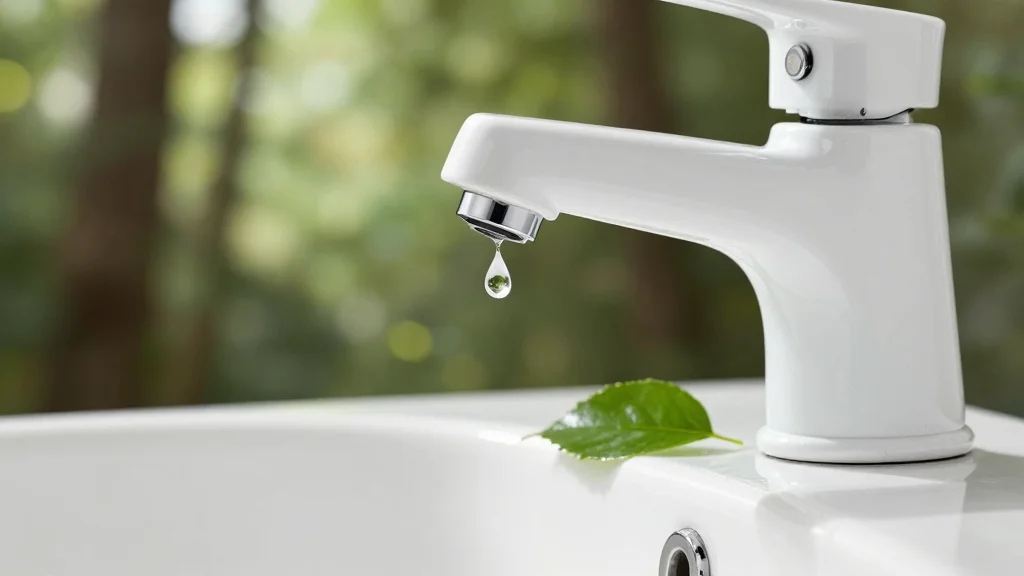
Brondell Leverages Water Wellness and Sustainability to Redefine Home‑Care Marketing

Why It Matters
Brondell’s pivot reflects a broader shift in the home‑care market where health, sustainability and lifestyle branding intersect. As consumers demand transparency about water quality and environmental impact, brands that can embed these concerns into product narratives gain a competitive edge. The company’s emphasis on measurable initiatives—such as tree‑planting counts and PFAS‑related messaging—offers a template for rivals seeking to move beyond feature‑driven advertising. The strategy also signals that water‑related wellness is becoming a mainstream marketing category, opening opportunities for cross‑industry collaborations between appliance makers, health researchers and environmental NGOs. If Brondell’s approach drives measurable sales lift, it could accelerate the adoption of water‑efficiency technologies across the broader consumer‑goods sector.
Key Takeaways
- •Brondell’s marketing now centers on water wellness, linking bidets and filtration to health and sustainability.
- •PFAS detected in 98.8% of >10,500 U.S. blood samples, fueling demand for clean‑water solutions.
- •U.S. consumers use an average of 141 toilet‑paper rolls per year, prompting bidet promotion as an eco‑alternative.
- •Brondell participates in 1% for the Planet, supporting reforestation in East Tanzania and kelp‑forest projects with Seatrees.
- •Acquisition of Nebia expands Brondell’s water‑conservation technology portfolio.
Pulse Analysis
Brondell’s integrated narrative is a textbook case of purpose‑driven branding gaining traction in a commoditized product space. By anchoring its messaging to hard data—PFAS prevalence, toilet‑paper consumption rates, and tree‑cutting statistics—the brand transforms ordinary bathroom fixtures into symbols of personal and planetary health. This approach mirrors the success of other consumer‑goods firms that have turned sustainability from a peripheral claim into a core value proposition, such as Patagonia’s environmental activism or Dyson’s emphasis on engineering excellence.
Historically, bathroom accessories have been marketed on convenience and luxury alone. Brondell’s shift to health‑centric storytelling taps into a growing consumer willingness to pay a premium for products that promise measurable wellness benefits. The PFAS statistic, in particular, provides a compelling hook that resonates with a public increasingly aware of invisible contaminants. By positioning its filtration and bidet lines as defensive tools against such threats, Brondell differentiates itself from generic competitors that lack a clear health narrative.
Looking forward, the sustainability component—especially the partnership with 1% for the Planet—offers a tangible proof point that can be quantified in marketing dashboards. If Brondell can translate tree‑planting metrics and water‑saving performance into consumer‑facing KPIs, it will set a benchmark for accountability in the sector. Competitors will likely respond by either amplifying their own eco‑initiatives or by seeking to undercut Brondell on price, potentially sparking a price‑quality trade‑off that could reshape the market’s pricing dynamics. The success of Brondell’s campaign will therefore be a bellwether for how deeply purpose can be woven into product marketing without diluting brand equity.
Brondell Leverages Water Wellness and Sustainability to Redefine Home‑Care Marketing
Comments
Want to join the conversation?
Loading comments...