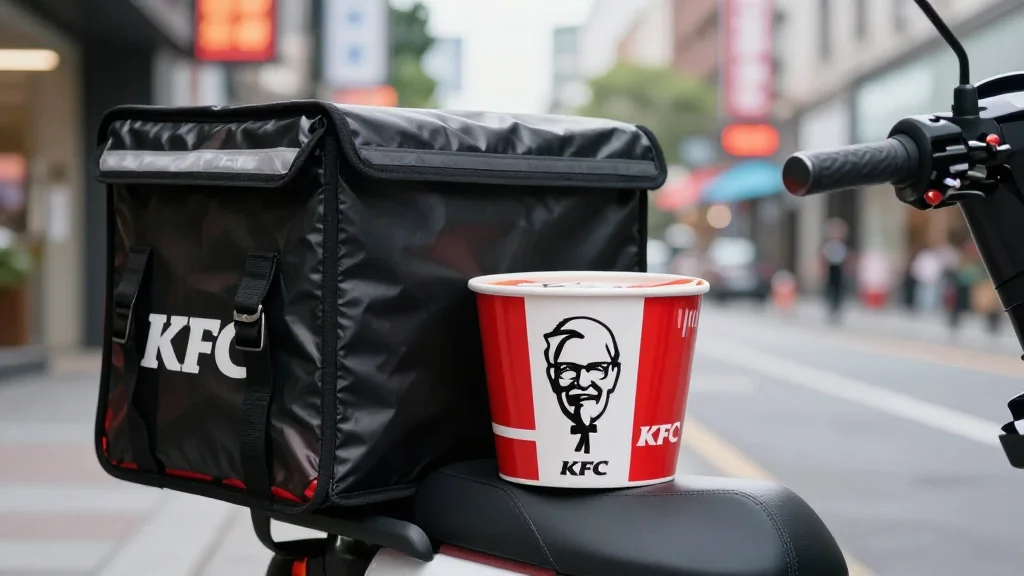
KFC China Sales Jump 33% on Delivery Boom, Margins Tighten

Companies Mentioned

Pizza Hut
Why It Matters
The KFC China story illustrates how fast‑food brands are reconfiguring their marketing mix around delivery platforms to capture demand in a price‑conscious market. By making delivery the primary sales channel, brands can reach a broader, cost‑sensitive audience, but they also inherit the cost structures and margin pressures of platform subsidies. Marketers must therefore balance the reach of delivery‑centric campaigns with the financial realities of lower profitability. If the margin squeeze persists, brands may shift spend toward higher‑margin channels such as loyalty programs, in‑store experiences, and premium menu items. The outcome will shape how Chinese fast‑food chains allocate advertising budgets, negotiate platform fees, and design promotions that protect both top‑line growth and bottom‑line health.
Key Takeaways
- •Delivery sales at KFC China grew 33% YoY in Q1, reaching 55% of total revenue.
- •Profit margins fell 190 basis points due to higher rider subsidies.
- •Pizza Hut’s delivery share rose to 51% of its sales, up 9 points YoY.
- •Yum China mitigated half of the margin hit through store‑operation improvements.
- •AI‑driven demand‑forecasting tools and dark‑kitchen pilots slated for rollout by end‑2026.
Pulse Analysis
KFC China’s delivery‑led growth underscores a broader shift in Chinese consumer behavior: convenience now trumps experience, especially among the “996” workforce that values low‑cost, time‑saving meals. Marketers have capitalized on this by flooding digital channels with hyper‑targeted promotions tied to delivery apps, effectively turning every order into a data point for future campaigns. However, the margin erosion reveals a structural flaw—subsidizing platform fees erodes profitability faster than sales can compensate.
Historically, fast‑food chains in China relied on aggressive real‑estate expansion and in‑store promotions to drive traffic. The delivery boom forces a re‑evaluation of that playbook. Brands that can integrate delivery data into their CRM systems will gain a competitive edge, enabling personalized offers that command higher average ticket sizes without further eroding margins. Conversely, firms that remain dependent on blanket platform subsidies risk a race to the bottom as rivals negotiate better terms or develop proprietary logistics.
Looking forward, the sustainability of the delivery‑first model will hinge on three variables: regulatory pressure on platform fees, labor cost dynamics, and consumer willingness to pay a premium for faster, higher‑quality service. If regulators clamp down on rider subsidies, brands may be forced to pass costs onto consumers, potentially dampening demand. Alternatively, innovations such as ghost kitchens or AI‑optimized routing could restore margin health while preserving the delivery volume that has become a lifeline for sales in a sluggish economy.
KFC China Sales Jump 33% on Delivery Boom, Margins Tighten
Comments
Want to join the conversation?
Loading comments...