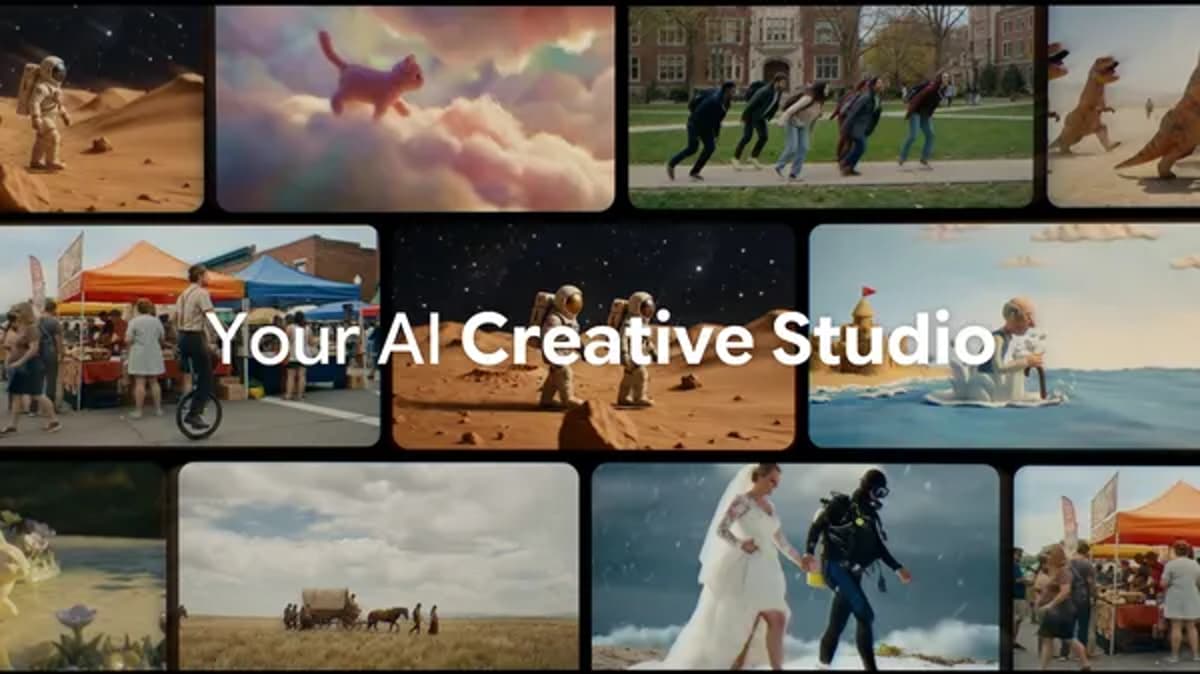
New Ways to Create and Refine Content in Flow
•February 25, 2026
0
Why It Matters
The enhancements turn Flow into a single‑source AI studio, cutting tool‑switching friction and accelerating content creation for marketers, filmmakers, and product teams. This positions Google to capture a larger share of the fast‑growing generative media market.
Key Takeaways
- •Integrated Whisk and ImageFX into Flow’s unified workspace.
- •Nano Banana model enables instant high‑fidelity image‑to‑video conversion.
- •New asset grid and Collections streamline media organization.
- •Lasso tool plus text prompts allow precise AI‑driven edits.
- •Free image generation and project migration launch March.
Pulse Analysis
The generative‑AI wave has reshaped how brands produce visual assets, but fragmented toolchains still hinder efficiency. By merging its best‑in‑class image generators—Whisk and ImageFX—into Flow, Google eliminates the need for separate applications, offering creators a seamless pipeline from concept sketches to polished video. The inclusion of the Nano Banana model, a DeepMind‑backed image engine, further raises the bar, delivering photorealistic frames that can be instantly repurposed as video ingredients, a capability that rivals emerging competitors.
Effective asset management is a silent driver of creative velocity. Flow’s new grid interface, complete with Collections and an intuitive “@” tagging system, lets teams locate, group, and rearrange media in seconds. This is especially valuable for collaborative campaigns where dozens of assets evolve in parallel. By supporting drag‑and‑drop prompts, the platform encourages iterative experimentation, reducing the time spent on manual file organization and enabling faster approvals across marketing and production stakeholders.
Perhaps the most disruptive addition is the natural‑language editing suite. The lasso tool combined with text commands such as “remove the man” or “add koi fish” empowers users to make granular adjustments without learning complex software. Precise camera controls and clip‑extension features further blur the line between AI‑assisted drafts and final cuts. As a result, creators can accelerate turnaround from days to hours, lowering production costs and expanding the pool of users who can generate broadcast‑quality content. These upgrades signal Google’s intent to dominate the end‑to‑end AI creative workflow market.
New ways to create and refine content in Flow
0
Comments
Want to join the conversation?
Loading comments...