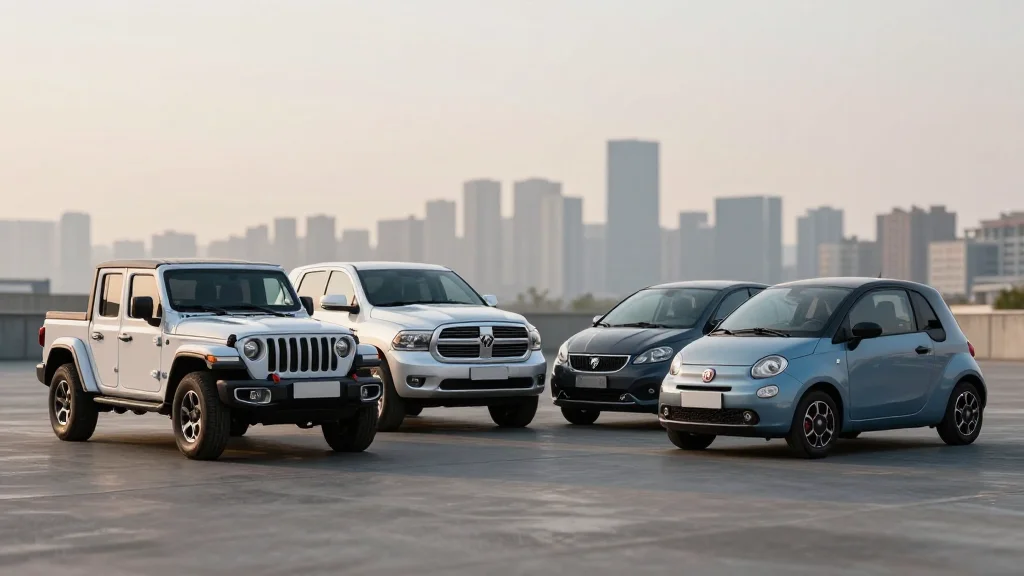
Stellantis Refocuses on Four Core Brands, Boosting Jeep, Ram, Peugeot, Fiat

Companies Mentioned
Why It Matters
The consolidation of Stellantis’s brand portfolio reshapes the competitive dynamics of the global automotive market. By funneling resources into Jeep, Ram, Peugeot and Fiat, the group can amplify the most profitable and recognizable names, potentially improving market share in key segments such as off‑road SUVs and pickup trucks. At the same time, the regional repositioning of weaker brands may reduce overall marketing spend but could also diminish global brand cohesion, affecting dealer networks and consumer perception. For marketers, the shift offers a case study in how large, multi‑brand corporations can streamline their messaging and allocate budgets more efficiently. It highlights the trade‑off between global brand power and localized relevance, a balance that will become increasingly critical as automakers navigate the transition to electric vehicles and contend with aggressive Chinese entrants.
Key Takeaways
- •Stellantis will prioritize Jeep, Ram, Peugeot and Fiat with a "material increase" in funding.
- •The plan, to be unveiled on May 21, will relegate the other 10 brands to regional roles.
- •A €22.2 billion ($24 billion) charge from last year's EV scale‑back underscores the need for a tighter strategy.
- •Marketing spend will concentrate on high‑impact global campaigns for the four core brands.
- •Analysts warn success hinges on balancing cost efficiency with preserving brand equity.
Pulse Analysis
Stellantis’s decision to narrow its brand focus reflects a broader industry pivot toward brand consolidation as a lever for marketing efficiency. Historically, the group’s 14‑brand architecture allowed it to cover every market niche, but it also diluted advertising dollars and created overlapping messaging. By concentrating on Jeep, Ram, Peugeot and Fiat, Stellantis can achieve economies of scale in media buying, creative development, and digital activation, which is especially valuable as the cost of reaching consumers across fragmented channels continues to rise.
The move also signals a strategic response to the electrification race. The €22.2 billion charge from the previous year revealed that spreading EV development across too many marques was financially unsustainable. A tighter brand set enables the company to pool R&D and platform costs, delivering electric models under a unified technology umbrella while preserving distinct brand identities. This could accelerate time‑to‑market for EVs under the core names, giving Stellantis a clearer narrative to sell to both regulators and consumers.
However, the regionalization of legacy brands carries risk. Brands like Citroën and Opel have loyal customer bases and strong dealer networks in Europe. Reducing their global marketing footprint may erode brand equity, making them more vulnerable to Chinese competitors that are already leveraging aggressive pricing and localized campaigns. The success of Stellantis’s new strategy will ultimately depend on how well it can maintain the perceived value of its demoted brands while extracting maximum ROI from the amplified marketing push behind its four pillars.
Stellantis Refocuses on Four Core Brands, Boosting Jeep, Ram, Peugeot, Fiat
Comments
Want to join the conversation?
Loading comments...