WeWork Launches 'WeWork Go' Phone‑booth Pods to Tap Flexible Workspace Market

Companies Mentioned
Why It Matters
The WeWork Go pods illustrate a broader shift in the coworking industry from large, leased floors to modular, on‑demand workspaces. By leveraging high‑traffic venues, WeWork can monetize underutilized real‑estate and reach a segment of professionals who need occasional privacy but do not want a full‑time desk. This model could pressure traditional office landlords and larger coworking operators to rethink how they monetize foot traffic and transient demand. If the pods prove profitable, they may accelerate the trend toward micro‑location services, prompting other providers to launch similar offerings. The move also underscores how legacy brands can reinvent themselves after financial distress, using technology and brand equity to explore new revenue streams without heavy capital outlays.
Key Takeaways
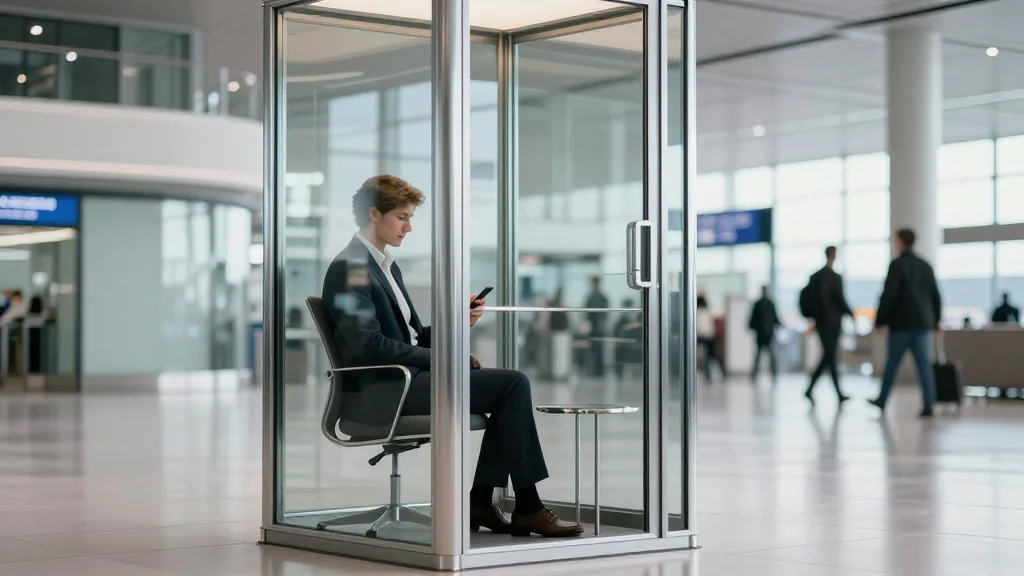
- •WeWork launched 'WeWork Go', a transparent phone‑booth office pod for 1‑4 users.
- •Pods will appear in airports, convention centers and hotel lobbies, targeting busy professionals.
- •CEO John Santora said the pods "expand the ability for our people to access our spaces and our technology."
- •WeWork, once valued at $47 billion, now trades near $0.05 per share and reports 550,000 members across 600+ locations.
- •The asset‑light pod strategy could create a new revenue stream less vulnerable to office‑leasing cycles.
Pulse Analysis
WeWork’s decision to introduce Go pods reflects a pragmatic response to the post‑pandemic reality where demand for permanent office space has softened, yet the need for flexible, private work environments remains strong. By embedding pods in existing high‑traffic venues, WeWork sidesteps the capital intensity of traditional expansion and taps into a pay‑as‑you‑go model that aligns with the gig‑economy mindset. This approach mirrors the broader shift in real‑estate toward “space‑as‑a‑service,” where providers monetize the right to use space rather than the space itself.
Historically, WeWork’s growth was fueled by aggressive lease‑back strategies that left the company over‑leveraged when demand collapsed. The Go pods represent a corrective course: a low‑cost, scalable product that can be deployed quickly and adjusted based on utilization data. If the pods achieve high occupancy, they could serve as a proof point for a new business unit that generates recurring subscription revenue while feeding users into WeWork’s larger ecosystem of membership services.
Competitors will likely watch the rollout closely. Companies like Industrious have experimented with pop‑up offices, but few have the brand cachet and integrated booking platform that WeWork offers. Success could force the industry to accelerate micro‑location offerings, potentially reshaping how flexible‑workspace providers think about market segmentation. Conversely, if utilization lags, it may reinforce the notion that demand for truly private, short‑term workspaces is limited to niche use cases. Either outcome will provide valuable data points for investors assessing the long‑term viability of asset‑light coworking models.
WeWork launches 'WeWork Go' phone‑booth pods to tap flexible workspace market
Comments
Want to join the conversation?
Loading comments...