Why It's Best For Marketers To Reach Gen Z On The Go
Companies Mentioned

Why It Matters
Marketers gain a data‑driven roadmap to reach Gen Z where they’re most attentive—during real‑world rides—unlocking higher ad recall and conversion potential. Lyft’s autonomous infrastructure hints at future in‑car advertising channels, expanding brand touchpoints beyond the app.
Key Takeaways
- •Gen Z makes up 24% of riders but 28% of rides.
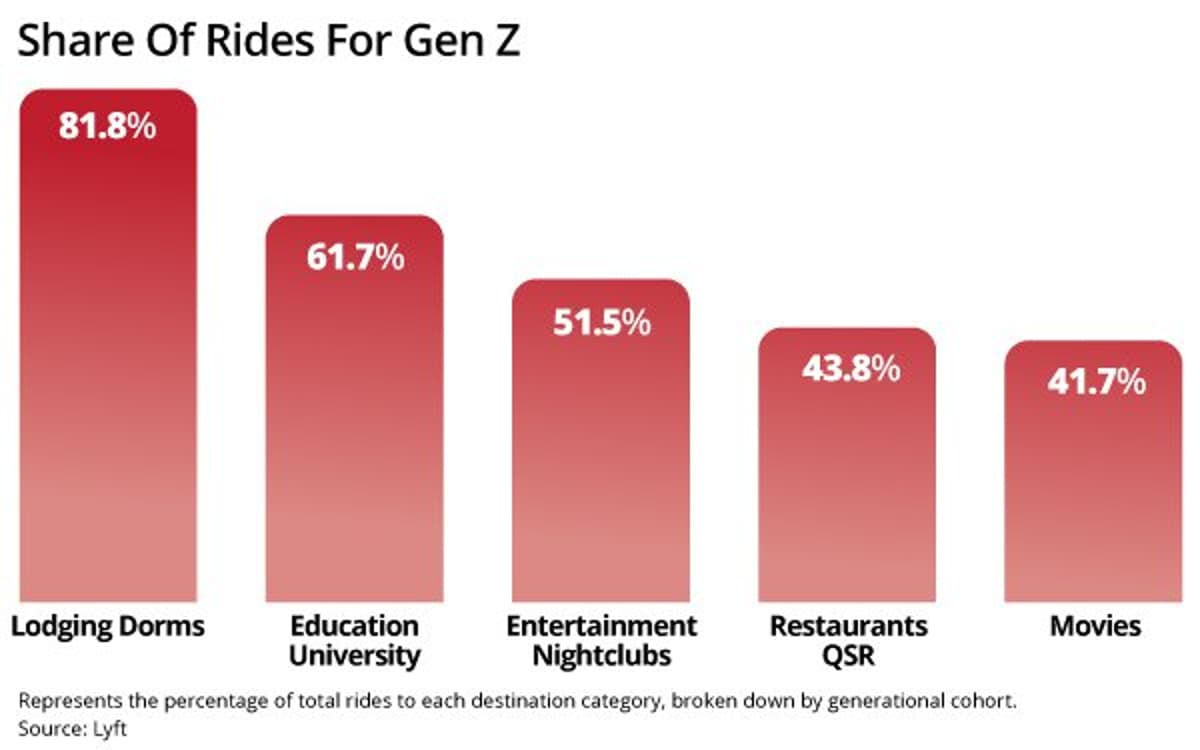
- •46.5% of Lyft rides to Taco Bell are Gen Z.
- •31.2% of Gen Z rides occur on weekends, 23.5% between midnight‑5 am.
- •Video ads achieve 78‑90% completion rates on Lyft’s platform.
- •Female Gen Z riders respond strongly to coupons and value messaging.
Pulse Analysis
The mobility habits of Generation Z are reshaping how brands allocate ad spend. While traditional screen‑based campaigns still matter, Lyft’s data shows that Gen Z prefers experiences that blend convenience with spontaneity, opting for ride‑hailing over personal vehicles. Their travel peaks during late‑night hours and weekends, creating natural windows where users are less distracted and more receptive to contextual messaging. Marketers can therefore align promotions with these high‑attention moments, leveraging the platform’s ability to deliver location‑aware offers that feel immediate and relevant.
Engagement metrics from the report highlight the potency of video and notification formats within the Lyft ecosystem. Completion rates between 78% and 90% dwarf typical mobile benchmarks, indicating that riders watch ads when they’re embedded in the journey flow. Push, local, infotainment, and ride‑offer notifications each capture distinct slices of attention, with female Gen Z users showing particular sensitivity to coupons and value‑driven content. This granular insight enables brands to tailor creative assets—short, entertaining clips paired with time‑limited discounts—to maximize conversion while respecting the rider’s on‑the‑go mindset.
Beyond the immediate advertising implications, Lyft’s investment in an 80,000‑square‑foot facility for Waymo autonomous vehicles signals a longer‑term shift toward in‑car media opportunities. As autonomous fleets scale, the interior cabin becomes a premium ad inventory, offering brands a captive audience during longer rides. Marketers that begin integrating ride‑based strategies now will be positioned to capitalize on this emerging channel, blending data‑driven targeting with the immersive potential of autonomous mobility.
Why It's Best For Marketers To Reach Gen Z On The Go
Comments
Want to join the conversation?
Loading comments...