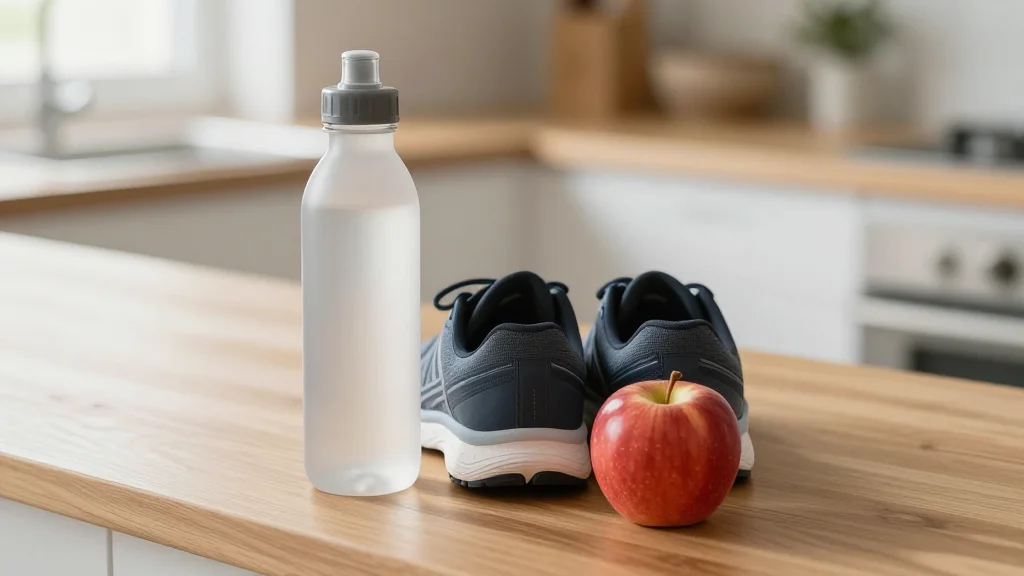
New Guide Shows Habit‑Stacking Can Accelerate Health and Wellness Goals

Companies Mentioned

Why It Matters
Habit‑stacking reframes motivation from a fleeting feeling to a repeatable system, offering a concrete pathway for millions struggling to translate health intentions into action. If the technique gains empirical support, it could reshape wellness programming, from corporate health initiatives to digital coaching platforms, by emphasizing cue‑driven micro‑behaviors over motivational messaging. Moreover, the guide’s emphasis on specificity and anchoring aligns with emerging neuroscience findings that habit loops are reinforced through consistent cue‑response-reward cycles. As the self‑help industry continues to monetize motivation, habit‑stacking provides a low‑cost, evidence‑informed alternative that could democratize behavior change for underserved populations.
Key Takeaways
- •New Yahoo guide outlines habit‑stacking steps for health goals
- •Eve Glazier (UCLA Health) and Beena Persaud (Cleveland Clinic) endorse the technique
- •Katy Milkman (Wharton) notes limited research but strong theoretical backing
- •Small study of 50 participants showed stronger flossing habits when stacked
- •Guide urges specific, cue‑driven micro‑habits to replace reliance on motivation
Pulse Analysis
Habit‑stacking is poised to become a cornerstone of the motivation economy, bridging the gap between aspirational content and actionable behavior. Historically, self‑help literature has leaned heavily on motivational rhetoric, which research shows often fizzles without structural support. By embedding new actions within existing routines, habit‑stacking operationalizes the habit loop model popularized by Charles Duhigg and later refined by BJ Fogg. This shift from inspiration to implementation could drive higher engagement metrics for wellness apps that integrate cue‑based reminders, potentially increasing subscription retention.
From a competitive standpoint, firms that embed habit‑stacking into their product roadmaps—think habit‑tracking wearables, AI‑driven coaching bots, and corporate wellness platforms—will likely capture a growing segment of consumers disillusioned with generic motivation hacks. However, the lack of large‑scale randomized trials remains a vulnerability. As Milkman warns, the market may face a credibility crunch if early adopters cannot demonstrate measurable outcomes. Investors and product teams should therefore prioritize partnerships with academic labs to generate robust data, turning anecdotal success into statistically validated results.
Looking ahead, the next wave may see habit‑stacking combined with personalized data analytics, where machine learning predicts optimal anchor habits for each user based on circadian rhythms, activity patterns, and stress markers. Such integration would not only enhance efficacy but also create new revenue streams through premium, data‑driven coaching services. In short, the guide’s release signals both an opportunity and a challenge: the motivation sector can evolve from feel‑good messaging to evidence‑based habit engineering, provided it backs up claims with rigorous research.
New Guide Shows Habit‑Stacking Can Accelerate Health and Wellness Goals
Comments
Want to join the conversation?
Loading comments...