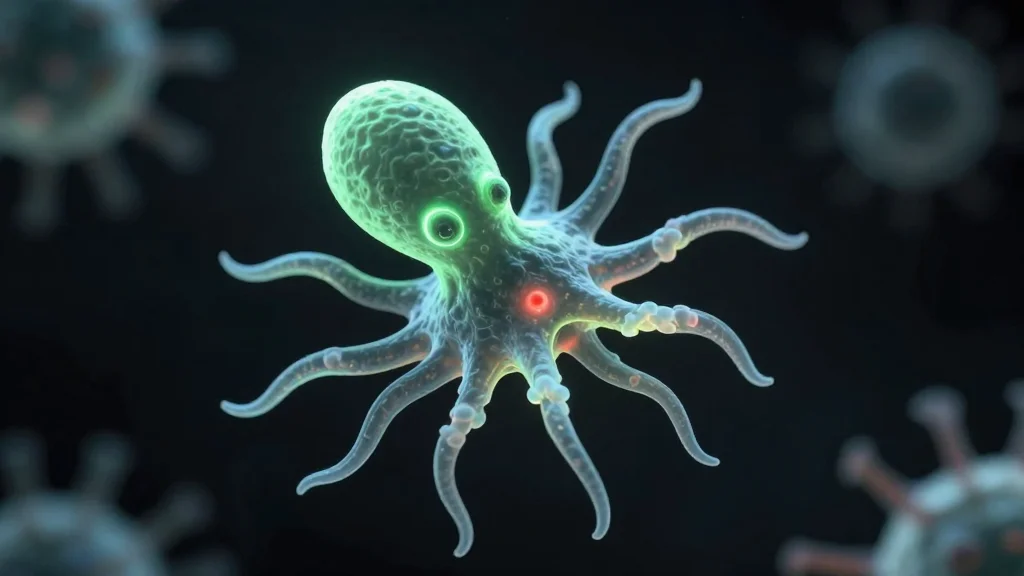
Octopus-Shaped Nanomachine Reprograms ATP Flow to Starve Cancer Cells
Key Takeaways
- •Octopus‑shaped nanomachine HSA‑ABC binds tumor membranes sixfold stronger.
- •ATP aptamer switch activates photodynamic therapy only in ATP‑rich tumors.
- •Combined photodynamic damage and DOX delivery kills 65% of cells in 4 h.
- •Feedback loop amplifies membrane disruption, deepening tumor bioenergetic crisis.
- •In mice, full system halts tumor growth without organ toxicity.
Pulse Analysis
Targeting cancer metabolism has traditionally focused on shutting down internal ATP production pathways, yet tumor cells readily reroute energy fluxes to survive. A newer frontier exploits the pronounced ATP efflux across malignant cell membranes, turning this byproduct into a therapeutic lever. By integrating DNA nanotechnology with protein engineering, the HSA‑ABC nanomachine leverages the extracellular ATP gradient as a precise activation signal, sidestepping the adaptive resistance that hampers glycolysis or oxidative‑phosphorylation inhibitors.
The HSA‑ABC construct features a human serum albumin core and multiple DNA‑based arms equipped with cholesterol anchors, a chlorin e6 photosensitizer, and an ATP‑responsive aptamer. In ATP‑rich tumor microenvironments, aptamer binding displaces a quencher, unleashing singlet‑oxygen generation upon 660 nm irradiation. Resulting membrane pores permit rapid doxorubicin entry, bypassing endocytosis and delivering lethal doses directly to the nucleus. Apoptosis then floods the extracellular space with additional ATP, re‑activating neighboring nanomachines in a feed‑forward cascade that magnifies membrane damage and deepens the bioenergetic crisis. Preclinical studies showed 65% tumor cell death within four hours and substantial tumor growth inhibition in mouse models, all while preserving major organ health.
Beyond its immediate efficacy, the nano‑octopus platform opens pathways for synergistic cancer therapies. The immunogenic cell‑death signatures observed suggest compatibility with checkpoint inhibitors, potentially amplifying anti‑tumor immunity. Moreover, the modular design could accommodate alternative pore‑forming agents or oncolytic peptides, expanding its applicability across cancer types. Challenges remain in scaling manufacturing and ensuring precise light delivery in deep tissues, but the concept redefines ATP flux from a passive marker to an active drug‑targeting conduit, heralding a new class of metabolically adaptive nanomedicines.
Octopus-shaped nanomachine reprograms ATP flow to starve cancer cells
Comments
Want to join the conversation?