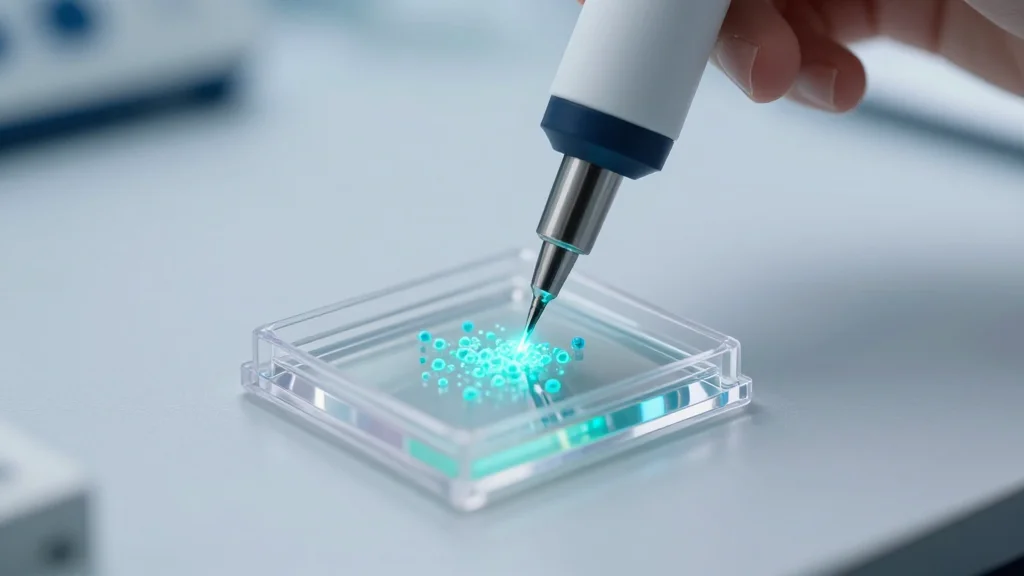
Researchers Use Nanomaterials and Ultrasound to Create Light Inside the Body
Key Takeaways
- •Ultrasound activates ceramic nanoparticles to emit light inside living tissue
- •Technique demonstrated in mice, enabling brain stimulation without implants
- •Blue 490 nm light can trigger neurons and support photodynamic cancer therapy
- •Researchers aim to develop biodegradable nanomaterials for human safety
- •Nanoparticles could pair with light‑activated gene editing for precise therapy
Pulse Analysis
Light‑based interventions have reshaped modern medicine, from optogenetic control of neural circuits to photodynamic destruction of tumors. Yet the very property that makes light useful—its limited penetration through tissue—forces clinicians to rely on invasive fiber‑optic probes or surgical exposure, raising infection risk and procedural complexity. The Stanford breakthrough sidesteps this bottleneck by converting ultrasound, a modality that traverses centimeters of soft tissue, into a localized light source. By dispersing engineered nanoparticles throughout the circulatory system, clinicians can now “paint” illumination onto any organ without breaching the skin.
The team engineered ceramic nanoparticles that remain dark until compressed by focused ultrasound, at which point they emit blue 490 nm photons. In mouse experiments the ultrasound‑driven light triggered specific neuronal populations, steering the animal’s turning behavior, and demonstrated sufficient intensity for photodynamic therapy concepts. Because the acoustic focus can be moved in real time, multiple sites can be illuminated simultaneously, offering a programmable light‑scanning platform. Researchers are already testing ultraviolet‑emitting variants to sterilize tissues and pairing the system with light‑activated CRISPR tools, promising spatially confined gene editing.
Commercializing this technology will hinge on replacing the current ceramic core with biodegradable, clinically approved materials that clear safely from organs such as the liver. If successful, the method could disrupt markets for endoscopic light delivery, neuromodulation devices, and targeted oncology lasers, offering a lower‑cost, outpatient alternative. Early‑stage investors are likely to watch the translational pathway closely, as regulatory clearance for nanomaterial‑based therapeutics remains stringent. Nonetheless, the convergence of ultrasound imaging, nanotechnology, and optogenetics positions this approach as a catalyst for next‑generation, minimally invasive therapies.
Researchers use nanomaterials and ultrasound to create light inside the body
Comments
Want to join the conversation?