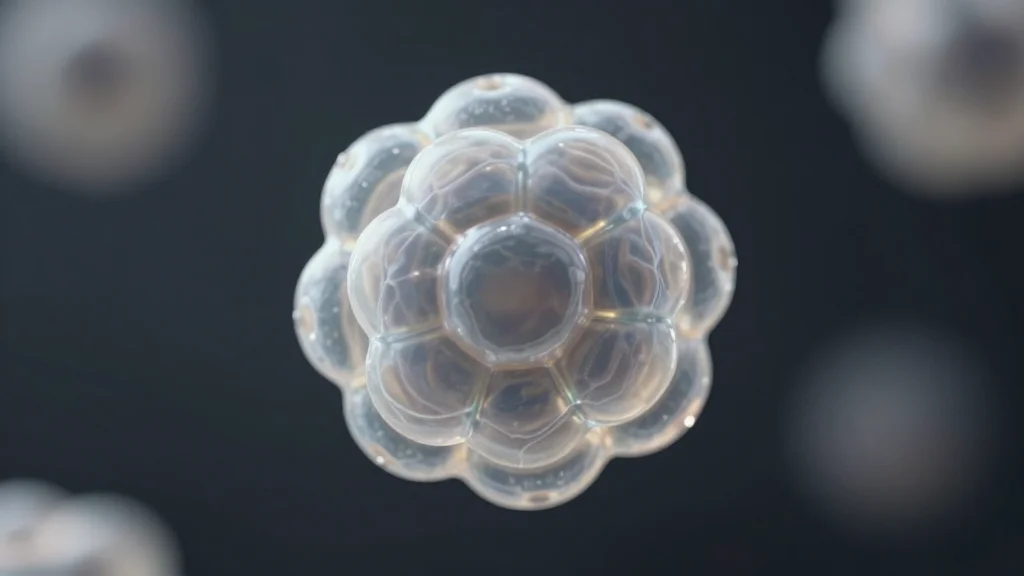
AI‑Designed Protein Nanocages Reach 220 Nm, Paving Way for Next‑Gen Vaccines

Why It Matters
The study bridges a long‑standing gap between computational protein design and practical nanomedicine. By demonstrating that a single, AI‑engineered protein can achieve quasisymmetric assembly, the work removes the need for multi‑component expression systems, streamlining regulatory pathways and manufacturing pipelines. For the nanotech sector, this represents a shift from synthetic polymers and lipid carriers toward biologically derived, programmable scaffolds that can be rapidly re‑engineered for emerging pathogens. Beyond vaccines, the technology could transform gene‑therapy delivery, where payload size and protection from immune clearance are paramount. The modularity of the design framework also means that future iterations could incorporate targeting ligands, responsive release mechanisms, or imaging agents, creating a versatile toolbox for precision medicine.
Key Takeaways
- •AI tools RFdiffusion and RoseTTAFold used to design single‑protein nanocages
- •Nanocages self‑assemble into quasisymmetric shells 70‑220 nm in diameter
- •Structures contain 180‑2,160 identical subunits (T = 3‑36)
- •Published in Nature; funded by South Korea’s Ministry of Science and ICT
- •Potential to replace lipid nanoparticles for vaccine and gene‑therapy delivery
Pulse Analysis
The convergence of deep‑learning protein design and cryo‑EM validation marks a watershed for nanotechnology. Historically, engineered protein cages have been limited to highly symmetric icosahedral forms, capping size at roughly 60 subunits. By breaking that symmetry barrier, Lee and Baker’s team unlocks a design space comparable to the most complex viral capsids, yet with the manufacturing simplicity of a single gene product. This could dramatically lower the cost curve for biologic delivery platforms, a factor that has historically favored large pharmaceutical players with extensive lipid‑nanoparticle expertise.
From a competitive standpoint, the breakthrough positions academic‑industry collaborations—especially those backed by government research programs—as agile innovators capable of outpacing traditional biotech pipelines. Companies that have invested heavily in mRNA lipid carriers may need to reassess their roadmaps, as protein nanocages promise better thermal stability and potentially reduced immunogenicity. However, the transition will hinge on demonstrating comparable encapsulation efficiency and in‑vivo performance.
Looking ahead, the next critical milestone is functional validation: loading mRNA, siRNA, or protein therapeutics and proving targeted delivery in animal models. Success would not only validate the platform’s therapeutic relevance but also catalyze a wave of venture capital into AI‑driven nanodesign startups. In the broader nanotech ecosystem, this work exemplifies how generative AI can accelerate material discovery, turning abstract computational predictions into tangible, market‑ready solutions within a few years.
AI‑Designed Protein Nanocages Reach 220 nm, Paving Way for Next‑Gen Vaccines
Comments
Want to join the conversation?
Loading comments...