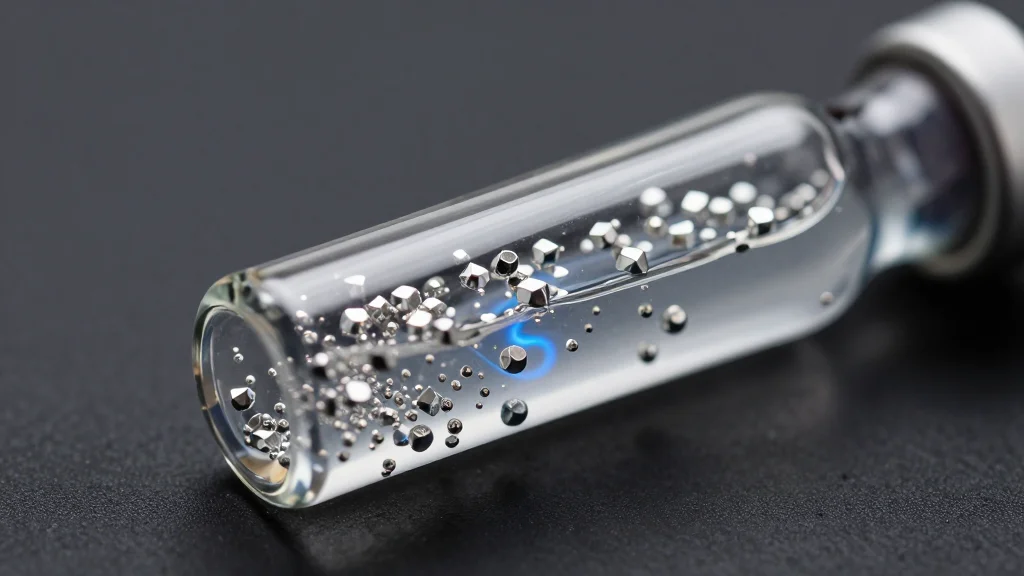
Cubical Bipyramid Nanoparticles Enable Systemic Magnetic Hyperthermia for Ovarian Cancer

Why It Matters
The ability to deliver magnetic hyperthermia systemically removes a critical barrier that has limited the technique to a narrow set of cancers. Ovarian cancer, which often presents at an advanced stage and has a five‑year survival rate below 50 %, could benefit from a non‑invasive adjunct therapy that sensitizes tumors to chemotherapy and radiation. Beyond ovarian cancer, the cubical bipyramid platform establishes a design principle—leveraging shape‑induced magnetic anisotropy—to boost heating efficiency, potentially expanding the therapeutic reach of nanomedicine across multiple deep‑tissue malignancies. By publishing the findings in a high‑impact journal, the OSU team signals that academic nanotechnology can move quickly from materials synthesis to translational medicine. The work may attract venture capital and pharmaceutical partnerships eager to commercialize shape‑engineered nanomedicines, accelerating the pipeline from bench to bedside.
Key Takeaways
- •OSU researchers created cubical bipyramid magnetic nanoparticles doped with cobalt
- •Particles achieve therapeutic hyperthermia (42‑46 °C) under alternating magnetic fields
- •Design enables systemic intravenous delivery, avoiding direct tumor injection
- •Published in *Advanced Functional Materials*, indicating peer‑reviewed validation
- •Potential to expand magnetic hyperthermia to deep‑seated cancers like ovarian cancer
Pulse Analysis
The OSU breakthrough reflects a broader shift in nanomedicine from material novelty to functional performance. Historically, magnetic hyperthermia suffered from low specific absorption rates (SAR) that required high particle loads, making systemic use impractical. By engineering magnetic anisotropy through geometry rather than solely composition, the cubical bipyramid design sidesteps the trade‑off between biocompatibility and heating power. This approach could set a new benchmark for SAR targets, prompting competitors to revisit particle shape as a design lever.
From a market perspective, the development arrives as investors increasingly seek differentiated nanotech assets that address clear clinical unmet needs. Companies focused on spherical iron‑oxide formulations have struggled to secure large‑scale funding due to limited indications. A shape‑engineered platform that can be administered intravenously may attract strategic partnerships with oncology drug developers looking to add a hyperthermia component to existing regimens. The upcoming preclinical toxicology data and the planned Phase I trial will be pivotal in converting scientific promise into commercial valuation.
Looking ahead, the key challenge will be scaling the seed‑and‑growth synthesis while maintaining tight control over particle geometry and cobalt doping levels. Manufacturing consistency is essential for regulatory approval, especially given the added complexity of a non‑spherical shape. If OSU can demonstrate reproducible large‑batch production, the cubical bipyramid could become the template for a new generation of magnetic nanotherapeutics, reshaping both the clinical and investment landscapes of nanotech oncology.
Cubical Bipyramid Nanoparticles Enable Systemic Magnetic Hyperthermia for Ovarian Cancer
Comments
Want to join the conversation?
Loading comments...