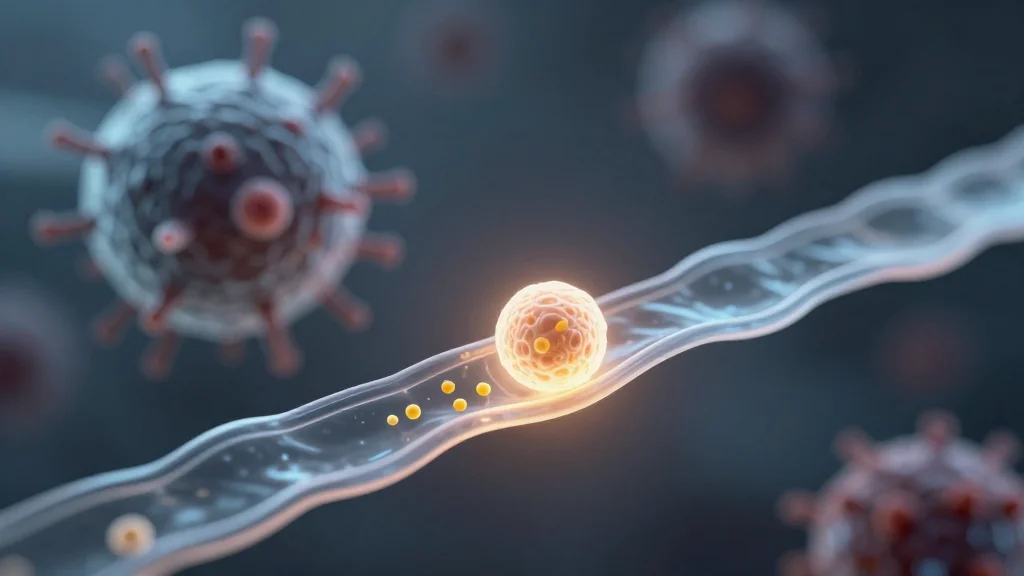
Enhancing Antitumour Nanovaccine Efficacy via Integrated Cholesterol Modulation in Situ
Why It Matters
Targeting dendritic cell cholesterol offers a novel lever to amplify immunotherapy outcomes, potentially raising response rates for cancer vaccines across the industry.
Key Takeaways
- •Cholesterol depletion in DC membranes boosts immune synapse formation.
- •NPCM‑OT nanovaccine delivers antigen while reducing DC membrane cholesterol.
- •Enhanced CD8⁺ T‑cell activation observed across multiple tumor models.
- •Study demonstrates both preventive and therapeutic tumor efficacy in vivo.
- •Approach offers a new lever for improving cancer vaccine design.
Pulse Analysis
The efficacy of cancer vaccines hinges on the ability of dendritic cells (DCs) to present antigens and prime cytotoxic T lymphocytes. Recent immunological studies have revealed that membrane cholesterol organizes lipid rafts, which can restrict the formation of immune synapses between DCs and T cells. By modulating cholesterol levels, DCs become more fluid, allowing greater contact frequency and stronger signaling. This mechanistic insight provides a biologically grounded target that complements existing adjuvant strategies, opening a pathway to amplify vaccine‑induced immunity without altering antigen composition. These findings also suggest that lipid metabolism could become a biomarker for vaccine responsiveness.
The authors engineered a membrane‑cholesterol‑depleting nanovaccine, NPCM‑OT, that co‑encapsulates tumor antigens and a cholesterol‑binding agent. Upon intravenous administration, the particles preferentially home to lymph‑node‑resident DCs, where they release their payload and strip cholesterol from the plasma membrane. This dual action reshapes lipid microdomains, promotes immune‑synapse assembly, and blocks efferocytosis pathways that normally dampen T‑cell activation. In mouse models of melanoma, breast and pancreatic cancer, NPCM‑OT achieved up to a 70 % reduction in tumor growth and extended survival, demonstrating both prophylactic and therapeutic potency.
By targeting a fundamental biophysical property of antigen‑presenting cells, this strategy sidesteps the need for novel adjuvants or complex antigen engineering, making it attractive for rapid translation. Pharmaceutical firms developing cancer vaccines can integrate cholesterol‑modulating modules into existing platforms, potentially improving response rates observed in checkpoint‑inhibitor trials. Moreover, the approach may synergize with adoptive cell therapies that rely on robust T‑cell priming. As regulatory pathways for nanomedicines mature, the NPCM‑OT concept could accelerate the pipeline for next‑generation immunotherapies and reshape market expectations for vaccine efficacy.
Enhancing antitumour nanovaccine efficacy via integrated cholesterol modulation in situ
Comments
Want to join the conversation?
Loading comments...