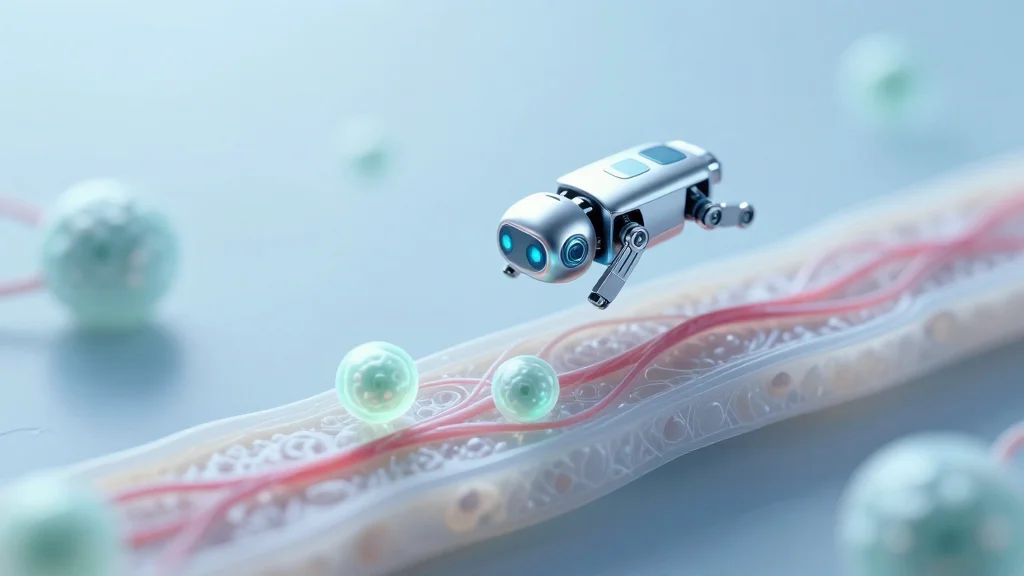
ETH Zurich Bio‑Hybrid Microrobots Restore Nerve Function in Spinal‑Injured Animals

Why It Matters
The NPCbot platform merges nanotechnology, stem‑cell biology and robotics, offering a unified solution to two persistent challenges in spinal cord repair: precise cell placement and sustained stimulation of regeneration. By eliminating the need for implanted electrodes, the method reduces surgical risk and potential infection, while the magnetic steering enables non‑invasive targeting of deep tissue lesions. Successful translation could dramatically improve outcomes for the estimated 17,000 new spinal cord injuries reported annually in the United States, expanding the therapeutic arsenal beyond rehabilitation and pharmacology. Beyond spinal repair, the underlying magnetoelectric nanoparticle design could be adapted for other hard‑to‑treat conditions, such as myocardial infarction or peripheral nerve damage, where localized electrical cues are known to promote healing. The ability to mass‑produce microrobots on a lab‑on‑chip platform also suggests a scalable manufacturing route, a prerequisite for commercial viability in the emerging nanomedicine market.
Key Takeaways
- •ETH Zurich and University of Zurich created NPCbots that combine iPS‑derived neural progenitor cells with magnetoelectric nanoparticles.
- •Each microrobot measures ~6 µm and is fabricated in ~30 minutes on a 1 cm² lab‑on‑chip surface.
- •In zebrafish, NPCbots restored near‑normal swimming within three days; in mice, nerve fibers reconnected after 28 days.
- •Production scales to millions of bots for animal studies by running multiple chips in parallel.
- •The technology avoids implanted electrodes, offering a minimally invasive, remotely controllable cell‑delivery system.
Pulse Analysis
The NPCbot breakthrough illustrates how nanotech is moving from proof‑of‑concept toward therapeutic reality. Historically, spinal cord repair has been hampered by the dual problems of scar tissue and the inability to deliver regenerative cues precisely. By embedding both navigation and stimulation functions within a single microrobot, the Zurich team resolves a long‑standing engineering trade‑off. This convergence mirrors trends in other sectors—such as targeted drug delivery—where multifunctional nanocarriers are gaining traction.
From a market perspective, the global nanorobotics sector is projected to exceed $5 billion by 2030, driven largely by medical applications. The NPCbot platform could capture a sizable share of the regenerative‑medicine niche, especially if the team can demonstrate safety and efficacy in larger preclinical models. However, commercialization will hinge on overcoming manufacturing bottlenecks and securing regulatory clearance for a device that blurs the line between drug and hardware. Partnerships with biotech firms experienced in GMP‑grade stem‑cell production could accelerate this path.
Looking ahead, the real test will be whether the magnetic steering can be reliably scaled to human anatomy, where tissue depth and heterogeneity pose new challenges. If the Zurich researchers succeed, the paradigm could expand to a suite of bio‑hybrid nanorobots tailored for organ‑specific repair, ushering in an era where nanotech‑enabled cell therapy becomes a standard clinical tool rather than an experimental curiosity.
ETH Zurich Bio‑Hybrid Microrobots Restore Nerve Function in Spinal‑Injured Animals
Comments
Want to join the conversation?
Loading comments...