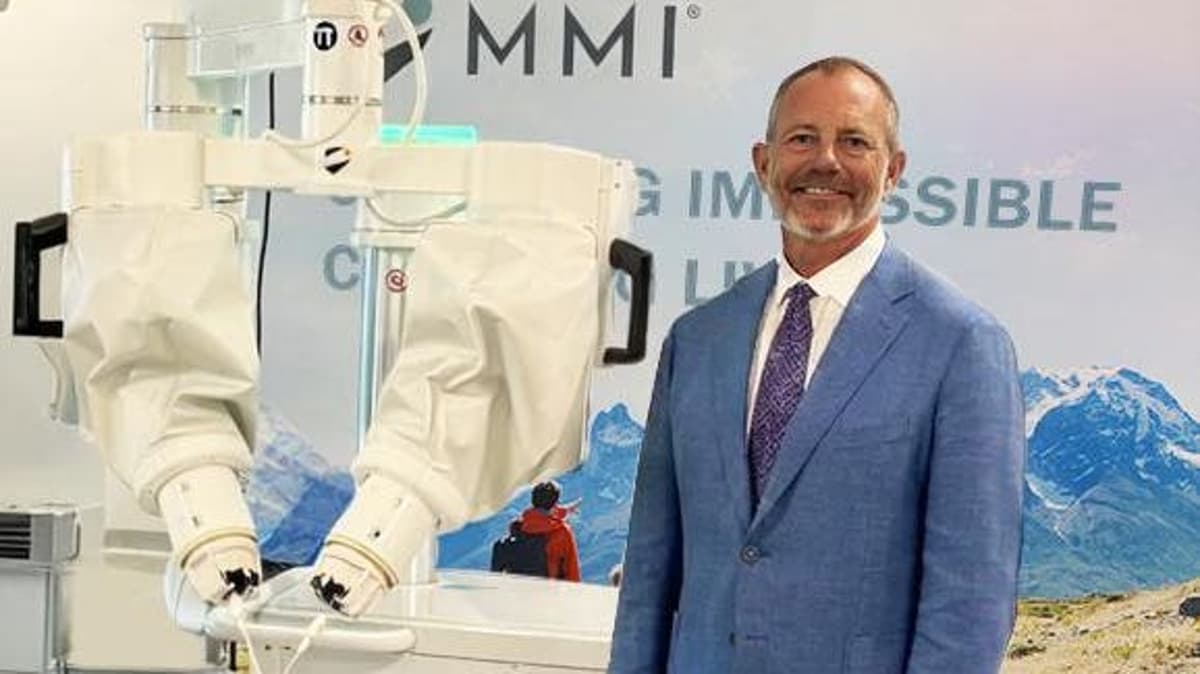
First U.S. Patients Treated With Microrobotic Surgery For Alzheimer’s
Why It Matters
Demonstrating a safe, minimally invasive method to improve brain waste clearance could open a new therapeutic class for Alzheimer’s, a market with unmet demand and billions in annual spend.
Key Takeaways
- •First human microrobot procedure for Alzheimer’s performed in Jacksonville
- •MMI aims to enroll 15 patients, monitor 12‑month outcomes
- •$220 million raised; valuation $500 million signals investor confidence
- •Success could trigger larger trials and reshape neuro‑degenerative therapy
Pulse Analysis
Alzheimer’s disease remains the most prevalent form of dementia in the United States, affecting roughly 7 million Americans and accounting for a multi‑billion‑dollar market for symptomatic drugs. Traditional approaches have focused on amyloid‑beta plaques and tau tangles, yet clinical failures have spurred interest in alternative pathways such as the brain’s glymphatic system. Recent research suggests that impaired lymphatic drainage in the cervical region contributes to toxin buildup, making mechanical clearance an attractive, though unproven, strategy. Microrobotic platforms—tiny instruments the width of a human hair—offer the precision needed to navigate vessels as small as 0.2 mm, potentially restoring the brain’s natural waste‑removal processes without invasive craniotomy.
Medical Microinstruments Inc. (MMI) leverages this technology in a first‑in‑human trial, funded by a $220 million capital raise that values the firm at about $500 million. The company’s robots, originally designed for peripheral lymphedema and nerve repair, received FDA clearance in November, underscoring regulators’ willingness to explore novel neuro‑interventions when safety data are robust. Investor interest reflects a broader shift toward high‑risk, high‑reward med‑tech ventures that promise to address chronic neurodegenerative conditions. Should the 15‑patient pilot demonstrate safety and modest cognitive benefit, MMI could quickly scale to a multi‑center study involving hundreds of participants, attracting partnership offers from big‑pharma firms eager to diversify their Alzheimer’s pipelines.
Beyond the immediate clinical implications, the trial signals a potential paradigm shift in how the industry tackles brain disorders. If microrobotic lymphatic clearance proves effective, it could complement existing pharmacologic therapies, offering a multimodal approach that addresses both pathology and physiological clearance. However, challenges remain: long‑term durability of the intervention, cost‑effectiveness, and the need for specialized surgical expertise could limit rapid adoption. Nonetheless, the convergence of advanced robotics, precision medicine, and a desperate market need positions microrobotic surgery as a compelling frontier that may redefine therapeutic strategies for Alzheimer’s and other neurodegenerative diseases.
First U.S. Patients Treated With Microrobotic Surgery For Alzheimer’s
Comments
Want to join the conversation?
Loading comments...