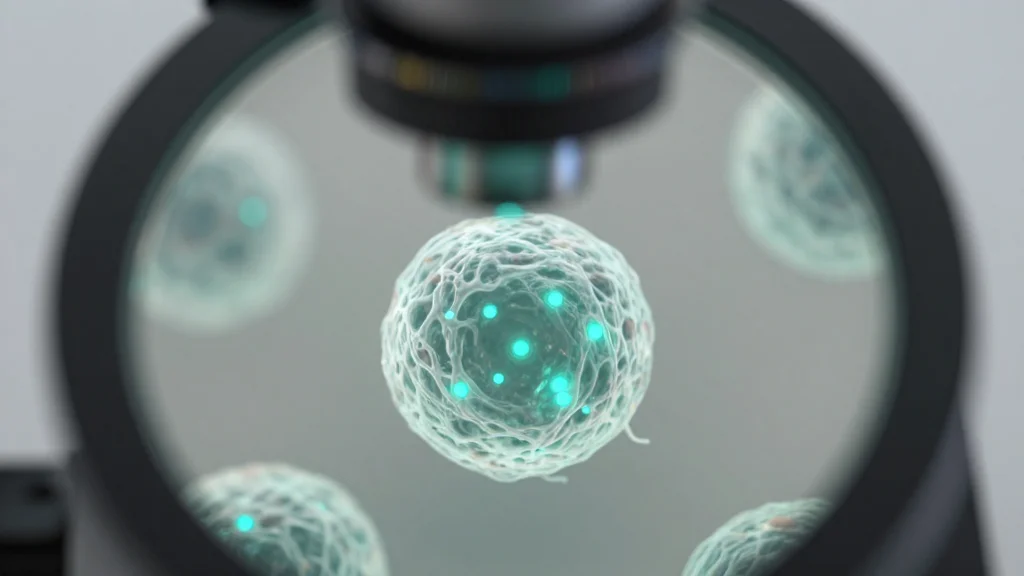
Glowing Nanoparticles Exposed Hidden Cancer-Protein Behavior that Could Reshape Drug Screening
Why It Matters
The ability to monitor receptor interactions over extended periods provides a more accurate readout of drug efficacy and uncovers mutation‑driven signaling mechanisms that drive aggressive cancers, offering new targets for therapeutic intervention.
Key Takeaways
- •Upconverting nanoparticles enable minutes‑long single‑molecule tracking
- •EGFR mutants show prolonged dimerization without stimulus, driving aggressive cancers
- •Multi‑color probes allow simultaneous observation of EGFR, HER2, HER3 dynamics
- •Technique promises realistic drug screening by monitoring receptor behavior live
- •Researchers aim to shrink probes and expand color palette for broader use
Pulse Analysis
The breakthrough hinges on upconverting nanoparticles that convert infrared light into visible emission without photobleaching, a limitation that has plagued conventional fluorescent dyes. By embedding rare‑earth ions, these probes sustain luminescence for minutes, hours, or even longer, allowing scientists to film individual receptor molecules as they roam the plasma membrane. This durability opens a window into dynamic processes that were previously captured only in fleeting snapshots, delivering unprecedented spatiotemporal resolution for cellular biochemistry.
Applying the technology to the EGFR family, Peng’s group observed that wild‑type receptors form transient dimers upon ligand binding, while oncogenic EGFR mutants lock into stable pairs independent of external cues. Such persistent dimerization fuels unchecked cell proliferation, a hallmark of aggressive tumors. The ability to directly visualize these mutant‑driven interactions clarifies why certain cancers resist standard therapies and highlights precise molecular nodes for drug development.
Beyond basic research, the method promises to overhaul pharmaceutical screening pipelines. Traditional assays rely on bulk readouts that mask heterogeneous cellular responses, whereas nanoparticle‑based single‑molecule tracking can reveal how candidate compounds modulate receptor pairing in real time. As the probes become smaller, brighter, and multicolored, they could be integrated into high‑throughput platforms, accelerating the discovery of drugs that more effectively disrupt pathological signaling. This convergence of nanotechnology and live‑cell imaging is set to reshape how the biotech industry evaluates therapeutic potency.
Glowing nanoparticles exposed hidden cancer-protein behavior that could reshape drug screening
Comments
Want to join the conversation?
Loading comments...