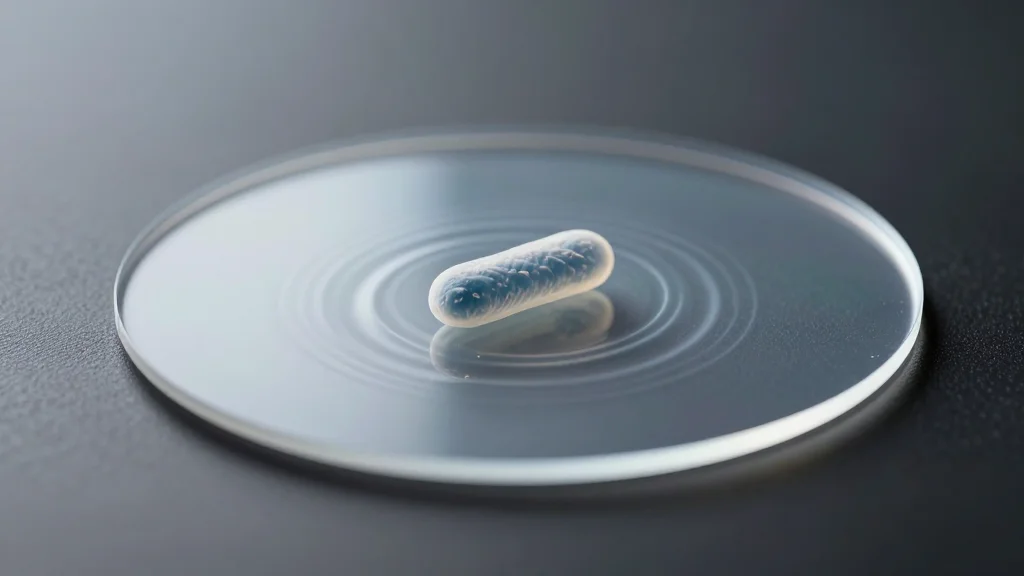
Graphene Drum Sensor Detects Superbugs in Real Time

Why It Matters
Antibiotic resistance threatens to reverse decades of medical progress, and rapid, accurate diagnostics are essential to curb its spread. By converting bacterial motion into an audible signal, the graphene drum sidesteps the latency of culture‑based methods and the complexity of molecular assays, offering a potentially universal platform that can be adapted to new pathogens as they emerge. The technology also exemplifies how nanomaterials can bridge physics and biology, opening pathways for other label‑free sensing applications such as viral detection or toxin monitoring. Beyond healthcare, the ability to read nanoscale mechanical vibrations could inspire new classes of sensors for environmental monitoring, food safety and biosecurity. If the graphene drum can be mass‑produced at low cost, it may democratize high‑precision diagnostics, especially in low‑resource settings where laboratory infrastructure is limited.
Key Takeaways
- •TU Delft and spin‑off SoundCell created a graphene nanodrum that detects bacterial motion acoustically.
- •The device can sense a single bacterial cell and differentiate species by unique frequency signatures.
- •Label‑free detection eliminates the need for fluorescent tags or chemical reagents.
- •Rapid, real‑time readout could cut diagnostic times from days to seconds.
- •Pilot clinical trials are planned for late 2026, with a handheld prototype in development.
Pulse Analysis
The graphene drum sensor arrives at a moment when the diagnostics market is hungry for faster, cheaper tools to combat antimicrobial resistance. Traditional susceptibility testing relies on culturing, which can take 24–48 hours, while molecular PCR panels, though quicker, require expensive reagents and specialized labs. By leveraging the extraordinary mechanical properties of graphene—its low mass, high strength, and exceptional conductivity—the SoundCell platform offers a fundamentally different detection modality that could undercut both cost and time.
Historically, nanomechanical resonators have been explored for mass sensing, but translating that physics into a clinically viable assay has been elusive due to challenges in signal‑to‑noise ratio and reproducibility. The Delft team's claim of single‑cell sensitivity suggests they have overcome key engineering hurdles, likely through advanced fabrication techniques and sophisticated signal processing algorithms. If the acoustic signatures prove robust across the heterogeneous matrices found in real patient samples, the technology could leapfrog existing platforms and set a new benchmark for point‑of‑care diagnostics.
From a market perspective, the global in‑vitro diagnostics market is projected to exceed $100 billion by 2030, with a growing segment dedicated to rapid antimicrobial susceptibility testing. SoundCell’s partnership with an established diagnostic OEM could accelerate commercialization, but the path to regulatory approval will demand rigorous clinical validation. Competitors such as rapid phenotypic platforms (e.g., Accelerate Diagnostics) and next‑generation sequencing services are also racing to fill the same need. The graphene drum’s unique value proposition—label‑free, real‑time acoustic readout—could carve out a niche if it delivers on its promise of simplicity and scalability. Investors and health systems will be watching closely as the pilot studies unfold, because a successful rollout could reshape how clinicians diagnose and treat superbug infections worldwide.
Graphene Drum Sensor Detects Superbugs in Real Time
Comments
Want to join the conversation?
Loading comments...