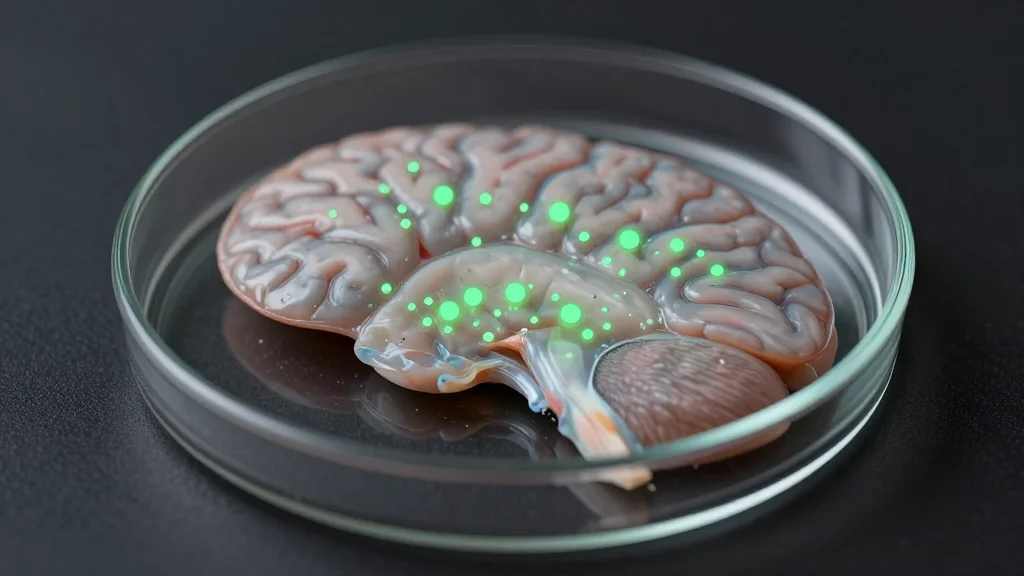
Graphene Quantum Dots Block Parkinson‑Linked Protein Clumps in First Animal Test

Why It Matters
The ability of graphene quantum dots to both inhibit α‑synuclein aggregation and stimulate autophagic clearance addresses two core pathological mechanisms of Parkinson’s disease. By demonstrating efficacy in an animal model, the work moves nanotech from theoretical proof‑of‑concept toward a therapeutic candidate that could alter disease progression rather than merely alleviate symptoms. Moreover, the intranasal delivery strategy offers a practical pathway to bypass the blood‑brain barrier, a major bottleneck for central nervous system drugs. Beyond Parkinson’s, the study establishes a template for using engineered carbon nanomaterials to target misfolded proteins across a spectrum of neurodegenerative illnesses. If safety and manufacturing challenges are resolved, GQDs could become a modular platform, accelerating the development pipeline for a range of protein‑targeted nanotherapies and reshaping investment priorities in biotech and materials science.
Key Takeaways
- •Professor Małgorzata Kujawska's team showed intranasal graphene quantum dots cut α‑synuclein aggregates by >60% in mice.
- •GQDs activated autophagy, helping neurons clear toxic proteins.
- •Safety testing revealed low toxicity at therapeutic doses, with stress responses only at higher concentrations.
- •The intranasal route bypasses the blood‑brain barrier, a key delivery challenge for neuro‑drugs.
- •Next steps include larger‑animal studies and a Phase 1 human trial, funded by EU grants and private investors.
Pulse Analysis
The breakthrough underscores a broader shift in nanomedicine from diagnostic and imaging roles toward active therapeutic interventions. Historically, carbon‑based nanomaterials have faced skepticism due to biocompatibility concerns; this study’s safety data, albeit early, could recalibrate risk assessments and encourage regulators to engage with nanotech developers sooner. The competitive landscape now includes traditional small‑molecule inhibitors of α‑synuclein, antibody therapies, and gene‑editing approaches. GQDs differentiate themselves by offering a dual mechanism—direct interference with fibril formation and stimulation of the cell’s own cleanup machinery—without the immunogenicity often associated with biologics.
From a market perspective, the Parkinson’s drug market exceeds $5 billion annually, yet disease‑modifying options remain elusive. A successful nanodot therapy could capture a sizable share, especially if the intranasal formulation proves convenient for patients. Investors are likely to monitor the upcoming EU grant allocations and any partnership announcements with pharmaceutical firms that have existing neurology pipelines. The technology also opens licensing opportunities for companies focused on nanomaterial manufacturing, potentially creating a new supply chain for medical‑grade graphene.
Looking ahead, the key risk lies in scaling production while maintaining particle uniformity—a known challenge for quantum dots. If the team resolves formulation stability and demonstrates long‑term safety, GQDs could evolve into a platform that accelerates the translation of nanotech across multiple neurodegenerative targets, setting a precedent for interdisciplinary collaborations between materials scientists and clinicians.
Graphene Quantum Dots Block Parkinson‑Linked Protein Clumps in First Animal Test
Comments
Want to join the conversation?
Loading comments...