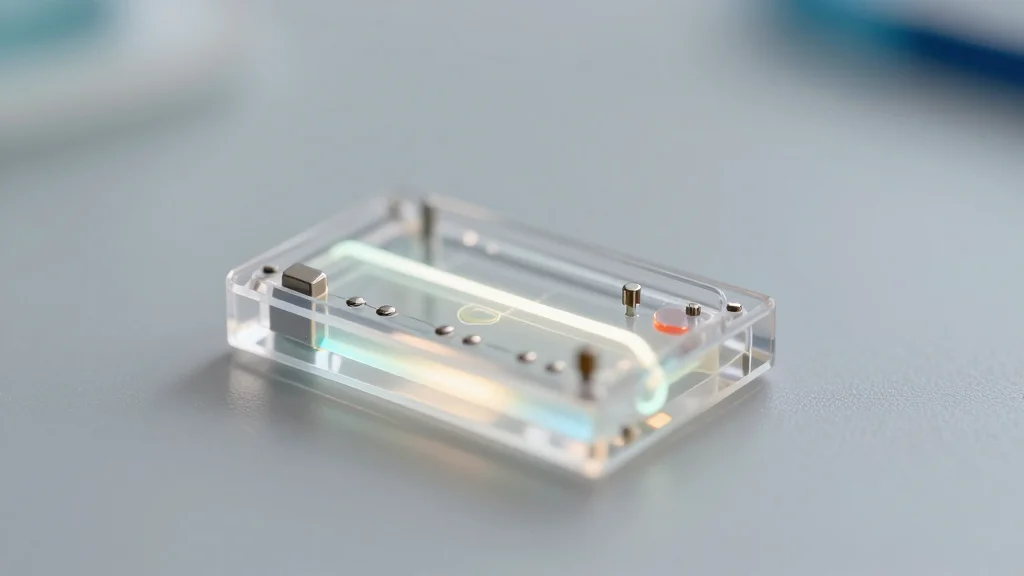
Joint‑on‑Chip Multi‑Sensor Platforms Enable Real‑Time Disease Monitoring

Why It Matters
Real‑time, multi‑modal sensing within JoC platforms bridges a critical gap between in vitro models and human disease, offering a more predictive environment for drug discovery. By capturing dynamic biochemical and mechanical cues, researchers can identify therapeutic windows earlier, reducing reliance on costly animal studies and speeding the path to clinical trials. The nanofabricated sensor architecture also showcases how precision engineering can be leveraged to create scalable, modular diagnostic tools, potentially reshaping the biotech landscape toward personalized, on‑chip medicine. Beyond osteoarthritis and rheumatoid arthritis, the approach could be adapted to other tissue interfaces—such as cartilage‑bone or tendon‑muscle junctions—expanding its impact across musculoskeletal research. The ability to monitor multiple parameters simultaneously may also inform regulatory frameworks, as continuous data streams provide richer safety and efficacy evidence for emerging therapies.
Key Takeaways
- •Mantegazza team integrates optical, electrical, mechanical and biochemical sensors into JoC platforms
- •Continuous monitoring replaces endpoint‑only analyses, improving insight into disease dynamics
- •Sensor array achieves 40% higher sensitivity for interleukin‑6 detection versus bulk assays
- •Mechanical sensors capture stiffness changes with 5 µm resolution, a first for in‑vitro joint models
- •Pilot validation with patient‑derived cells planned for later 2026, aiming for biotech partnerships
Pulse Analysis
The multi‑sensor JoC breakthrough arrives at a moment when the biotech industry is hungry for more predictive preclinical models. Traditional cell culture and animal studies have long been criticized for their limited translational power, and investors have repeatedly poured capital into organ‑on‑chip startups that promise to close that gap. What sets this development apart is its emphasis on real‑time, multiplexed data acquisition, a capability that directly addresses the reproducibility crisis in biomedical research. By embedding nanofabricated sensors at the chip level, the platform reduces assay variability and enables longitudinal studies that were previously impossible.
Historically, JoC systems have excelled at recapitulating the structural and mechanical environment of joints but fell short on functional readouts. The new sensor suite transforms these models into active laboratories, where each experiment yields a continuous data stream rather than a single snapshot. This shift could redefine how pharmaceutical companies design early‑stage screening campaigns, moving from a batch‑wise approach to a continuous monitoring paradigm that flags promising compounds earlier and discards failures faster. In competitive terms, firms that can integrate such sensor arrays into scalable manufacturing pipelines will likely capture a sizable share of the emerging market for high‑content, on‑chip diagnostics.
Looking ahead, the technology’s modularity suggests a path toward broader adoption across organ‑on‑chip domains. If the upcoming validation with patient‑derived cells confirms the platform’s predictive accuracy, we can expect a wave of venture capital interest, potentially mirroring the $500 million raised last year for microphysiological systems. Moreover, regulatory agencies may begin to recognize continuous sensor data as a valid endpoint, further accelerating commercialization. In short, the integration of nanotech‑enabled sensors into JoC platforms not only advances scientific understanding of joint disease but also positions the field for rapid growth and investment.
Joint‑on‑Chip Multi‑Sensor Platforms Enable Real‑Time Disease Monitoring
Comments
Want to join the conversation?
Loading comments...