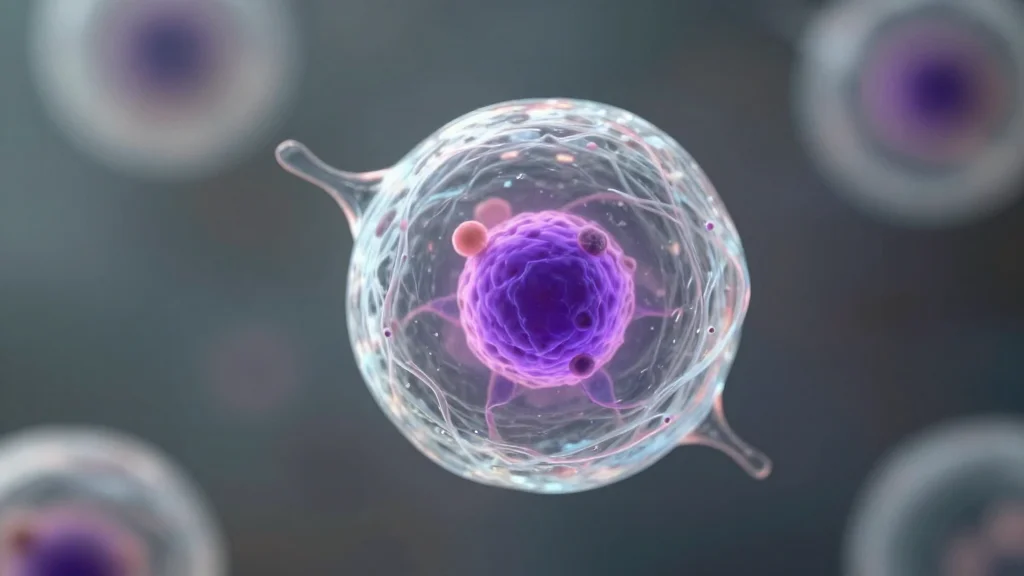
KAUST Engineers Six‑protein Nanoscale Factory Inside Living Cells to Make Medicines on Site

Why It Matters
The ability to transplant entire enzymatic pathways into human cells could transform how medicines are administered, shifting from systemic dosing to localized, on‑demand synthesis. This reduces the risk of off‑target toxicity and may lower the required dosage, improving patient compliance and outcomes. Additionally, the MOF‑based delivery system offers a versatile platform for future nanotherapeutics, potentially accelerating the development of treatments for diseases that are currently hard to target with conventional drugs. Beyond therapeutic applications, the technology provides a powerful research tool for synthetic biology, enabling scientists to prototype metabolic pathways inside mammalian cells without permanent genetic modification. This could accelerate drug discovery, metabolic engineering, and the study of disease mechanisms, positioning nanotechnology as a central pillar of next‑generation biomedicine.
Key Takeaways
- •KAUST scientists delivered six enzymes inside mammalian cells using metal‑organic framework particles.
- •The enzymes assembled a biosynthetic pathway that produced violacein, a compound with anti‑cancer potential.
- •The work is described as the most complex multiprotein system delivered into living cells to date.
- •Researchers call the approach a “protein pathway transplant,” enabling on‑site drug synthesis.
- •Future steps include in vivo testing, scaling MOF production, and expanding the platform to other therapeutic pathways.
Pulse Analysis
The KAUST breakthrough marks a pivotal shift from the conventional paradigm of external drug administration to intracellular manufacturing. Historically, nanomedicine has focused on carrier particles that release pre‑formed drugs at target sites. By contrast, this synthetic organelle creates the drug inside the cell, sidestepping issues of drug stability, diffusion barriers, and systemic exposure. The approach leverages advances in metal‑organic frameworks—a class of porous materials that have already shown promise for gas storage and catalysis—repurposing them as protective nanocontainers for delicate proteins.
From a market perspective, the technology could open a new segment of “bio‑manufacturing therapeutics,” attracting investment from both biotech firms and material‑science companies. Companies that have built expertise in MOF synthesis, such as BASF and MOF Technologies, may find strategic partnership opportunities with biotech firms seeking delivery platforms. Meanwhile, the pharmaceutical industry could view this as a route to extend the patent life of existing molecules by re‑engineering them for intracellular production, potentially revitalizing pipelines that have stalled due to delivery challenges.
Regulatory pathways will be a major hurdle. The FDA has yet to define clear guidelines for nanomaterials that act as intracellular factories, especially when the end product is a biologically active small molecule. Early engagement with regulators, coupled with rigorous safety data, will be essential to move from bench to bedside. If the platform proves safe and scalable, it could catalyze a wave of modular, programmable therapeutics, fundamentally altering drug development timelines and cost structures. The next year will be critical as the team moves into animal models and begins to address the translational challenges that accompany any first‑in‑class technology.
KAUST engineers six‑protein nanoscale factory inside living cells to make medicines on site
Comments
Want to join the conversation?
Loading comments...