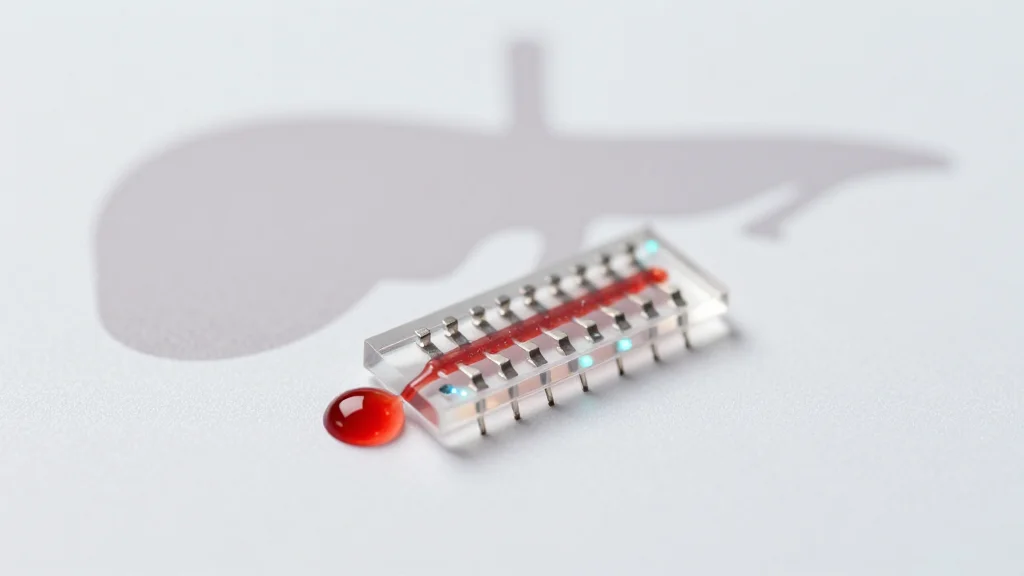
Liquid Biopsy Differentiation of Pancreatic Cancer From Non‐Cancerous Pancreatic Disease Using Dielectrophoresis‐Recovered Nanoparticles Carrying Cell‐Free DNA and Protein Biomarkers (Small 29/2026)
Why It Matters
Early, non‑invasive detection of pancreatic cancer can dramatically improve survival rates, and this technology offers a scalable path to routine screening. Its speed and accuracy could shift diagnostic standards away from invasive biopsies and costly imaging.
Key Takeaways
- •Dielectrophoretic chip isolates extracellular vesicles directly from plasma
- •Biomarker panel combines cell‑free DNA and protein signals
- •Differentiates pancreatic cancer from benign disease with high accuracy
- •Microfluidic approach reduces processing time to under an hour
- •Enables non‑invasive screening for early‑stage pancreatic cancer
Pulse Analysis
Pancreatic cancer remains one of the deadliest malignancies, largely because symptoms appear late and conventional imaging often misses early lesions. Serum marker CA19‑9 lacks specificity, and tissue biopsies carry procedural risks. In this context, liquid biopsy—analyzing tumor‑derived material circulating in blood—has emerged as a promising alternative, offering the potential to catch disease before it becomes radiographically visible.
The new dielectrophoresis‑based microfluidic chip tackles a key bottleneck: efficiently harvesting extracellular vesicle nanoparticles that ferry tumor‑specific DNA and proteins. By arranging circular microelectrodes that generate precise electric field gradients, the device pulls vesicles from raw plasma without dilution or centrifugation. Once captured, the platform quantifies both cell‑free DNA mutations and protein signatures, creating a multimodal biomarker profile. Early data suggest the assay can separate malignant from benign pancreatic conditions with sensitivity and specificity rivaling, if not exceeding, current imaging modalities, all within an hour of sample collection.
If validated in larger cohorts, this technology could reshape pancreatic cancer screening pipelines. Its rapid turnaround and minimal sample preparation make it attractive for outpatient clinics and potentially for population‑level risk assessment programs. Moreover, the modular nature of the chip allows adaptation to other tumor types, opening a broader market for liquid‑biopsy diagnostics. Investors and healthcare systems will watch closely as the assay moves toward regulatory clearance, where its non‑invasive nature and cost‑effectiveness could drive widespread adoption.
Liquid Biopsy Differentiation of Pancreatic Cancer From Non‐Cancerous Pancreatic Disease Using Dielectrophoresis‐Recovered Nanoparticles Carrying Cell‐Free DNA and Protein Biomarkers (Small 29/2026)
Comments
Want to join the conversation?
Loading comments...